The Power of Emotions in Marketing

Understanding Emotional Triggers

To leverage the power of emotions in marketing, brands must understand how emotions influence consumer decision-making. Research in psychology and behavioral marketing shows that people rarely make purchasing choices based on logic alone. Instead, emotions guide attention, shape perception, and drive action, with rational thinking often used afterward to justify the decision.
When consumers interact with a brand, their emotional response forms almost instantly. This reaction determines whether they feel trust, excitement, comfort, or urgency. Because emotional responses occur faster than analytical reasoning, emotionally engaging campaigns tend to be more memorable and persuasive than purely informational ones.
The power of emotions in marketing lies in their ability to simplify decisions. Emotions help consumers assess whether a product aligns with their values, identity, or current needs. Positive emotions encourage loyalty and sharing, while emotions like fear or urgency can prompt immediate action when paired with a clear solution.
By understanding these emotional triggers and applying them thoughtfully, brands can create messages that feel relevant, authentic, and human—building stronger connections that lead to higher engagement and long-term loyalty.
Happiness
Happy customers are more likely to share their positive experiences, spreading your message further. Brands like Coca-Cola mastered “happiness marketing” with campaigns like “Open Happiness,” encouraging customers to associate their product with joy.
Fear
Fear not only instills urgency but can also motivate people to take action. Think about life insurance commercials or anti-littering campaigns. These ads often spotlight the risks of inaction, pushing people to make choices based on the desire to avoid harm.
Belonging
The feeling of inclusion or community is a potent emotional trigger. Brands like Apple thrive on exclusivity, creating a sense of identity for their consumers by suggesting, “If you own this product, you’re part of something bigger.”
Nostalgia
Tapping into fond memories is another effective way to connect. Nostalgia-driven ads often remind people of simpler times, such as family traditions or cherished childhood experiences (e.g., Disney’s “dreams come true” campaigns).
Trust
Building trust isn’t just about proving a product’s quality but also about making consumers feel secure in their choice. Brands that share authentic testimonials, behind-the-scenes stories, or transparent practices excel at earning customer confidence.
Examples of Emotional Marketing in Action

To truly understand the power of emotions in marketing, it helps to look at real-world campaigns that successfully connected with audiences on a deeper emotional level. These brands didn’t just promote products—they told stories, reflected shared values, and tapped into feelings that shaped how people perceived and remembered them.
By aligning their messaging with emotions like joy, hope, belonging, or empowerment, these campaigns created meaningful experiences that resonated long after the ad ended. They demonstrate how emotional storytelling can strengthen brand identity, increase engagement, and influence purchasing decisions in ways that logic-driven marketing often cannot.
The following examples highlight how the power of emotions in marketing can turn simple campaigns into cultural moments, driving both emotional connection and measurable business impact.
Brands that connect emotionally don’t just promote products—they tell stories. Emotional marketing customer relationships shows how campaigns foster loyalty and trust.
Google’s “Parisian Love”
Google’s “Parisian Love” ad is a masterclass in emotional storytelling. It follows a simple yet compelling narrative: the search history of a man falling in love with someone abroad. Through each search query, viewers witness moments of excitement, curiosity, nervousness, and ultimately, deep love. The campaign uses subtle visual cues, minimal text, and emotive pacing to convey a full emotional journey. This ad demonstrates the power of emotions in marketing, showing that even a tech product like Google Search can evoke feelings of connection, joy, and nostalgia by linking technology to real human experiences.
Nike’s “You Can’t Stop Us”
Nike’s campaign during global lockdowns highlighted unity, resilience, and perseverance in the face of unprecedented challenges. Using split-screen visuals and seamless editing, the ad interweaves athletes from different backgrounds and sports, emphasizing collective human effort and determination. By tapping into hope, courage, and motivation, the campaign inspired viewers to stay active and resilient in difficult times. This example illustrates how the power of emotions in marketing can transform a brand message into a universal experience that resonates deeply with diverse audiences.
Dove’s “Real Beauty”
Dove’s “Real Beauty” campaign redefined conventional standards of beauty through authentic storytelling. By showcasing real women of different ages, shapes, and ethnicities, Dove fostered a sense of inclusion, trust, and self-confidence. Emotional storytelling made viewers feel seen, valued, and understood, sparking conversations about self-esteem and societal expectations. This campaign highlights the power of emotions in marketing, proving that when brands connect authentically with their audience’s emotions, they can build loyalty, trust, and meaningful engagement.
Always’ “Like a Girl”
The “Like a Girl” campaign by Always transformed a common insult into a statement of empowerment. By challenging stereotypes about girls’ abilities, the ad tapped into emotions like pride, confidence, and inspiration. The storytelling combined real-life scenarios with compelling visuals, showing girls excelling in sports, academics, and everyday life. This emotional approach not only strengthened the brand’s image but also sparked global conversations about gender confidence. It’s a perfect example of how the power of emotions in marketing can turn a simple message into a cultural movement that resonates across generations.
How to Implement Emotional Marketing
While large brands often have bigger budgets, the power of emotions in marketing is not limited by company size. Small and mid-sized businesses can create equally impactful campaigns by focusing on authenticity, relevance, and emotional connection. Emotional marketing works best when brands clearly understand their audience and communicate messages that resonate on a human level. Here’s how to get started:
Know Your Audience
To fully harness the power of emotions in marketing, you must deeply understand your audience. Go beyond basic demographics and explore their values, motivations, pain points, and aspirations. Surveys, social media insights, customer feedback, and focus groups can reveal what truly matters to them. Once you identify the emotions that influence their decisions—such as trust, belonging, or excitement—you can craft messages that feel personal, relevant, and emotionally compelling.
Dive deep into values, motivations, and pain points. For guidance, see build emotion marketing strategy.
Tell a Story
Storytelling is one of the strongest ways to activate the power of emotions in marketing. Rather than simply highlighting product features, build a narrative that shows real-life impact. Share stories that demonstrate how your product or service solves a problem, supports a goal, or enhances a meaningful moment in someone’s life. When audiences see themselves reflected in your story, emotional engagement increases, making your brand more memorable and persuasive.
Use Visual and Audio Cues
Music, colors, and imagery all play vital roles in triggering emotions. For example:
- Colors: Warm tones like orange and red evoke excitement, while blues are associated with trust and calmness.
- Music: A heartfelt piano track can tug at emotions or uplift spirits, depending on the rhythm and tempo.
Be Authentic
Authenticity is at the heart of the power of emotions in marketing. Today’s audiences are highly perceptive and can quickly sense when a brand’s emotional message feels forced or insincere. Emotional marketing is most effective when it reflects real values and genuine intent rather than manipulative tactics. Sharing behind-the-scenes moments, real customer stories, employee experiences, or purpose-driven initiatives helps humanize your brand and builds trust. When audiences feel that a brand is honest and relatable, emotional connections form more naturally and last longer.
Create Shareable Content
The power of emotions in marketing is amplified when content inspires people to share it. Audiences are far more likely to spread content that makes them laugh, feel inspired, nostalgic, or deeply moved. Emotional storytelling, unexpected visuals, and relatable messages increase the chances of organic sharing across social platforms. Because people enjoy passing along emotions they connect with, emotionally driven campaigns often achieve greater reach, stronger engagement, and higher brand recall without relying solely on paid promotion.
Measure Success
To fully leverage the power of emotions in marketing, it’s important to measure how emotional campaigns perform. Look beyond surface-level metrics and track engagement rates, social shares, time on page, and conversion rates to understand how audiences respond emotionally. These insights reveal which emotional triggers resonate most and which messages fall flat. By analyzing performance data, brands can refine future campaigns, strengthen emotional impact, and continuously improve results over time.
Emotional Marketing Across Different Channels
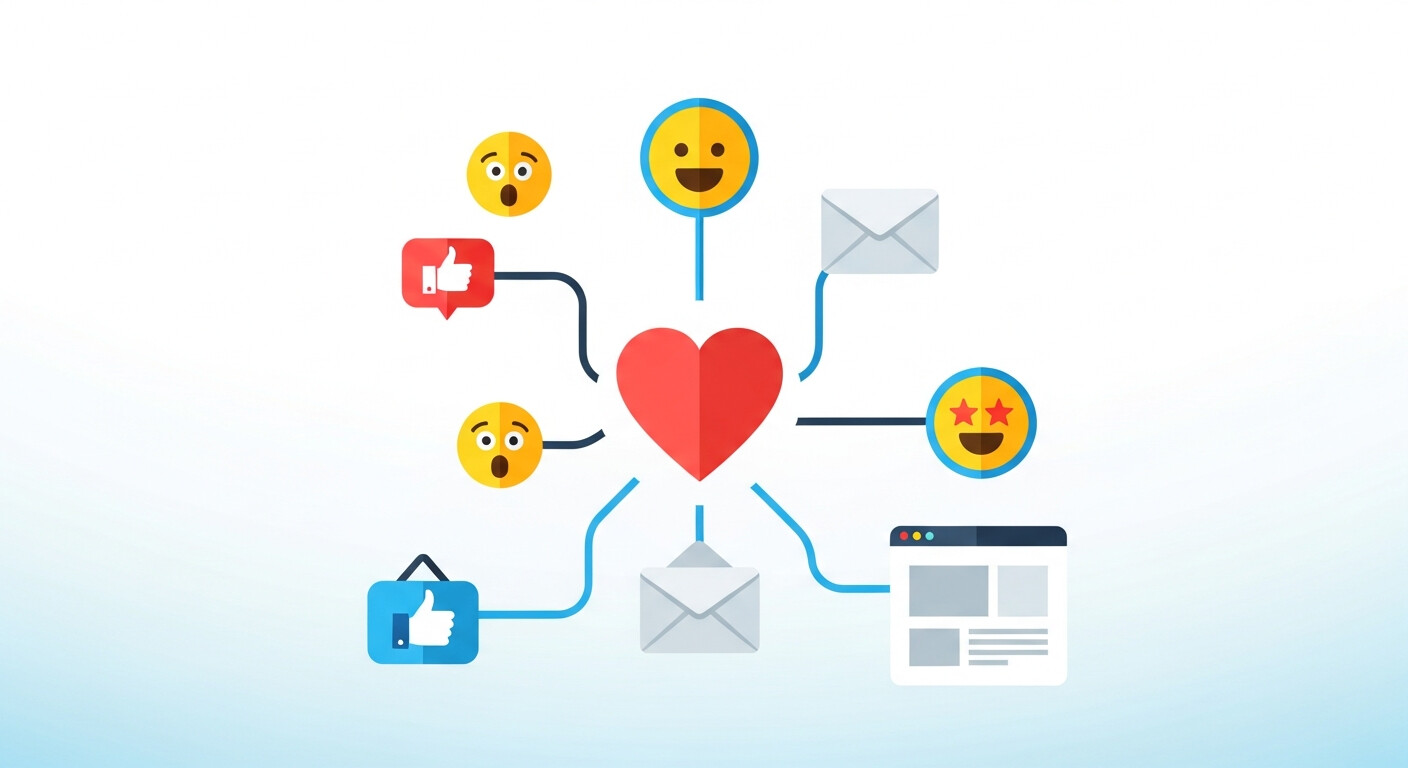
The power of emotions in marketing becomes even more effective when tailored to specific channels. Different platforms trigger emotions in different ways, and understanding this allows brands to maximize impact.
On social media, emotional marketing thrives on relatability and immediacy. Short videos, authentic storytelling, and user-generated content help brands spark joy, empathy, or inspiration quickly as users scroll. Email marketing, on the other hand, allows for more personal emotional engagement through storytelling, personalized subject lines, and value-driven messaging that builds trust over time.
In paid advertising, emotional cues help brands cut through noise. Ads that evoke curiosity, urgency, or belonging tend to outperform purely informational creatives. When brands adapt emotional messaging to each channel’s strengths, the power of emotions in marketing translates into higher engagement and stronger conversions across the funnel.
Emotional Marketing and Brand Loyalty
One of the most lasting benefits of the power of emotions in marketing is its influence on brand loyalty. While discounts and promotions may drive short-term sales, emotional connections encourage repeat purchases and long-term relationships.
When customers emotionally identify with a brand’s values, mission, or story, they are more likely to stay loyal—even when competitors offer similar products. Emotional branding turns customers into advocates who recommend, defend, and emotionally invest in a brand. Over time, this emotional bond becomes a competitive advantage that is difficult to replicate through pricing or features alone.
Emotional Marketing in a Data-Driven World
As analytics and AI continue to advance, the power of emotions in marketing is increasingly guided and validated by data. Brands can now measure emotional engagement through behavioral patterns, sentiment analysis, heatmaps, time-on-page metrics, and interaction data across digital touchpoints. These insights allow marketers to understand not just what users do, but how they feel when interacting with content.
Data-driven emotional marketing enables brands to refine messaging based on real audience responses rather than assumptions or intuition alone. By analyzing which emotional triggers lead to higher engagement, conversions, or retention, marketers can continuously optimize campaigns while maintaining authenticity.
By combining emotional insight with data-driven decision-making, businesses can create personalized, relevant experiences that resonate on a human level—proving that in a digital-first landscape, the power of emotions in marketing remains a critical driver of performance and long-term brand growth.
Analytics and AI allow brands to measure emotional engagement through sentiment analysis, behavioral patterns, and interaction data. Explore the future of emotional AI revolutionizing marketing to see how personalization enhances impact.
Building the Future of Emotional Marketing

The rise of digital platforms and AI tools means emotional marketing will only grow more personalized. Imagine developing campaigns that shift based on a consumer’s mood as interpreted through their browsing habits, or programmatic ads that adjust tone to align with user behavior.
But one thing will always remain constant in emotional marketing—people crave connection. Businesses that understand and empathize with their audience will always stand out.
Are you ready to take your marketing to the next level? Start exploring how you can integrate emotions into your next campaign and create lasting impressions.
Get a deeper understanding of industry trends and opportunities in our comprehensive overview of the e-commerce market.
Frequently Asked Questions (FAQ)
What is the power of emotions in marketing?
The power of emotions in marketing lies in the ability to influence consumer decisions, strengthen brand loyalty, and create memorable experiences that drive engagement and conversions.
How can small businesses use emotional marketing effectively?
Small businesses can focus on storytelling, personalized campaigns, authentic customer stories, and visual or audio cues to evoke emotions without needing large budgets.
Which emotions are most effective in marketing?
Happiness, fear, belonging, nostalgia, and trust are consistently powerful triggers that motivate purchasing decisions and brand engagement.
Can emotional marketing improve ROI?
Yes. Campaigns that connect emotionally often see higher engagement, shares, and conversion rates, translating into better ROI compared to campaigns based solely on product features.
How do you measure emotional marketing success?
Success can be measured through engagement metrics (likes, shares, comments), conversion metrics (click-through rates, leads, sales), and sentiment analysis to track audience response.