Emotional Marketing vs Logical Marketing: A Guide
Every day, consumers encounter thousands of promotional messages. Some make us laugh, some make us cry, and others present cold, hard facts. The core debate for advertisers often comes down to one question: Emotional Marketing vs Logical Marketing. Understanding how both strategies influence consumer behavior is the key to creating highly persuasive campaigns.
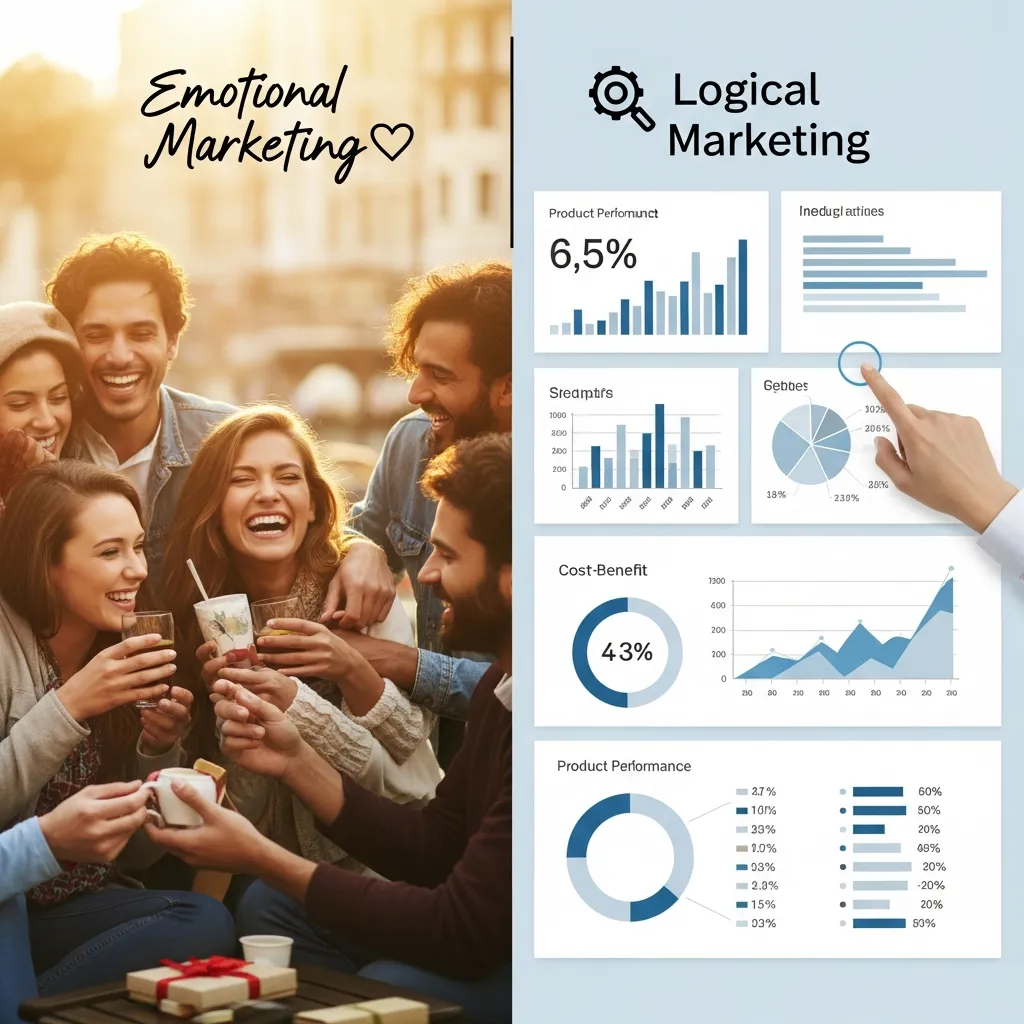
Emotional marketing targets the heart. It uses feelings like joy, fear, or nostalgia to build a deep connection with the audience. Logical marketing targets the brain. It relies on facts, data, and clear benefits to prove a product’s value.
While they might seem like opposing forces, the most successful brands know that Emotional Marketing vs Logical Marketing is not an either-or scenario. Buyers frequently make decisions based on how they feel and then justify those purchases with logic. This guide explores the psychology behind both approaches, platform-specific strategies, and how to blend them for maximum impact.
The Psychology Behind Emotional Marketing
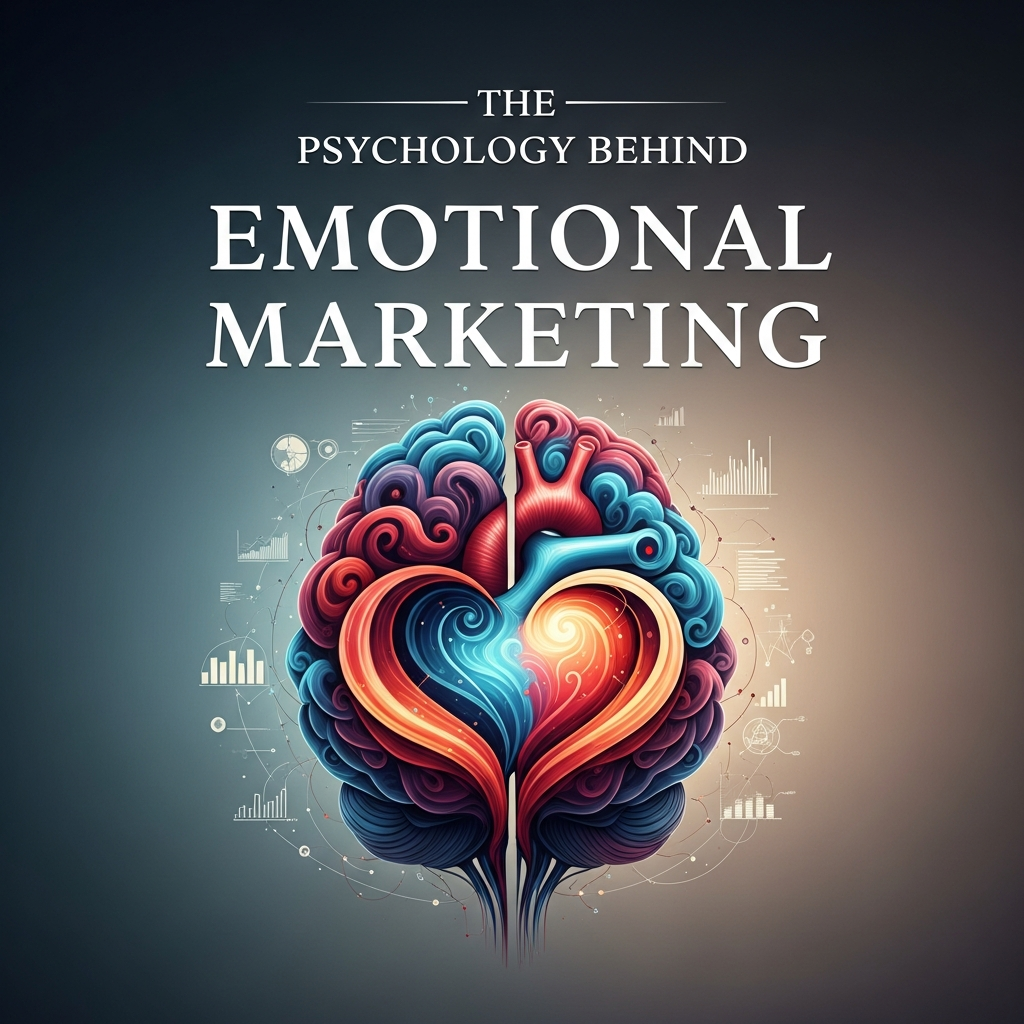
Emotions play a massive role in how we choose what to buy. When a brand connects with a customer on an emotional level, price and features often become secondary considerations.
How Emotions Drive Decisions
The human brain processes emotions rapidly. When faced with a choice, our feelings about a brand often dictate our initial preference. This gut reaction can easily override a detailed cost-benefit analysis.
Key Emotional Triggers in Marketing
Marketers use specific feelings to prompt action. Joy creates a positive association with a product. Fear of missing out (FOMO) creates urgency. Trust builds long-term relationships, while a sense of belonging makes customers feel like part of an exclusive community.
The Limbic System and its Role
The limbic system is the part of the brain responsible for emotions and memories. When an advertisement triggers this area, the viewer forms a lasting memory of the brand, making future purchases much more likely.
Building Brand Loyalty Through Emotion
Logical arguments win sales, but emotional connections win loyalty. Customers who feel understood by a company will advocate for that brand and stick with it even when cheaper alternatives appear.
The Psychology Behind Logical Marketing
If emotion starts the engine, logic steers the car. Logical marketing provides the concrete reasons a consumer needs to finalize a transaction.
How Logic and Reason Influence Choices
Many purchases, especially expensive business-to-business (B2B) investments, require careful calculation. Consumers need to know exactly what problem the product solves.
Key Logical Appeals in Marketing
Logical marketing highlights data, facts, features, and cost-effectiveness. It answers the specific question: “What is the tangible return on this investment?”
The Prefrontal Cortex and its Role
The prefrontal cortex handles logic, reasoning, and complex decision-making. Marketing materials that target this brain region help buyers feel confident and secure in their choices.
Building Trust and Credibility Through Logic
Transparency builds trust. By sharing case studies, exact specifications, and verifiable statistics, brands prove they have nothing to hide.
Emotional Marketing in Action: Platform-Specific Strategies
Different channels require different approaches. Here is how you can apply these concepts across various digital platforms.
Emotional Marketing on Facebook Ads
Facebook is a highly visual and social platform. Emotional Marketing on Facebook Ads relies on visual storytelling and relatable scenarios. Showing real people overcoming everyday struggles creates an immediate bond. Harnessing user-generated content adds authenticity, while call-to-actions that evoke a sense of community encourage immediate clicks.
Emotional Triggers for Email Marketing
The inbox is a highly personal space. Using Emotional Triggers for Email Marketing starts with crafting compelling subject lines that spark curiosity or excitement. Personalization fosters a direct connection, making the reader feel valued. Weaving storytelling into the email body keeps the reader engaged from the first sentence to the final pitch.
Emotional Content Strategy for Instagram
Instagram is driven by aesthetics and lifestyle. An effective Emotional Content Strategy for Instagram requires high-quality, aspirational visuals that make users feel inspired. Authentic captions drive community engagement. Leveraging Stories and Reels allows brands to share raw, behind-the-scenes emotional narratives that humanize the company.
Emotional Hooks for YouTube Thumbnails
On YouTube, you have milliseconds to grab attention. Emotional Hooks for YouTube Thumbnails rely heavily on intrigue and curiosity. Conveying value and anticipation through text overlays is essential. Using human faces with expressive imagery—like surprise or excitement—dramatically increases click-through rates.
The Art of Blending: When and How to Combine Strategies
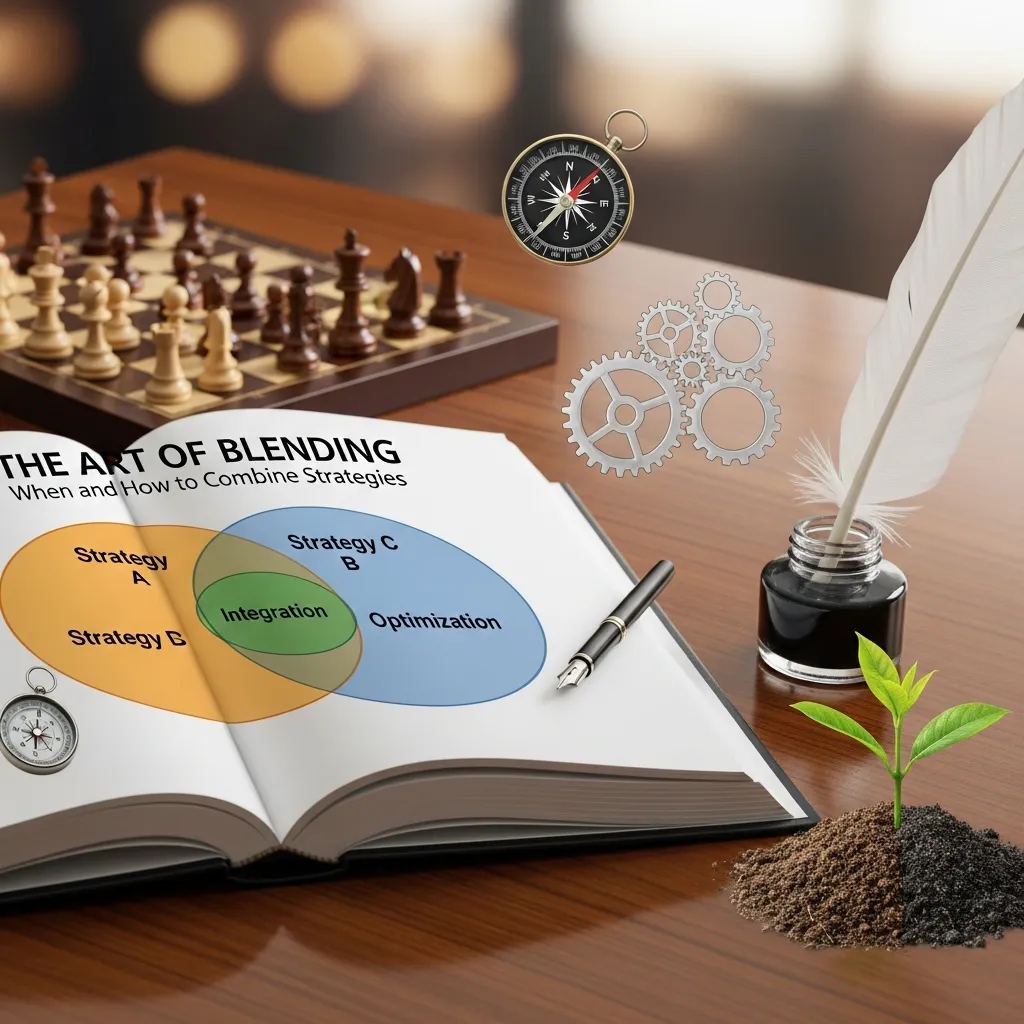
The true magic happens when you understand how to navigate the Emotional Marketing vs Logical Marketing spectrum.
Identifying Your Target Audience’s Primary Drivers
Research your audience thoroughly. Do they buy your product to feel luxurious, or do they buy it to save time? Knowing their primary motivation helps you weigh your messaging appropriately.
High-Involvement vs. Low-Involvement Purchases
Low-involvement purchases, like a candy bar, rely heavily on quick emotional triggers. High-involvement purchases, like a car or enterprise software, require a strong logical foundation to justify the significant expense.
Crafting Hybrid Campaigns
Great campaigns lead with emotion and close with logic. A car commercial might show a family enjoying a beautiful road trip (emotion) before listing the vehicle’s top safety ratings and fuel efficiency (logic).
Measuring the Impact of Combined Strategies
Use A/B testing to find the perfect balance. Test an emotional headline against a logical one, and analyze which drives better conversion rates for your specific audience.
The Future of Persuasion: Emotional AI in Advertising
Technology is rapidly changing how we connect with consumers.
Understanding Emotional AI
Emotional AI involves machines reading and reacting to human emotions through text, voice, or facial analysis. This allows brands to serve hyper-relevant content based on the user’s current mood.
Emotional AI in Advertising: Future Trends
AI-powered personalization will soon generate content on the fly. If a user’s browsing behavior indicates frustration, the AI might serve a calming, logical advertisement offering a direct solution. If they seem joyful, it might serve a highly energetic, emotion-driven ad.
Ethical Considerations and Challenges
Tracking emotions raises significant privacy concerns. Brands must navigate these tools transparently to avoid crossing the line from persuasive to manipulative.
Case Studies: Brands Excelling in Persuasion
Emotional Dominant Examples
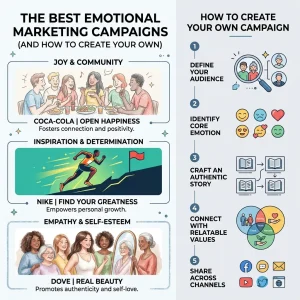
Nike rarely talks about the specific fabric of their shoes. Instead, they sell greatness, determination, and victory. Coca-Cola sells happiness and togetherness, not carbonated sugar water.
Logical Dominant Examples
Tech companies and financial services often lean on logic. A cloud hosting provider will highlight uptime guarantees, server speeds, and data security protocols to win over IT directors.
Balanced Approach Examples
The automotive industry excels at balancing both. They sell the thrill of the open road alongside miles-per-gallon statistics and warranty information.
Measuring Success: KPIs for Emotional and Logical Campaigns
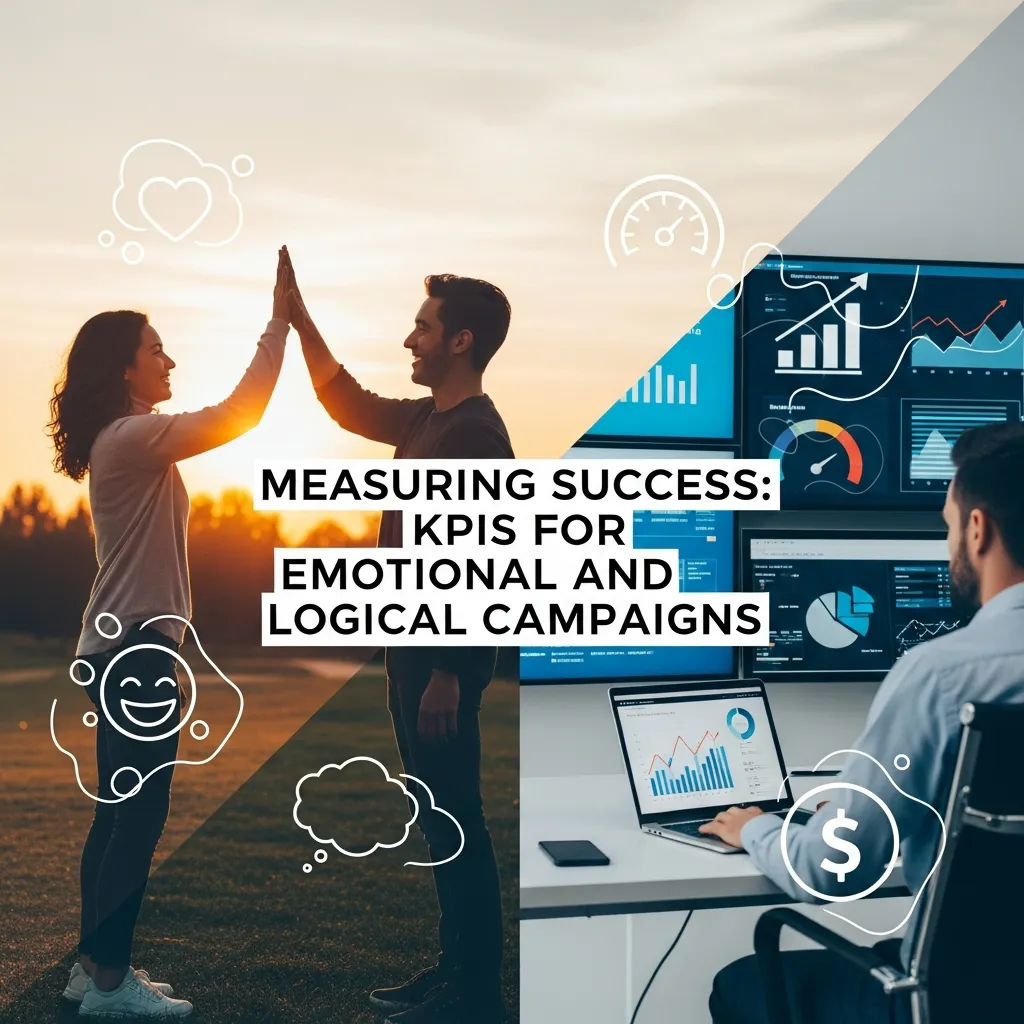
To fully understand the effectiveness of your campaigns, especially when balancing Emotional Marketing vs Logical Marketing, you need to track the right key performance indicators (KPIs). Each approach influences different metrics, so analyzing them together gives a complete picture of performance.
Engagement Metrics
Track likes, shares, comments, and overall interaction rates across your platforms. Campaigns driven by emotion tend to perform strongly here because people are naturally inclined to engage with content that makes them feel something—whether it’s happiness, inspiration, or even surprise. High engagement often indicates that your emotional messaging is resonating with your audience and building a stronger connection.
Conversion Rates and Sales
While emotional campaigns attract attention, logical campaigns often drive action. Monitor conversion rates, click-through rates (CTR), and actual sales to see how well your logical messaging performs. For example, tracking how many users clicked on product specifications, pricing pages, or comparison charts—and then completed a purchase—can reveal how effectively your campaign is guiding users toward a decision.
Brand Sentiment and Awareness
Beyond numbers, understanding how people feel about your brand is crucial. Use social listening tools and customer feedback to analyze brand sentiment. Are people speaking positively about your brand? Do they associate it with trust, quality, or innovation? Emotional marketing plays a big role here, as it shapes perception and long-term brand identity. Increased mentions, positive reviews, and organic discussions are strong indicators of growing brand awareness.
ROI Analysis
At the end of the day, every campaign must justify its investment. Calculate the return on investment (ROI) by comparing the total cost of your campaign with the revenue it generates. For emotional campaigns, this might include video production and storytelling costs, while logical campaigns may involve data-driven content and detailed product assets. A balanced ROI analysis helps you determine which mix of Emotional Marketing vs Logical Marketing delivers the best financial results.
Common Mistakes to Avoid
Being Overly Emotional or Completely Cold
Too much emotion can seem manipulative. Too much logic can be incredibly boring. Finding the middle ground is essential.
Misunderstanding Your Audience’s Needs
Pitching logical features to an audience looking for an emotional escape will result in ignored advertisements.
Inconsistent Messaging
If your Facebook ads are highly emotional but your landing page is a cold wall of technical text, the jarring transition will cause visitors to bounce.
Ignoring Data and Analytics
Never assume you know what works. Always look at your campaign data to see how the Emotional Marketing vs Logical Marketing dynamic is actually performing.
Mastering the Synergy of Persuasion
The debate of Emotional Marketing vs Logical Marketing is not about choosing a winner. It is about understanding the human mind. We are feeling creatures who think. By capturing attention with genuine emotion and validating that attention with clear logic, you create marketing campaigns that are virtually impossible to ignore. Evaluate your current messaging, identify where you lean too far in one direction, and start crafting balanced, powerful campaigns today.
Frequently Asked Questions (FAQ)
1. What is the main difference between Emotional Marketing vs Logical Marketing?
Emotional Marketing vs Logical Marketing comes down to feelings versus facts. Emotional marketing appeals to feelings like joy, fear, or nostalgia to drive action, while logical marketing appeals to reason by using data, facts, and tangible benefits.
2. Which strategy works better in Emotional Marketing vs Logical Marketing for B2B companies?
In the context of Emotional Marketing vs Logical Marketing, B2B companies traditionally lean on logical marketing because purchases involve high costs and multiple stakeholders. However, blending emotional elements—like reducing stress or improving efficiency—can give brands a competitive edge.
3. Does emotional marketing work for expensive products in Emotional Marketing vs Logical Marketing?
Yes, within Emotional Marketing vs Logical Marketing, emotional marketing can attract buyers even for high-end products. However, it must be supported by logic. Buyers often connect emotionally first, then justify the purchase with facts and features.
4. How can I use Emotional Marketing vs Logical Marketing on Facebook Ads?
To apply Emotional Marketing vs Logical Marketing on Facebook Ads, focus on emotional storytelling to grab attention, then support it with logical benefits like pricing, features, or results to drive conversions.
5. What are common Emotional Triggers for Email Marketing in Emotional Marketing vs Logical Marketing?
In Emotional Marketing vs Logical Marketing strategies, triggers like curiosity, exclusivity, urgency (FOMO), and gratitude are highly effective in email campaigns to capture attention and encourage action.
6. How do I build an Emotional Content Strategy for Instagram using Emotional Marketing vs Logical Marketing?
An effective Emotional Marketing vs Logical Marketing approach on Instagram includes emotional visuals and storytelling, supported by logical messaging like product value, benefits, or usability in captions.
7. What makes good Emotional Hooks for YouTube Thumbnails in Emotional Marketing vs Logical Marketing?
Within Emotional Marketing vs Logical Marketing, strong thumbnails use emotional cues like facial expressions and curiosity, while the video content should deliver logical value to maintain trust.
8. What is Emotional AI in Advertising: Future Trends in Emotional Marketing vs Logical Marketing?
In the evolving space of Emotional Marketing vs Logical Marketing, Emotional AI uses technology to analyze user emotions and deliver personalized ads that balance emotional appeal with logical relevance.
9. Can logical marketing build brand loyalty in Emotional Marketing vs Logical Marketing?
In Emotional Marketing vs Logical Marketing, logical marketing builds trust through transparency and facts, but long-term loyalty is usually driven by emotional connections with the brand.
10. How do I know if my campaign should focus on Emotional Marketing vs Logical Marketing?
Choosing between Emotional Marketing vs Logical Marketing depends on your product and audience. Low-cost or impulse purchases benefit from emotion, while high-cost or complex decisions require strong logical support.
11. Is it possible to combine Emotional Marketing vs Logical Marketing in one ad?
Yes, the best strategy in Emotional Marketing vs Logical Marketing is to combine both—start with an emotional hook to grab attention and finish with logical proof to drive action.
12. How do I measure success in Emotional Marketing vs Logical Marketing campaigns?
To evaluate Emotional Marketing vs Logical Marketing, track emotional engagement metrics like shares and comments, along with logical outcomes like conversions, sales, and ROI.