The Psychology of Advertising: Why We Buy What We Buy

This blog post explores the psychology of advertising, examining how understanding consumer behavior and cognitive processes can lead to more effective campaigns. We will discuss the power of emotional appeals, the science behind persuasive messaging, and how digital marketing leverages psychological principles to connect with audiences.
Have you ever wondered why a simple commercial can make you feel unexpectedly nostalgic or urgently need a product you had never heard of five minutes ago? The answer lies in the psychology of advertising. At its core, marketing is about human behavior. Brands that understand how people think, feel, and make decisions hold a distinct advantage. They do not just sell products; they connect with consumers on a fundamental level.
Understanding consumer psychology is essential for modern marketing. It transforms basic promotions into compelling narratives that resonate deeply with audiences. Every color choice, word, and image in a successful campaign is carefully selected to trigger a specific psychological response. Advertising influences perception and decision-making long before a consumer reaches the checkout page. By studying these cognitive triggers, marketers can craft messages that guide behavior naturally and effectively.
The evolution of advertising heavily relies on psychological insights. Early campaigns focused primarily on product features and logical benefits. Over time, advertisers realized that human beings are rarely purely logical creatures. Today, the psychology of advertising informs everything from television commercials to highly targeted online ads. By understanding the mind of the buyer, businesses can create impactful, memorable, and highly successful campaigns.
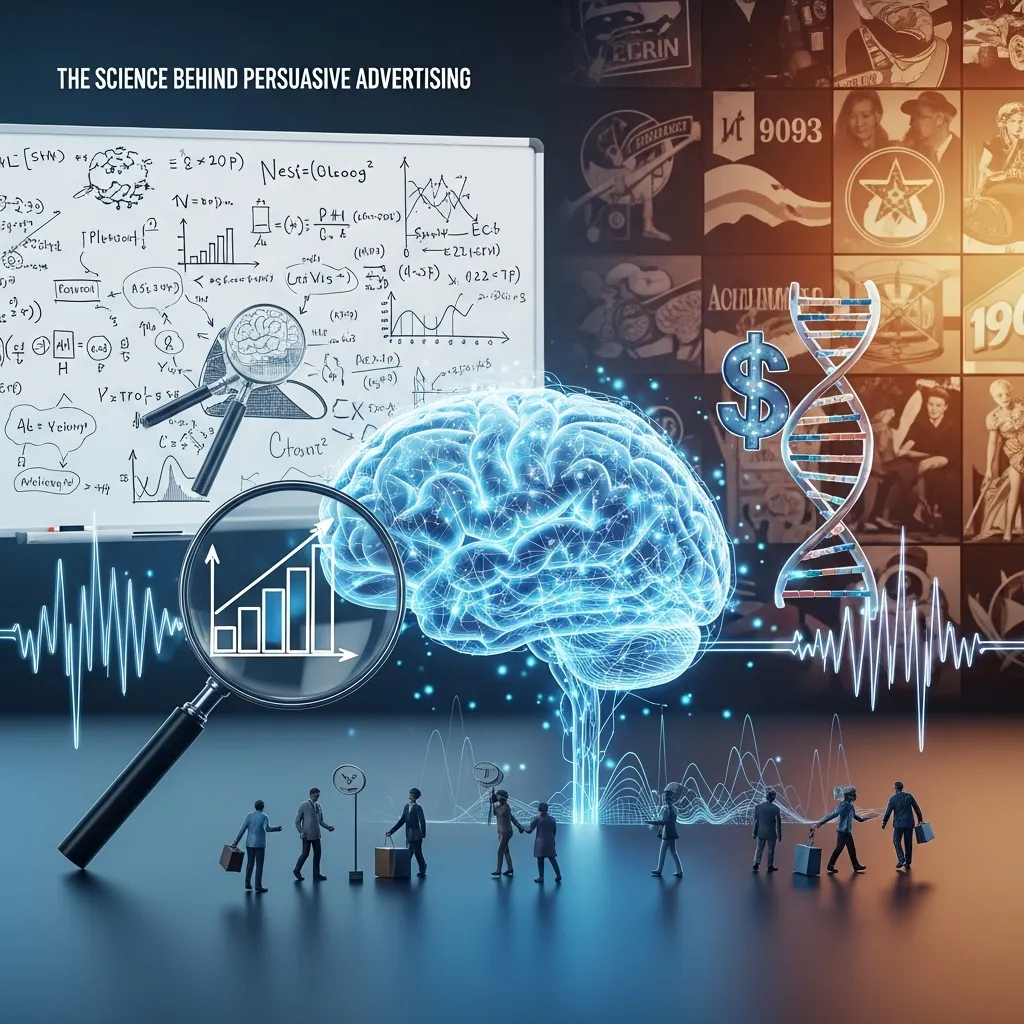
The Science Behind Persuasive Advertising
Cognitive biases and their role in consumer choices
Human brains are wired to take shortcuts, and these shortcuts are known as cognitive biases. In the psychology of advertising, biases play a massive role in shaping consumer choices. For example, the anchoring bias occurs when people rely too heavily on the first piece of information they see. If a store displays a high original price next to a discounted price, the consumer perceives a massive bargain, even if the final price is still relatively high.
Heuristics and how they simplify decision-making
Heuristics are mental rules of thumb that simplify decision-making. When faced with too many choices, consumers experience decision fatigue. Advertisers use heuristics to make choosing their product the easiest path forward. Familiarity is a common heuristic. People tend to buy brands they recognize simply because the brain prefers the known over the unknown.
The impact of repetition and familiarity
Repetition breeds familiarity, and familiarity builds trust. The psychology of advertising relies heavily on the mere-exposure effect. This psychological phenomenon dictates that people develop a preference for things merely because they are familiar with them. When consumers see a brand’s logo or hear its jingle repeatedly across various channels, they are significantly more likely to choose that brand when making a purchase decision.
Emotional Appeal in Advertising
Understanding the different types of emotions advertisers target
An Emotional Appeal is one of the most powerful tools in an advertiser’s arsenal. Different campaigns target different emotions, ranging from joy and excitement to fear and sadness. A luxury car commercial might target pride and the desire for status. A charity campaign might aim for empathy and compassion. Identifying the right emotion is crucial for aligning a product with the consumer’s internal desires.
Mastering an Emotional Content: techniques for evoking desired responses
Mastering an Emotional Content requires a deep understanding of storytelling. Advertisers use relatable characters, compelling music, and evocative visuals to draw viewers in. Techniques for evoking desired responses include showing the transformation a product brings or highlighting a shared human struggle. When Mastering an Emotional Content is done correctly, the advertisement stops feeling like a sales pitch and starts feeling like a meaningful story.
The link between emotion, memory, and brand loyalty
There is a strong scientific link between emotion and memory. People are far more likely to remember how a brand made them feel than the specific features of a product. By consistently using a positive Emotional Appeal, companies foster deep-rooted brand loyalty. Consumers return to brands that make them feel safe, happy, or understood, proving that the psychology of advertising is largely about relationship building.
Key Psychological Principles in Action
Scarcity and Urgency: creating a fear of missing out (FOMO)
Scarcity implies value. When a product is presented in limited quantities or for a limited time, it triggers a fear of missing out (FOMO). This psychological trigger accelerates the decision-making process. Phrases like “only a few left in stock” push consumers to act quickly rather than overthinking the purchase.
Social Proof: the influence of others’ opinions and actions
People naturally look to others for cues on how to behave. Social proof is a cornerstone of the psychology of advertising. Testimonials, user reviews, and case studies reassure potential buyers that others have successfully used and enjoyed the product. Seeing a crowd outside a restaurant makes you assume the food is excellent; advertising mimics this effect digitally.
Authority: leveraging expert endorsements and credibility
Consumers trust experts. When a dentist recommends a specific toothpaste or a famous athlete wears a particular brand of shoes, the product gains instant credibility. The principle of authority reduces the perceived risk of a purchase, making the consumer feel confident in their choice.
Reciprocity: the power of giving to receive
Reciprocity is a social norm where people feel obligated to return a favor. In advertising, this often takes the form of free samples, valuable content, or complimentary trials. When a brand gives something away for free, the consumer subconsciously feels indebted, increasing the likelihood of a future purchase.
Commitment and Consistency: encouraging initial small steps
Once a person makes a small commitment, they are more likely to follow through with larger actions to remain consistent with their initial choice. Advertisers use this by asking consumers to sign up for a newsletter or create a free account. These small steps pave the way for a long-term purchasing relationship.
The Role of Digital Marketing in the Psychology of Advertising
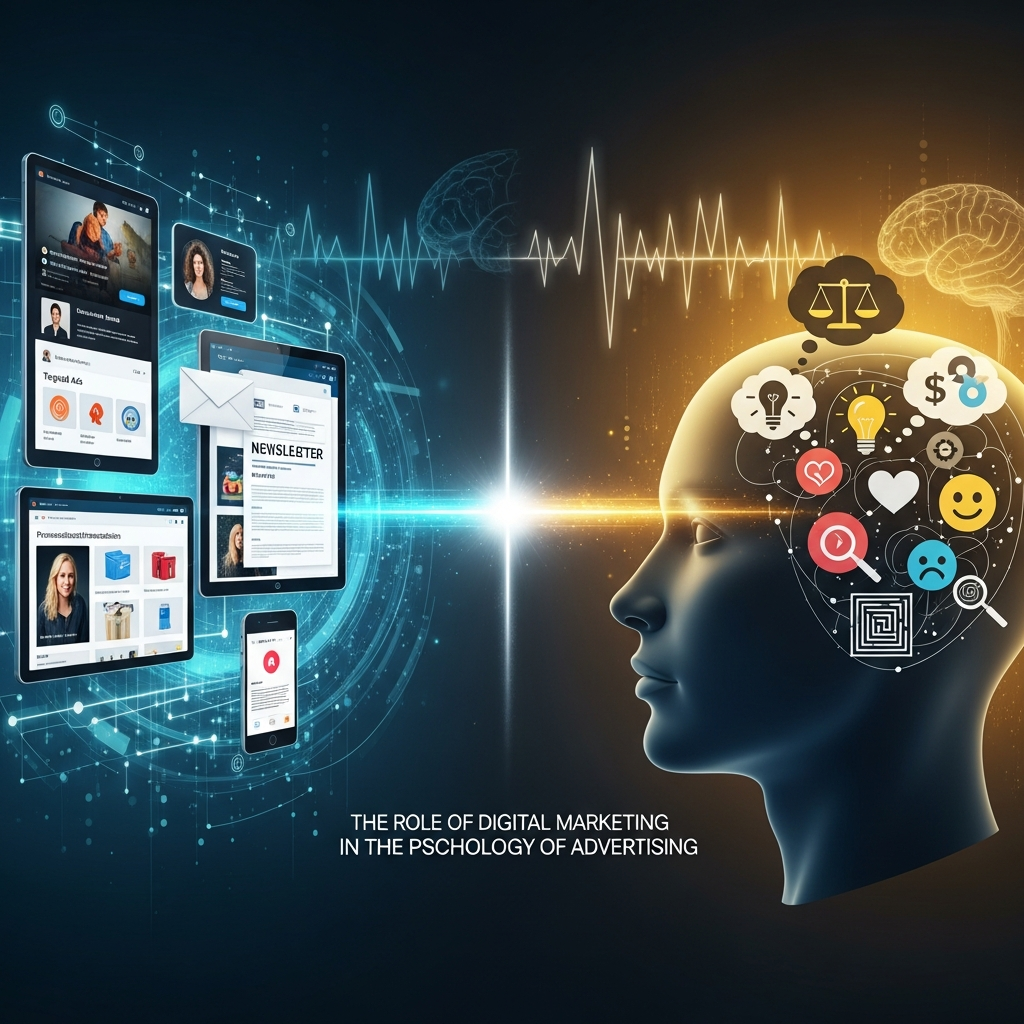
Personalized advertising and its psychological impact
Digital marketing has revolutionized the psychology of advertising by enabling hyper-personalization. When an advertisement speaks directly to a consumer’s specific needs, location, or past behavior, it grabs attention immediately. Personalized advertising makes the consumer feel seen and understood, which significantly increases conversion rates.
A/B testing and understanding consumer responses
Digital marketing allows advertisers to test psychological theories in real time. Through A/B testing, marketers can present two different versions of an ad to see which emotional trigger or headline performs best. This data-driven approach removes the guesswork and provides concrete evidence of how consumers process different psychological cues.
Behavioral targeting and retargeting
Behavioral targeting tracks a user’s online actions to serve them highly relevant ads. Retargeting takes this a step further by showing ads to users who have previously visited a website but did not make a purchase. This leverages the mere-exposure effect, keeping the brand top-of-mind and gently nudging the consumer back toward the checkout process.
Influencer marketing and social psychology
Influencer marketing merges digital marketing with the principles of social proof and authority. Followers develop parasocial relationships with influencers, viewing them as trusted friends. When an influencer recommends a product, it bypasses traditional skepticism, serving as a highly effective application of the psychology of advertising.
Ethical Considerations in the Psychology of Advertising
Balancing persuasion with transparency
While the psychology of advertising is powerful, it must be used responsibly. Advertisers must balance persuasion with transparency. Consumers deserve to know when they are being marketed to, and claims about products must be truthful and accurate.
Avoiding manipulative practices
There is a fine line between persuasion and manipulation. Exploiting deep-seated insecurities or using deceptive scarcity tactics damages brand trust. Ethical advertisers focus on highlighting genuine value and solving real problems rather than coercing consumers into regrettable purchases.
The responsibility of advertisers
Advertisers hold significant power to shape cultural norms and consumer habits. With this power comes the responsibility to promote positive messages and avoid harmful stereotypes. Ethical application of the psychology of advertising builds long-term, sustainable brand relationships based on mutual respect.
Case Studies: Successful Campaigns Based on the Psychology of Advertising
Analyzing campaigns that effectively utilized emotional appeals
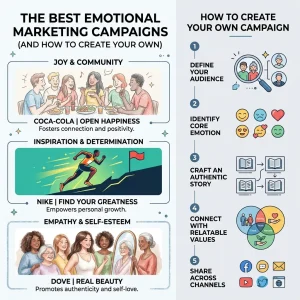
Consider campaigns that focus heavily on family connection or personal empowerment. Brands that focus on self-esteem and body positivity successfully apply an Emotional Appeal to challenge industry norms. By making viewers feel empowered rather than inadequate, these brands build massive, fiercely loyal followings.
Examples of brands that mastered digital marketing with psychological insights
Streaming services provide excellent examples of mastering digital marketing through psychology. By using sophisticated algorithms to recommend personalized content, they leverage the principle of consistency and commitment. Their “continue watching” features utilize behavioral targeting to keep users engaged on a daily basis.
Future Trends in the Psychology of Advertising
AI and machine learning in understanding consumer behavior
Artificial intelligence is taking the psychology of advertising to new heights. Machine learning algorithms can analyze vast amounts of data to predict consumer behavior with incredible accuracy. This allows brands to anticipate needs and deliver messaging exactly when the consumer is most receptive.
The rise of immersive experiences and their psychological effects
Virtual and augmented reality are creating immersive advertising experiences. These technologies transport consumers into a brand’s world, creating intense emotional connections and memories. The psychological impact of experiencing a product virtually is proving to be a highly effective driver of physical sales.
Neuromarketing and its potential
Neuromarketing involves studying consumers’ sensorimotor, cognitive, and affective responses to marketing stimuli. By using technologies like brain scanning and eye tracking, researchers can see exactly how the brain reacts to an advertisement. This offers an unprecedented understanding of the psychology of advertising, allowing for the creation of perfectly optimized campaigns.
The Enduring Power of the Psychology of Advertising
The intersection of human behavior and marketing is fascinating and complex. As long as businesses need to connect with consumers, the psychology of advertising will remain a vital field of study. By understanding cognitive biases, mastering emotional content, and utilizing digital marketing effectively, brands can create campaigns that are not only profitable but also genuinely meaningful to their audiences. As technology advances, the application of these psychological principles will only become more precise, shaping the future of how we discover and choose the products in our lives.
FAQ
1. What is the psychology of advertising?
The psychology of advertising is the study of how marketing campaigns influence consumer behavior, perception, and decision-making by utilizing cognitive and emotional triggers.
2. How do emotions influence purchasing decisions in advertising?
Emotions drive action. A strong Emotional Appeal bypasses pure logic, creating a personal connection that makes a consumer more likely to desire a product and remember the brand positively.
3. What are some common psychological techniques used in advertising?
Common techniques include scarcity, social proof, authority, reciprocity, and leveraging cognitive biases like the anchoring effect to guide consumer choices.
4. How does digital marketing utilize the psychology of advertising?
Digital marketing uses tools like personalized targeting, retargeting, and A/B testing to deliver precise, psychologically optimized messages to the right consumer at the right time.
5. What is the role of scarcity in advertising?
Scarcity creates urgency and a fear of missing out (FOMO). It makes products appear more valuable, prompting consumers to act quickly before the opportunity is gone.
6. Why is social proof effective in advertising?
Social proof works because humans are social creatures who look to others for behavioral cues. Seeing others endorse a product reduces the perceived risk of buying it.
7. How do cognitive biases affect consumer behavior?
Cognitive biases act as mental shortcuts. Advertisers use them to simplify the decision-making process, making their product the easiest or most logical choice in the consumer’s mind.
8. What does “Mastering an Emotional Content” mean in advertising?
Mastering an Emotional Content refers to the skillful use of storytelling, visuals, and messaging to reliably evoke specific feelings, turning a standard advertisement into a compelling narrative.
9. Are there ethical concerns regarding the psychology of advertising?
Yes. Advertisers must avoid manipulative tactics, false scarcity, and exploiting consumer insecurities, focusing instead on transparency and genuine value.
10. How can businesses apply the psychology of advertising to their campaigns?
Businesses can apply these principles by understanding their target audience deeply, utilizing social proof, creating a sense of urgency, and crafting messages with a strong Emotional Appeal.
11. What is the difference between traditional and digital advertising in terms of psychological impact?
While both rely on the psychology of advertising, digital marketing allows for real-time personalization, interactive behavioral targeting, and precise data tracking that traditional media lacks.
12. How important is market research in understanding the psychology of advertising for a specific audience?
Market research is crucial. It reveals the specific pain points, desires, and cognitive biases of a target demographic, allowing advertisers to tailor their psychological approach effectively.