Digital Marketing Trends in 2026: Strategies, AI, SEO, and the Future of Marketing
Digital marketing is evolving rapidly as businesses adopt artificial intelligence, smarter automation, personalized content, and data-driven advertising. Understanding digital marketing trends in 2026 can help brands reach the right audience, improve customer engagement, increase conversions, and remain competitive in an increasingly crowded online marketplace. From social media and search engine optimization to influencer partnerships and marketing automation, businesses need flexible strategies that respond to changing customer expectations. This guide explores the latest developments, practical marketing strategies, and emerging technologies that can help businesses build a stronger digital presence and achieve sustainable growth.
Digital Marketing Trends in 2026
The digital marketing landscape in 2026 is shaped by changing consumer behavior, artificial intelligence, privacy regulations, and the growing demand for personalized experiences. Businesses can no longer depend on a single advertising channel to attract customers. Instead, they need a balanced approach that combines search visibility, engaging content, social media communication, email marketing, and paid campaigns. These digital marketing trends demonstrate why an integrated strategy is becoming increasingly important for businesses of every size.
Another major development is the shift toward customer-focused marketing. Consumers expect brands to provide useful information, relevant recommendations, transparent communication, and consistent experiences across different platforms. Companies that understand customer needs can create more meaningful campaigns and build long-term relationships. Businesses should regularly analyze their marketing performance, test new ideas, and adjust their strategies according to measurable results.
Latest Digital Marketing Strategies
Successful marketing strategies begin with clearly defined goals and a thorough understanding of the target audience. Businesses should identify their ideal customers, research their purchasing behavior, and select channels that support their objectives. For example, a company seeking immediate sales may prioritize paid search advertising, while a business focused on long-term visibility may invest more heavily in SEO and content marketing. Combining these approaches can help generate both immediate and sustainable results.
The latest digital marketing trends also emphasize consistency across the customer journey. A potential customer might discover a brand through a search engine, explore its social media profiles, read a blog post, and eventually make a purchase after receiving an email. Every interaction should communicate a consistent message and provide a clear next step. Businesses selling products online can strengthen their campaigns by following this online store marketing guide to explore ways to attract shoppers and improve their online sales performance.
AI in Digital Marketing
 Artificial intelligence is transforming how marketers research audiences, create content, analyze performance, and automate repetitive tasks. AI-powered tools can assist with keyword research, customer segmentation, campaign reporting, chatbot responses, and personalized product recommendations. These capabilities allow marketing teams to work more efficiently while identifying opportunities that might otherwise be difficult to discover.
However, AI should support human expertise rather than replace it completely. Automatically generated content may contain inaccurate information, repetitive language, or advice that does not reflect a brand’s experience. Marketers should review AI-assisted material, verify facts, and add original insights before publishing. Among the important digital marketing trends, the most effective use of AI combines automation with human creativity, strategic thinking, and a genuine understanding of customers.
Businesses can also use predictive analytics to identify potential customer needs and improve campaign planning. For example, analyzing previous purchases and website interactions can help marketers recommend relevant products or deliver more useful messages. Responsible data handling and transparency remain essential, particularly when personal information is involved.
Social Media Marketing Trends
Social media continues to provide businesses with opportunities to build brand awareness, communicate directly with customers, and showcase products through engaging content. Short-form videos, creator collaborations, live demonstrations, educational posts, and customer-generated content remain useful formats for capturing attention. Rather than publishing identical content everywhere, brands should adapt their messaging to the audience and purpose of each platform.
A strong social media strategy requires more than frequent posting. Businesses need to understand which topics interest their followers, respond to comments, monitor engagement, and evaluate whether social activity contributes to meaningful outcomes. These digital marketing trends highlight the importance of building communities instead of focusing exclusively on follower counts. A smaller audience that actively trusts a brand can be more valuable than a large audience with little interest in its products.
For a practical approach to planning campaigns, businesses can explore this social media marketing strategy guide. It can complement a broader marketing plan by helping brands organize their social content, improve audience engagement, and maintain a more consistent online presence.
Search Engine Optimization Trends
Search engine optimization remains essential for businesses that want to attract visitors without relying entirely on paid advertising. Effective SEO includes keyword research, helpful content, technically sound websites, relevant internal links, mobile usability, and a positive page experience. Search visibility also depends on whether content answers users’ questions clearly and demonstrates reliability.
Modern SEO requires marketers to focus on search intent instead of simply repeating keywords. A person searching for product comparisons needs different information from someone ready to purchase. Creating dedicated pages for these needs can improve relevance and help visitors find the information they expect. The digital marketing trends influencing search also encourage businesses to consider conversational queries, local search opportunities, and the ways AI-powered search experiences present information.
Technical performance remains important. Websites should load efficiently, work smoothly on mobile devices, use logical navigation, and provide clear page structures. Marketers should monitor search performance, indexation, organic traffic, and conversions to identify areas for improvement. SEO results often take time, so consistent optimization and useful content are generally more sustainable than shortcuts designed to manipulate rankings.
Content Marketing Strategies
Content marketing helps businesses attract audiences by answering questions, solving problems, and demonstrating expertise. Blog posts, case studies, tutorials, videos, newsletters, and downloadable resources can all support different stages of the buying journey. The strongest content strategies focus on audience needs and business goals rather than publishing large quantities of material without a clear purpose.
Content should also be original, accurate, easy to understand, and regularly reviewed. Marketers can repurpose a detailed article into short videos, social media posts, email newsletters, and infographics to extend its reach. These digital marketing trends make content distribution almost as important as content creation. Businesses should identify where their audience spends time and choose suitable channels for sharing their material.
An effective content plan includes topic research, editorial scheduling, internal linking, and performance measurement. Metrics such as engaged sessions, newsletter subscriptions, qualified leads, and assisted conversions can reveal whether content is contributing to business growth. Updating existing articles with current information and better explanations can also help maintain their usefulness over time.
Influencer Marketing Trends
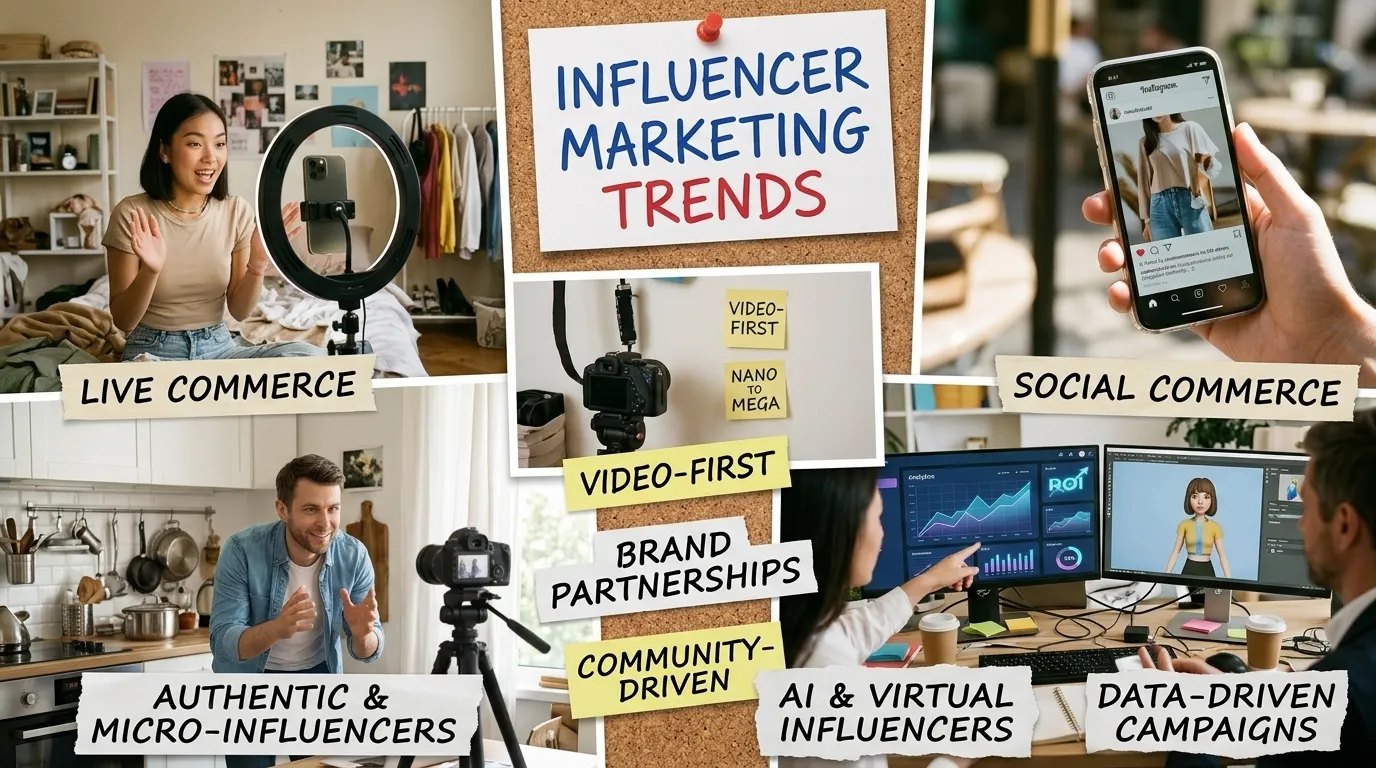 Influencer marketing enables brands to connect with established communities through creators who have developed trust with their audiences. Businesses can work with large creators to increase awareness or collaborate with smaller niche influencers whose followers closely match their target customers. The right partnership depends on audience relevance, credibility, content quality, and campaign objectives rather than follower numbers alone.
Brands should establish clear expectations before launching a campaign. These may include the content format, publishing schedule, key messages, compensation, disclosure requirements, and performance indicators. Marketers should also verify that an influencer’s audience is genuine and that their communication style aligns with the brand.
Current digital marketing trends favor authentic partnerships and measurable outcomes. Instead of evaluating success only through likes and views, businesses can track referral traffic, discount-code usage, qualified leads, and sales. Long-term relationships with relevant creators may also produce more consistent messaging and stronger audience familiarity than isolated promotional posts.
Digital Advertising Trends
Digital advertising allows businesses to reach specific audiences through search engines, social networks, display advertising, video platforms, and other online channels. Campaign targeting, creative testing, and conversion tracking help marketers understand which messages produce the best results. However, successful advertising requires more than increasing the budget; it depends on matching the right offer with the right audience.
Among the most significant digital marketing trends is the increased use of automated bidding, AI-assisted creative development, and campaign optimization. These technologies can help advertisers manage large campaigns and identify opportunities for improvement. Nevertheless, marketers must monitor performance carefully, review targeting settings, and ensure that automated systems support genuine business objectives.
Businesses can also evaluate traditional channels alongside digital advertising when appropriate. For example, television advertising may support broad brand awareness, particularly for companies targeting mass audiences. Exploring the benefits of TV advertising can help marketers understand how television might complement online campaigns. Measuring website visits, branded searches, and other relevant indicators can provide additional insight into cross-channel performance.
Marketing Automation Tools
Marketing automation helps businesses manage repetitive activities, nurture leads, and communicate with customers at appropriate times. Common applications include welcome emails, abandoned-cart reminders, customer onboarding, lead scoring, and post-purchase follow-ups. These workflows can save time while ensuring that customers receive relevant information throughout their relationship with a brand.
The latest digital marketing trends emphasize personalized automation rather than sending identical messages to every subscriber. Businesses can organize audiences according to interests, purchase history, engagement, and lifecycle stage. For example, a new subscriber might receive educational content, while an existing customer might receive product recommendations or helpful usage guidance.
Choosing the right automation platform depends on business size, budget, technical requirements, and existing systems. Before investing in advanced software, companies should establish clear workflows, maintain accurate customer data, and define measurable objectives. They should also provide appropriate consent options and respect applicable privacy requirements. Automation is most effective when it makes communication more helpful rather than overwhelming customers with excessive messages.
Future of Digital Marketing
 The future of digital marketing will likely involve deeper integration of AI, more personalized customer experiences, evolving search technologies, interactive content, and increasingly sophisticated measurement. Businesses will need to adapt as platforms change their features, consumers develop new expectations, and privacy requirements influence how marketing data can be collected and used.
These digital marketing trends also create opportunities for entrepreneurs and smaller businesses. A focused niche, helpful content, strong customer relationships, and efficient marketing tools can help a company compete without requiring a massive advertising budget. Entrepreneurs exploring new opportunities can review these profitable online business ideas to discover business models that may benefit from a well-planned digital presence.
Long-term success will depend on experimentation, customer trust, and continuous improvement. Businesses should test new channels carefully, measure results against meaningful objectives, and invest in strategies that demonstrate value. Working with an experienced digital marketing company may also help organizations develop coordinated campaigns, improve their online visibility, and manage multiple marketing channels more effectively.
Ultimately, digital marketing is not simply about adopting every new technology. It is about understanding customers, communicating value, and choosing the right tools to achieve specific goals. Companies that combine innovation with useful content, ethical practices, and consistent measurement will be better positioned to adapt to the changing digital environment.
Conclusion
The future of digital marketing depends on innovation, adaptability, and a strong understanding of customer needs. From artificial intelligence and search engine optimization to social media, content creation, influencer partnerships, and marketing automation, businesses have more opportunities than ever to connect with their target audiences. Following digital marketing trends can help companies improve their online visibility, attract potential customers, and build lasting relationships. However, success requires more than adopting the latest tools; it also involves creating valuable content, maintaining customer trust, and measuring results consistently. Businesses that combine modern technology with effective marketing strategies and continuous improvement will be better prepared to compete in the evolving digital landscape. By focusing on customer satisfaction and sustainable growth, brands can turn emerging opportunities into long-term success in 2026 and beyond.
FAQ
1. What are the most important digital marketing trends in 2026?
The most important developments include AI-assisted marketing, personalized customer experiences, short-form video, evolving SEO practices, influencer partnerships, marketing automation, and data-driven advertising. Businesses should prioritize the trends that best match their audience and objectives.
2. How does AI help in digital marketing?
AI can support content research, audience segmentation, predictive analytics, customer service, advertising optimization, and repetitive marketing tasks. Human review remains important to maintain accuracy, originality, and brand consistency.
3. Is SEO still important in 2026?
Yes. SEO helps businesses attract relevant organic traffic by improving website usability, publishing helpful content, addressing search intent, and maintaining strong technical foundations. It remains a valuable long-term marketing investment.
4. Which social media platform is best for marketing?
The best platform depends on the target audience, industry, content format, and business goals. Companies should research where their customers are active and test relevant platforms before committing significant resources.
5. How often should businesses publish content?
There is no universal publishing schedule. Businesses should choose a realistic frequency that allows them to produce useful, accurate, and consistent content. Quality, relevance, and audience engagement matter more than publishing volume alone.
6. Is influencer marketing effective for small businesses?
Yes. Small businesses can collaborate with niche creators whose audiences closely match their target customers. Clear objectives, authentic partnerships, and appropriate performance tracking help improve campaign effectiveness.
7. What is marketing automation used for?
Marketing automation manages tasks such as email sequences, lead nurturing, customer onboarding, abandoned-cart reminders, and follow-up communications. It helps businesses save time and deliver more relevant messages.
8. How can businesses measure digital marketing success?
Businesses can track metrics such as qualified leads, conversion rates, customer acquisition costs, return on advertising spend, organic traffic, and customer retention. The most useful metrics depend on the campaign’s objectives.
9. How much should a business spend on digital marketing?
The appropriate budget depends on revenue, business objectives, industry competition, target audience, and available resources. Businesses should establish measurable goals, test campaigns with manageable budgets, and increase investment when results justify it.
10. How can businesses prepare for the future of digital marketing?
Businesses should continue learning, experiment with relevant technologies, create helpful content, protect customer data, and regularly review campaign performance. Following digital marketing trends can help organizations identify opportunities and adapt their strategies as customer behavior and technology evolve.