How Emotion Marketing Transforms Customers Into Loyal Fans
Emotion marketing focuses on feelings over facts, helping brands build trust, loyalty, and lasting customer relationships through authentic emotional connections.
Logic tells us what we need. Emotion tells us what we want. And while customers might think they make decisions based on facts and features, neuroscience reveals a different story—our emotions drive over 95% of purchasing decisions, with logic simply providing the justification afterward.
This insight has revolutionized how smart marketers approach their craft. Instead of bombarding audiences with product specifications and competitive advantages, successful brands tap into the emotional triggers that motivate action. They understand that people don’t buy products; they buy feelings, aspirations, and solutions to their deepest needs.
Emotion marketing isn’t about manipulation or cheap tricks. It’s about creating genuine connections that resonate with your audience’s values, fears, dreams, and desires. When executed authentically, it transforms casual buyers into passionate advocates who choose your brand not just once, but repeatedly—even when competitors offer similar products at lower prices.
The Science Behind Emotional Decision-Making
Harvard Business School professor Gerald Zaltman discovered that 95% of purchasing decisions happen subconsciously, driven by emotional responses rather than rational analysis. This finding aligns with neuroscientist Antonio Damasio’s research on patients with brain damage affecting their emotional processing—these individuals struggled to make even simple decisions, despite their logical reasoning remaining intact.
The emotional brain processes information 20,000 times faster than the rational brain. When customers encounter your brand, they form an emotional impression within milliseconds, long before conscious thought kicks in. This initial emotional response becomes the foundation for all subsequent interactions with your brand.
Functional magnetic resonance imaging (fMRI) studies show that when people evaluate brands, the areas of the brain associated with personal identity and emotions activate more strongly than those linked to product attributes. This explains why customers often struggle to articulate exactly why they prefer one brand over another—their decision isn’t based on features they can easily verbalize.
Core Emotions That Drive Consumer Behavior
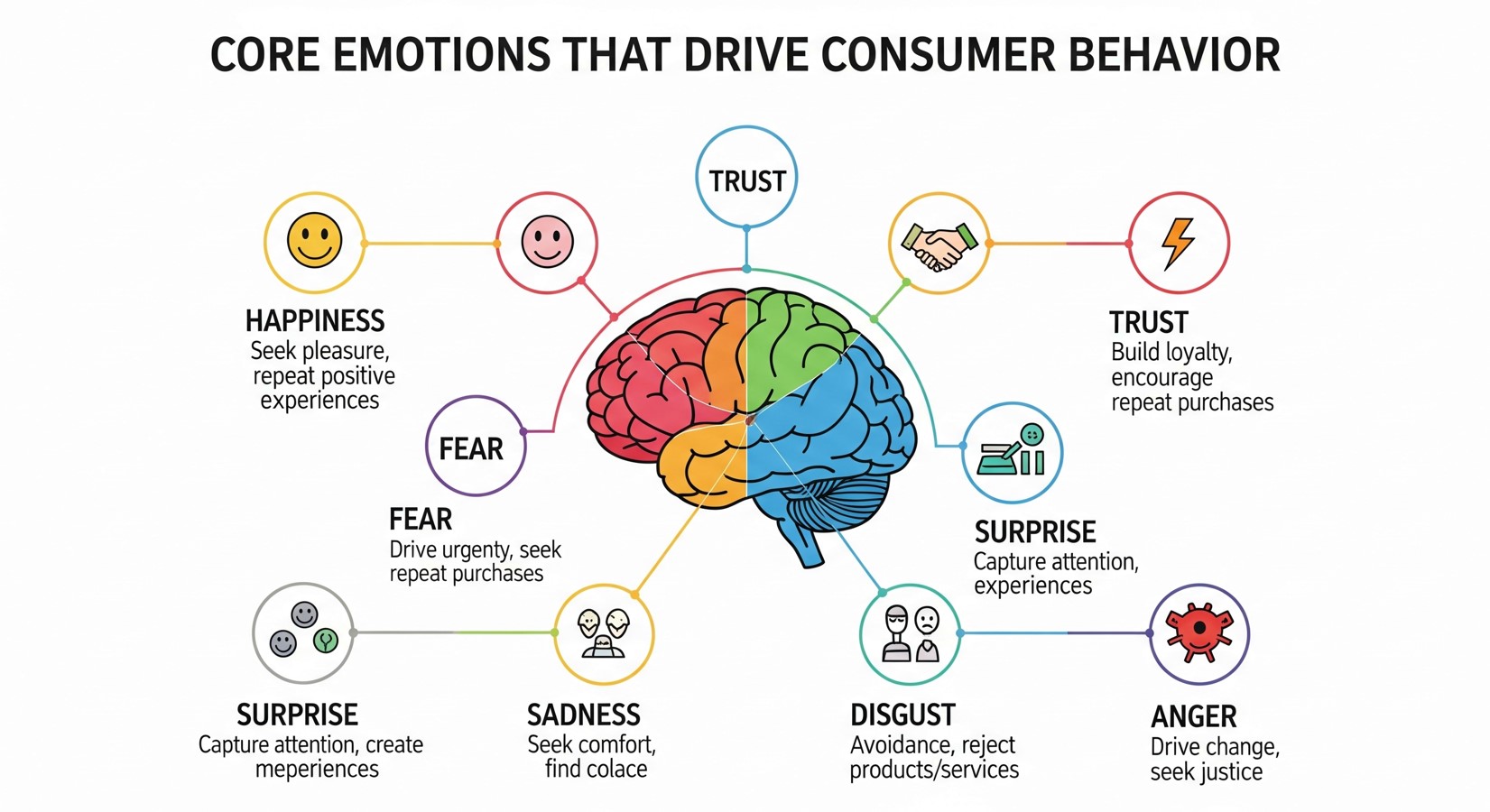
Understanding which emotions motivate your target audience helps you craft messages that resonate on a visceral level. While humans experience a complex spectrum of feelings, several core emotions consistently drive purchasing decisions.
Fear and Security
Fear remains one of the most powerful motivators in marketing. This doesn’t mean scaring customers, but rather addressing their genuine concerns and positioning your product as the solution that provides security and peace of mind.
Insurance companies excel at fear-based marketing by highlighting potential risks—car accidents, house fires, medical emergencies—then positioning their policies as protection against financial ruin. Cybersecurity firms use similar tactics, emphasizing data breaches and identity theft to drive demand for their services.
The key lies in balancing fear with hope. Present the problem your audience faces, then immediately offer your solution as the path to safety and security.
Joy and Happiness
Positive emotions create strong associations with brands and encourage sharing behavior. Coca-Cola’s “Share a Coke” campaign tapped into joy by personalizing bottles with individual names, transforming a simple beverage purchase into a moment of personal connection and delight.
Brands that consistently associate themselves with happiness often see increased customer loyalty and word-of-mouth marketing. People naturally want to share positive experiences, making joy a emotion that amplifies your marketing reach organically.
Pride and Achievement
Luxury brands frequently tap into pride and status, positioning their products as symbols of success and achievement. Apple’s marketing doesn’t focus on technical specifications—it emphasizes how their products make users feel creative, innovative, and part of an exclusive community.
Athletic brands like Nike build entire campaigns around achievement and personal triumph. Their “Just Do It” slogan doesn’t sell shoes; it sells the feeling of overcoming obstacles and reaching your potential.
Belonging and Connection
Humans are social creatures with an innate need to belong. Brands that successfully create communities around their products often enjoy fierce customer loyalty. Harley-Davidson doesn’t just sell motorcycles—they sell membership in a brotherhood of rebels and free spirits.
Social proof leverages this need for belonging by showing that others like your customers have chosen your brand. Testimonials, user-generated content, and community features all tap into the desire to be part of something bigger.
Strategies for Implementing Emotion Marketing
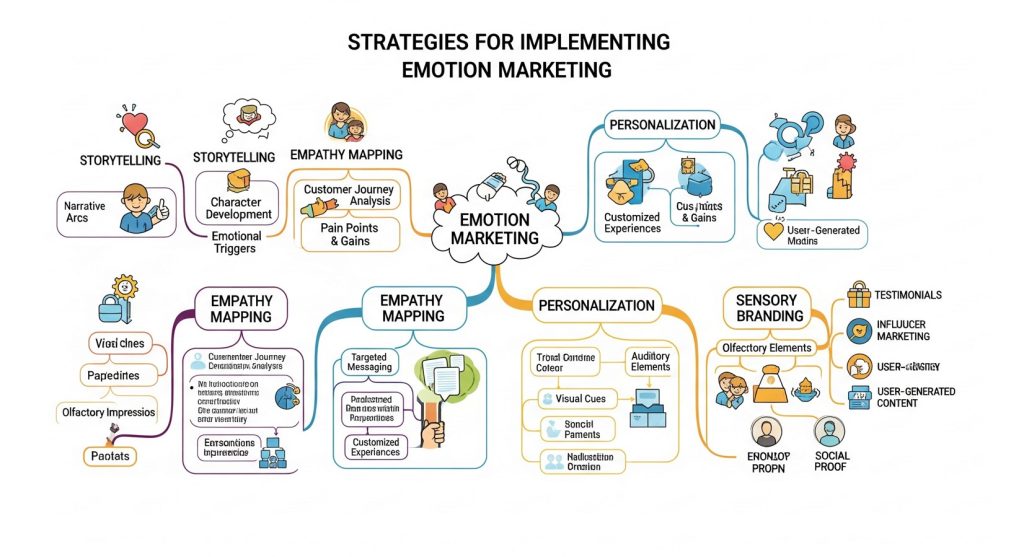
Successful emotion marketing requires a strategic approach that aligns emotional triggers with your brand values and customer needs.
Storytelling That Resonates
Stories activate multiple areas of the brain simultaneously, making them incredibly powerful for emotional engagement. Campaigns that leverage the role of storytelling in emotional marketing show higher engagement and conversion.
Dove’s “Real Beauty” campaign tells stories of women discovering their own beauty, shifting focus from product features to emotional transformation. These narratives create deep connections that transcend traditional advertising.
Effective brand stories follow classic narrative structures: introduce a relatable character, present a challenge they face, and show how your product or service helps them overcome it. The key is ensuring your audience can see themselves in the story.
Visual and Sensory Appeal
Emotions often bypass language entirely, making visual and sensory elements crucial for emotional marketing. Colors, imagery, music, and even scents can trigger powerful emotional responses.
Red creates urgency and excitement—perfect for clearance sales and call-to-action buttons. Blue suggests trust and reliability, explaining why financial institutions favor this color. Green implies growth and health, making it popular among organic and sustainable brands.
High-quality imagery that shows people experiencing positive emotions while using your product creates aspirational associations. Videos that capture genuine moments of joy, surprise, or satisfaction often perform better than polished but emotionally sterile content.
Personalization and Relevance
Generic messages rarely create emotional connections. Personalization makes customers feel seen and understood, increasing the emotional impact of your marketing.
This extends beyond using someone’s name in an email. True personalization involves understanding your audience’s specific challenges, goals, and values, then tailoring your message accordingly. A fitness app might send different motivational messages to someone training for a marathon versus someone trying to lose weight after pregnancy.
Social Proof and Community Building
Leverage user-generated content, customer reviews, and community engagement to reinforce belonging and trust. Successful campaigns often explore how to use emotional benefits in marketing to build stronger connections.
Create opportunities for customers to connect with each other around shared interests or values. Facebook groups, user forums, and brand-sponsored events can strengthen emotional bonds with your brand while fostering customer relationships.
Measuring Emotional Engagement
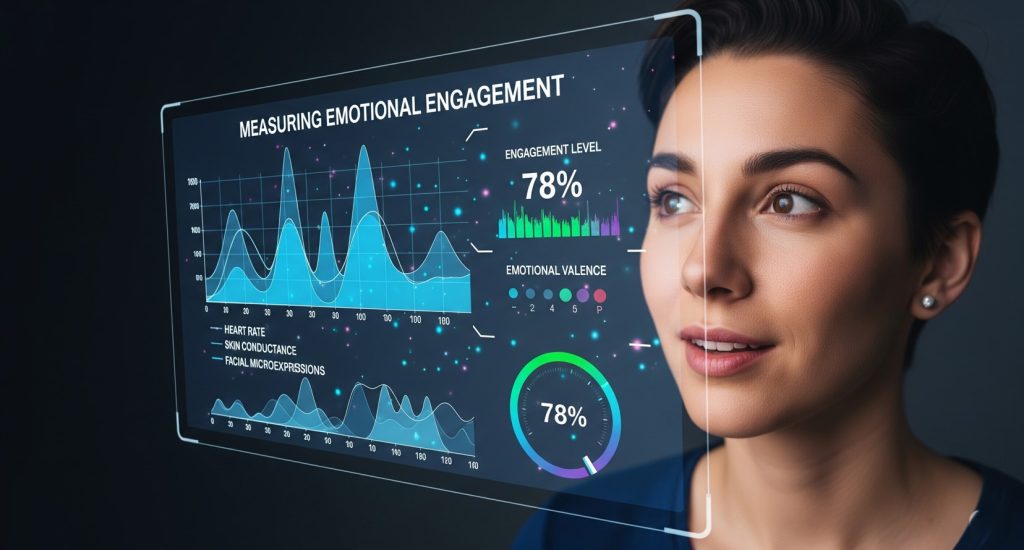
Traditional metrics like click-through rates and conversion rates don’t capture emotional engagement. To truly understand how your emotion marketing performs, you need different measurement approaches.
Sentiment Analysis
Monitor social media mentions, reviews, and comments to gauge the emotional tone surrounding your brand. Positive sentiment indicates successful emotional connections, while negative sentiment reveals areas for improvement.
Advanced sentiment analysis tools can identify specific emotions—joy, anger, surprise, disgust—providing nuanced insights into how your audience feels about different aspects of your brand.
Engagement Depth
Look beyond surface-level metrics to understand how deeply your audience engages with your content. Time spent reading blog posts, video completion rates, and social media shares indicate emotional investment in your message.
Comments and user-generated content provide qualitative insights into emotional responses. Pay attention to the language customers use when describing your brand—emotional words suggest successful connection.
Brand Loyalty Metrics
Emotional connections drive loyalty, so track metrics like repeat purchase rates, customer lifetime value, and Net Promoter Score. Customers who feel emotionally connected to your brand are more likely to remain loyal even when competitors offer better deals.
Survey customers about their emotional associations with your brand. Ask questions like “How does our brand make you feel?” and “What emotions do you associate with our products?” to gather direct emotional feedback.
Common Pitfalls to Avoid
Emotion marketing can backfire when executed poorly. Avoid these common mistakes that can damage your brand reputation and alienate customers.
Inauthentic Emotional Appeals
Customers quickly spot fake emotion. If your brand values don’t align with your emotional messaging, the disconnect will be obvious. Don’t claim to care about environmental issues if your business practices suggest otherwise.
Authenticity requires consistency across all touchpoints. Your emotional marketing messages should align with your customer service approach, product quality, and company culture.
Overwhelming or Manipulative Tactics
Heavy-handed emotional manipulation creates negative associations with your brand. Fear-based marketing should address genuine concerns, not manufacture artificial anxiety. Emotional appeals should feel helpful and supportive, not pushy or desperate.
Respect your audience’s intelligence and emotions. The goal is creating genuine connections, not exploiting vulnerabilities for short-term sales.
Cultural Insensitivity
Emotions are deeply tied to cultural values and experiences. What resonates with one audience might offend another. Research cultural norms and values before launching emotional campaigns in new markets.
Test emotional appeals with diverse focus groups to identify potential cultural blind spots. What seems universal to your team might actually be culturally specific.
Emotional Marketing Across the Customer Journey
Emotions don’t influence just one moment of decision-making; they shape the entire customer journey from first exposure to long-term loyalty. Many brands focus emotional marketing only at the top of the funnel, using inspiring ads or attention-grabbing stories to spark interest. However, the most effective emotional strategies are woven into every stage of the customer experience, reinforcing trust, confidence, and satisfaction over time.
At the awareness stage, emotion acts as a filter. Consumers are overwhelmed with information, so they instinctively pay attention to messages that make them feel understood. A brand that acknowledges a customer’s frustration, ambition, or uncertainty immediately stands out. This emotional recognition creates a sense of relevance, signaling that the brand “gets” them before any product details are even introduced.
As customers move into the consideration stage, emotions shift from curiosity to reassurance. This is where empathy and credibility matter most. Educational content that addresses doubts, success stories that reflect real-life challenges, and transparent communication all help reduce anxiety and build confidence. Customers may compare features and pricing at this stage, but emotionally they are asking a deeper question: “Can I trust this brand to deliver on its promise?”
During the purchase stage, emotional clarity becomes critical. Confusion, hesitation, or fear of making the wrong choice can derail conversions. Brands that simplify decision-making, reinforce positive outcomes, and offer supportive messaging help customers feel secure and confident. Clear guarantees, reassuring language, and a frictionless checkout experience reduce emotional resistance and make the final decision feel safe rather than risky.
After the purchase, emotions determine whether a customer becomes loyal or disengaged. Follow-up communication, onboarding experiences, and customer support interactions either reinforce satisfaction or introduce regret. A thoughtful welcome message, proactive help, or a simple acknowledgment of the customer’s choice can strengthen positive emotions and reduce buyer’s remorse. Over time, these consistent emotional reinforcements transform customers into advocates who feel personally invested in the brand’s success.
When emotion marketing is aligned across the entire journey, it stops being a tactic and becomes a brand experience. Customers don’t just remember what you sold them; they remember how you made them feel at every step, which ultimately determines whether they return, recommend, or walk away.
Building Long-Term Emotional Connections

Emotion marketing isn’t a one-time campaign—it’s an ongoing relationship-building strategy that requires consistent attention and refinement. Emphasizing participatory asset mapping for community growth can help brands create sustainable, emotionally connected ecosystems.
Develop emotional personas alongside your traditional customer personas. Understand not just what your customers do, but how they feel about their challenges and aspirations. This emotional insight should inform every aspect of your marketing strategy.
Create emotional touchpoints throughout the customer journey. From first awareness through post-purchase support, every interaction should reinforce positive emotional associations with your brand.
Regularly audit your marketing materials for emotional impact. Are you consistently triggering the emotions that drive action? Are your messages authentic and aligned with your brand values? Does your visual identity support your emotional positioning?
Making Emotion Marketing Work for Your Brand
Successful emotion marketing starts with deep customer understanding. Conduct surveys, interviews, and focus groups to uncover the emotions that drive your audience’s decisions. What keeps them awake at night? What makes them feel proud? What do they aspire to become?
Map these emotional insights to your customer journey. Identify moments when customers might feel frustrated, excited, confused, or delighted, then craft messaging that acknowledges and addresses these emotions.
Start small with emotion marketing experiments. Test emotional headlines against rational ones. Try storytelling approaches versus feature-focused content. Measure not just conversion rates, but engagement depth and customer feedback.
Remember that emotion marketing amplifies your existing brand experience. If your product disappoints or your customer service frustrates, emotional marketing might initially increase sales but ultimately damage your reputation when reality doesn’t match expectations.
The most successful emotion marketing feels natural and helpful rather than forced or manipulative. When you genuinely understand and care about your customers’ emotional needs, authentic emotional connections follow naturally—creating the foundation for long-term business success built on customer loyalty rather than constant acquisition.
Frequently Asked Questions (FAQ)
Is emotion marketing effective for B2B companies, or is it only for B2C brands?
Emotion marketing is just as effective in B2B environments as it is in consumer markets. While B2B decisions involve multiple stakeholders and longer sales cycles, those decisions are still made by humans influenced by fear, confidence, pride, and trust. Executives may justify purchases with ROI and efficiency metrics, but their emotional drivers often include risk reduction, professional credibility, and the desire to make the “right” decision for their organization.
How can brands use emotional marketing without being manipulative?
The difference lies in intent and execution. Ethical emotion marketing addresses real customer problems and emotions rather than creating artificial fear or pressure. When brands genuinely aim to help customers feel confident, secure, or inspired, emotional messaging feels supportive rather than exploitative. Transparency, honesty, and alignment with actual product value are what keep emotional marketing authentic.
Can emotional marketing work for low-cost or everyday products?
Yes, and in many cases it is essential. Everyday products often lack strong feature differentiation, which makes emotional positioning even more important. Brands selling commodities like snacks, cleaning supplies, or household items rely heavily on emotions such as comfort, nostalgia, convenience, or family connection to stand out in crowded markets.
How long does it take to see results from emotion marketing?
Emotional marketing can produce short-term engagement boosts, but its greatest value appears over time. Building trust, loyalty, and emotional attachment is a gradual process. While campaigns may generate immediate attention, the true impact is reflected in repeat purchases, brand preference, and long-term customer relationships rather than instant conversions alone.
What role does data play in emotion marketing?
Data is essential for understanding which emotions resonate and when. Behavioral analytics, customer feedback, sentiment analysis, and engagement metrics help brands validate emotional assumptions and refine their messaging. Emotion marketing is most effective when creativity and empathy are guided by real customer insights rather than guesswork.
How can small businesses implement emotion marketing with limited budgets?
Small businesses often have an advantage because they can be more personal and authentic. Sharing founder stories, highlighting real customer experiences, and speaking directly to local or niche audiences creates emotional impact without large advertising budgets. Consistency and sincerity matter more than high production value when building emotional connections.