The Undeniable Power of Emotions in Marketing
Emotional marketing uses feelings to connect with customers, build loyalty, and drive action. Storytelling, visuals, and understanding your audience are key for effective, authentic campaigns.
When we think about making a purchase, we often believe we’re acting logically. We compare features, weigh the pros and cons, and look at the price tag. But what if the real driver behind our decisions is something less tangible? What if our feelings, not our thoughts, are in the driver’s seat?
Marketing has long understood a fundamental truth about human nature: emotions are powerful motivators. While logic and reason play a part, it’s the emotional connection a consumer feels with a brand that often seals the deal. From the joy of unboxing a new phone to the sense of security from an insurance ad, feelings shape our perceptions and guide our actions.
This post will explore the critical role of emotions in marketing. We will look at the science behind why emotional appeals work, examine how different emotions can be used to influence consumer behavior, and provide practical examples of brands that have mastered the art of emotional connection. By the end, you’ll have a clearer understanding of how to build stronger, more resonant marketing campaigns.
Why We Buy With Our Hearts, Not Our Heads
The idea that emotions drive purchasing decisions isn’t just a marketing theory; it’s backed by neuroscience. Harvard Business School professor Gerald Zaltman suggests that 95% of our purchase decisions are subconscious, driven by deep-seated emotional and cognitive biases. Insights from emotions in the stock market even show how emotional impulses affect decision-making in finance.
Think about it: Why do people choose a premium brand like Apple over a competitor with similar specs? It’s not just about the processor speed. It’s about the feeling of creativity, innovation, and belonging that the brand cultivates. Why does a donation appeal featuring a single, compelling story outperform one filled with statistics? Because the story of one person’s struggle elicits empathy in a way that abstract numbers cannot.
Emotional marketing works because it creates a shortcut to our decision-making process. When a brand makes us feel something—whether it’s happiness, trust, or even a sense of urgency—it forges a mental and emotional imprint. This connection makes the brand more memorable and desirable, influencing our choices long before we start comparing features.
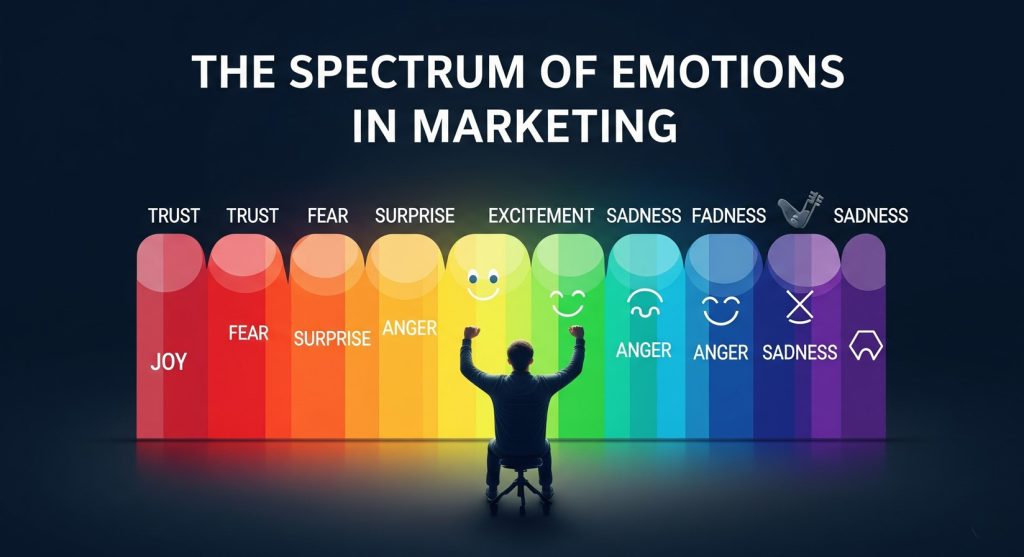
The Spectrum of Emotions in Marketing
Not all emotions are created equal, and different feelings can be used to achieve different marketing goals. By understanding the psychological impact of various emotions, marketers can craft messages that resonate on a deeper level.
Happiness and Joy
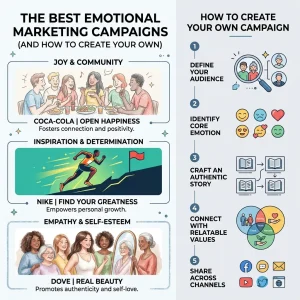
Happiness is one of the most powerful and sought-after emotions. Brands that associate themselves with joy and positivity create a powerful “feel-good” factor that makes consumers want to engage. Marketing campaigns that evoke happiness are highly shareable, as people naturally want to spread positive feelings to others.
Example: Coca-Cola’s “Open Happiness” Campaign
For decades, Coca-Cola has positioned itself not just as a beverage but as a catalyst for happiness, connection, and shared moments. Their campaigns consistently feature smiling faces, friendships, and celebratory events, linking the simple act of drinking a Coke with pure joy. This strategy has made Coca-Cola a global symbol of positivity.
Trust and Security
For industries like finance, healthcare, and insurance, building trust is paramount. Marketing that evokes feelings of safety, security, and reliability helps consumers feel confident in their decisions. These campaigns often use calming colors, reassuring language, and testimonials from trusted figures to build credibility.

Example: Allstate’s “You’re in Good Hands” Slogan
Allstate’s long-running campaign, featuring a reassuring spokesman and the iconic slogan, is a masterclass in building trust. The message is simple and powerful: in times of crisis, Allstate provides security and peace of mind. This emotional appeal has made them a trusted name in a highly competitive industry.
Fear and Urgency
While it must be used ethically and carefully, fear can be a potent motivator. Marketers often use the “fear of missing out” (FOMO) to drive immediate action. Limited-time offers, scarcity warnings (“only 3 left in stock!”), and social proof (“200 people bought this today”) all tap into our fear of being left behind. Fear can also be used to highlight the negative consequences of inaction, such as in public health campaigns against smoking.
Example: The World Wildlife Fund (WWF)
WWF campaigns leverage imagery to create urgency and encourage donations. This relates to research on market emotion and its impact on trading.
Surprise and Delight
Unexpected positive experiences can create a lasting impression and foster strong brand loyalty. When a brand goes above and beyond to surprise and delight its customers, it creates a memorable moment that people are eager to share. This can be anything from a handwritten thank-you note in an order to an unexpected freebie. For ideas, see our guide on e-commerce marketing examples that actually work.
Example: Zappos’ Customer Service
Online shoe retailer Zappos built its empire on legendary customer service. Stories abound of their representatives going to extraordinary lengths for customers, like sending flowers to a woman whose mother had passed away. These acts of kindness create powerful emotional bonds and generate incredible word-of-mouth marketing.
The Neuroscience Behind Emotional Marketing
Emotions are not just abstract concepts—they are deeply rooted in brain chemistry. Neuroscientific research shows that emotional stimuli trigger activity in the amygdala, the part of the brain responsible for processing feelings and forming memories. When a brand evokes a strong emotional response, this neurological activation strengthens memory retention, making the brand more memorable.
Marketing messages that trigger emotions like excitement, empathy, or nostalgia are more likely to be encoded in long-term memory than purely informational content. This explains why emotionally resonant advertisements often outperform purely rational campaigns. By leveraging these insights, marketers can design campaigns that stick in consumers’ minds and influence decisions long after initial exposure.
Emotional Marketing Across Different Platforms
Different marketing channels offer unique opportunities to evoke emotions.
Social Media: Platforms like Instagram, TikTok, and Facebook thrive on emotionally charged content. Short videos, behind-the-scenes glimpses, and authentic user-generated content create immediacy and relatability. Social media campaigns that tap into humor, nostalgia, or inspiration tend to go viral more often than purely informational posts.
Email Marketing: Emails that tell a story or celebrate a milestone with the subscriber evoke positive feelings. Thoughtful personalization, such as birthday discounts or anniversary messages, creates emotional touchpoints that enhance customer loyalty.
Video Marketing: Video is particularly effective for emotional storytelling because it combines visuals, audio, and narrative. For example, brand videos that show customer experiences or social impact initiatives create empathy and connection, increasing engagement and sharing. Platforms like YouTube or short-form TikTok videos allow marketers to deliver these emotional narratives directly to a receptive audience.
Measuring the Impact of Emotional Marketing
While emotions may seem intangible, their effects can be measured with modern marketing analytics. Engagement metrics such as likes, shares, comments, and watch time are strong indicators of emotional resonance. Additionally, surveys and sentiment analysis can quantify how audiences feel about a brand after interacting with campaigns.
Conversion metrics, including repeat purchases or subscription sign-ups, often correlate with emotional engagement. For instance, customers who feel a deep connection with a brand are more likely to become loyal advocates. By combining qualitative feedback with quantitative data, marketers can refine campaigns to maximize emotional impact and ROI.
Emotional Marketing in the Age of Digital Transformation

The rise of digital channels has changed how emotions influence consumer behavior. Unlike traditional media, digital marketing allows brands to interact directly with consumers in real time, providing opportunities to create personalized emotional experiences.
For example, retargeting ads that reflect a user’s previous engagement or personalized email campaigns that acknowledge past purchases can evoke feelings of recognition and loyalty. Similarly, interactive content—quizzes, polls, and virtual experiences—encourages emotional participation, making consumers feel seen, valued, and engaged with the brand.
Digital platforms also allow brands to respond immediately to customer emotions, whether through social media interactions, live chat support, or community engagement. This immediacy strengthens the emotional bond between brand and consumer, creating a sense of connection that is difficult to achieve in traditional media alone.
Using Nostalgia to Strengthen Brand Connection
Nostalgia links the past to the present, creating comfort and familiarity. Brands can revive classic campaigns or retro product designs to deepen emotional resonance. This is an important tactic for marketers studying how emotion influences consumer behavior.
Campaigns that reference past trends, iconic cultural moments, or historical brand achievements can transport consumers back to meaningful times in their lives. For instance, reintroducing retro product designs or reviving classic advertisements can make long-time customers feel valued while attracting younger audiences who perceive the brand as authentic and storied.
By tapping into nostalgia thoughtfully, marketers can strengthen emotional attachment and differentiate their brand in a crowded marketplace.
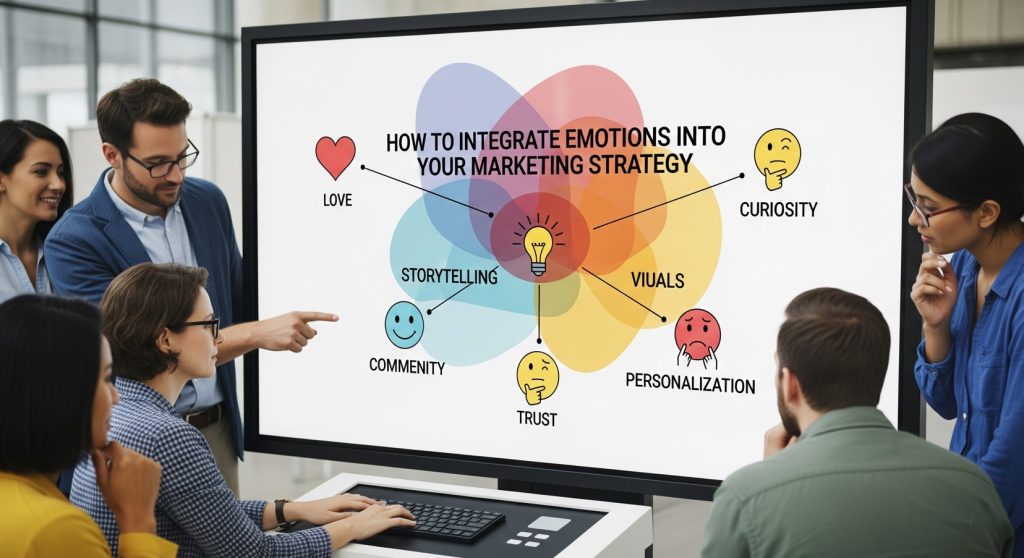
How to Integrate Emotions into Your Marketing Strategy
Harnessing the power of emotions marketing requires more than just adding a smiling face to your ad. It requires a thoughtful, strategic approach.
Understand Your Audience Deeply
To evoke the right emotions, you first need to understand what your audience cares about. What are their hopes, fears, and aspirations? What challenges do they face? Use market research, surveys, and customer interviews to build detailed buyer personas. The more you know about your audience, the better you can tailor your message to resonate with their emotional landscape.
Tell Compelling Stories
Humans are wired for stories. A good story can transport us, make us feel part of something bigger, and create a powerful emotional response. Instead of just listing product features, tell the story behind your brand. Share customer success stories. Create narratives that your audience can see themselves in.
Use Visuals and Colors Strategically
Visuals are processed much faster than text and have a direct line to our emotions. Use images and videos that reflect the emotion you want to evoke. Color psychology also plays a crucial role. For example, blue often conveys trust and calmness, while red can signify excitement or urgency. Choose a color palette that aligns with your brand’s emotional tone.
Build a Community
People have an innate desire to belong. By creating a community around your brand, you can foster a sense of connection and loyalty. This can be done through social media groups, forums, or exclusive events. When customers feel like they are part of a tribe, their emotional investment in the brand deepens significantly.
Paving the Way for Deeper Connections
In a marketplace crowded with endless choices, the brands that win are the ones that connect. While features and price points are important, they are rarely the deciding factor. The true differentiator is the ability to make your audience feel something.
By understanding the principles of emotions marketing, you can move beyond transactional relationships and build genuine, lasting connections with your customers. Start by identifying the core emotion you want your brand to own, and then weave that feeling into every aspect of your marketing, from your ad campaigns to your customer service interactions. When you speak to the heart, the mind will follow.
Frequently Asked Questions (FAQ)
Can emotional marketing work for any industry?
Yes. Every industry can leverage emotions—whether it’s tech brands inspiring creativity, healthcare promoting trust and reassurance, or nonprofits fostering empathy. The key is understanding your audience’s core emotional triggers.
How do I know which emotion to target?
Audience research is essential. Surveys, focus groups, and social listening reveal what matters most to your customers. Once you understand their motivations, you can craft campaigns that resonate emotionally.
Is emotional marketing more effective than logical marketing?
Emotional marketing often drives action faster and more memorably than purely rational messaging. However, combining emotion with clear product benefits creates the most persuasive campaigns.
How can small businesses use emotional marketing on a budget?
Storytelling through social media, customer testimonials, and authentic behind-the-scenes content is low-cost yet highly effective. Even small gestures like personalized messages can create strong emotional connections.
Can emotional marketing backfire?
Yes. Misaligned messaging, insincerity, or overuse of fear tactics can damage trust. Emotional marketing must be authentic, aligned with brand values, and sensitive to audience perception.
How do I measure the success of emotional marketing?
Engagement metrics (shares, comments, likes), sentiment analysis, repeat purchases, and customer retention rates all indicate emotional resonance. Surveys and feedback can provide qualitative insights into consumer perception.