Emotional Marketing for Real Estate: Strategies to Connect With Property Buyers
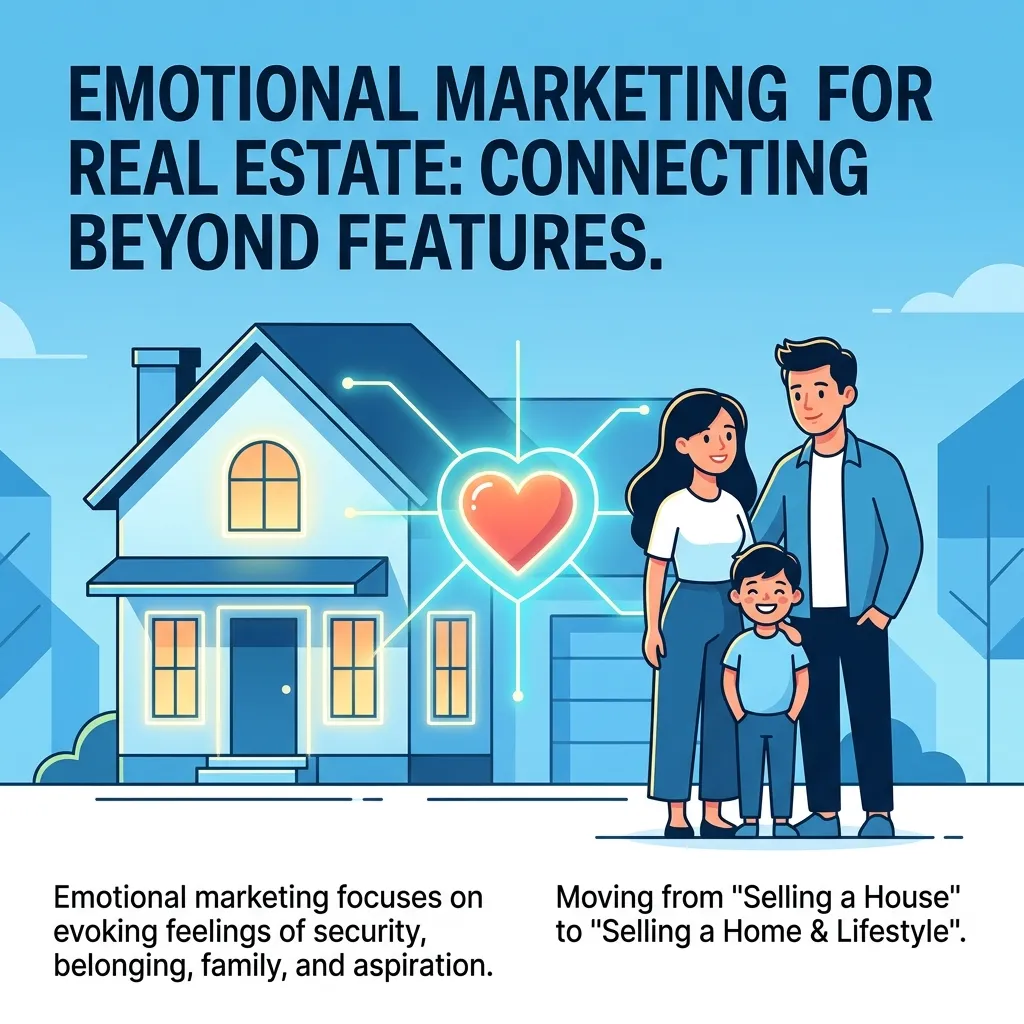
Emotional marketing for real estate helps agents, brokers, and property brands connect with buyers beyond price, location, and features. By using emotions such as security, belonging, pride, excitement, trust, and nostalgia, real estate marketers can create stronger property stories, improve engagement, build trust, and encourage qualified prospects to take action.
Buying a home is rarely a purely logical decision. Buyers may compare prices, locations, floor plans, amenities, and investment potential, but emotions often influence how they feel about a property and whether they can imagine themselves living there. This is why emotional marketing for real estate has become an important approach for agents, brokers, developers, and property marketers.
A house is more than walls, rooms, and square footage. For many buyers, it represents security, family, independence, achievement, comfort, identity, or a new beginning. Real estate marketing that communicates these emotional benefits can create a stronger connection than a listing that simply presents features.
Effective emotional marketing for real estate does not mean manipulating buyers or exaggerating promises. Instead, it means understanding what people genuinely care about and communicating the human value behind a property.
This guide explains how emotional marketing works in real estate, which emotions matter most, how to create emotionally engaging property campaigns, and how agents can use storytelling, visuals, social proof, and digital channels to build stronger buyer relationships.
What Is Emotional Marketing for Real Estate?
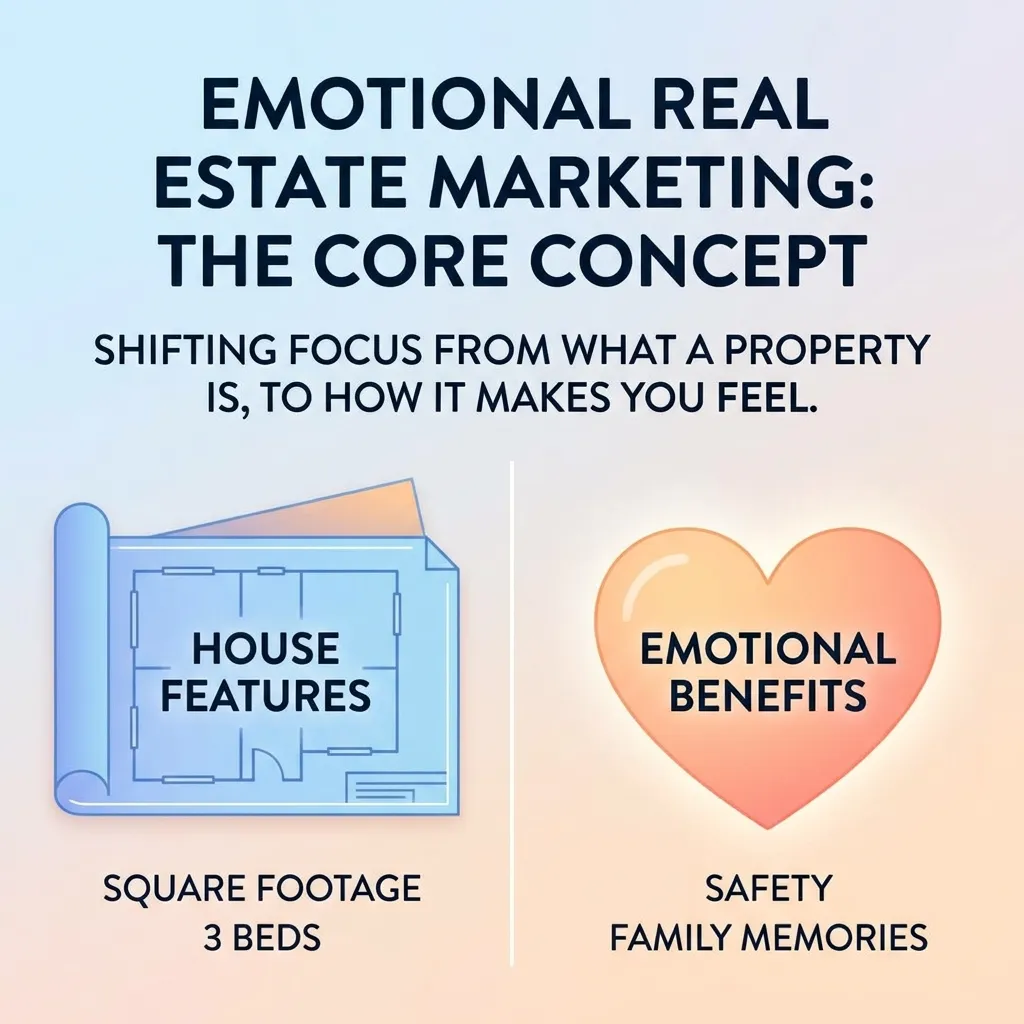
Emotional marketing for real estate is the practice of using emotional needs, aspirations, experiences, and motivations to communicate the value of properties to potential buyers.
Traditional property marketing might say:
- Three bedrooms
- Two bathrooms
- Modern kitchen
- Large backyard
- Close to schools
- Secure parking
These details are important, but they do not necessarily create an emotional picture.
An emotional approach could transform the same information into a story:
“Imagine Sunday mornings with your family gathered around the kitchen table, children playing safely in the backyard, and enough space to create memories for years to come.”
The features remain relevant, but the message connects them to a desired lifestyle.
This approach aligns with broader principles discussed in the benefits of emotional marketing, where emotions can influence attention, perception, decision-making, and relationships with brands.
Why Emotional Marketing Matters in Real Estate
Real estate purchases involve significant financial and personal considerations. Buyers may spend weeks or months comparing properties before making a decision.
Emotional marketing can make the process more meaningful by helping potential buyers visualize the life associated with a property.
Emotional Connections Make Properties More Memorable
A buyer may forget a list of specifications, but a compelling story about a family’s future in a home can remain memorable.
This is especially useful when several properties have similar:
- Prices
- Locations
- Sizes
- Designs
- Amenities
- Financing options
An emotionally differentiated property can stand out in a crowded market.
Emotions Influence Purchase Decisions
People use rational information to evaluate options, but emotions can influence preferences and final decisions.
For example, two homes might offer similar practical benefits. One may nevertheless feel more attractive because its marketing communicates warmth, security, community, or family connection.
That emotional response can influence which property receives more attention.
Emotional Marketing Can Build Trust
Real estate involves high levels of financial commitment. Buyers need confidence in both the property and the person selling it.
Authentic storytelling, customer experiences, transparent communication, and realistic property presentations can help establish trust.
Trust becomes especially important when buyers are unfamiliar with an agent, developer, neighborhood, or property brand.
The Most Powerful Emotions in Real Estate Marketing
Different buyers respond to different emotional motivations. Understanding the target audience is therefore essential.
1. Security
Security is one of the strongest emotional motivations associated with home ownership.
Marketing can communicate feelings of:
- Safety
- Stability
- Protection
- Financial confidence
- Family security
- Long-term certainty
For example, instead of simply highlighting a gated community, marketers can explain how the environment supports a comfortable and secure lifestyle.
However, claims about safety should always be accurate and verifiable.
2. Belonging
People often want to feel connected to their neighborhood and community.
Real estate campaigns can emphasize:
- Friendly neighborhoods
- Community activities
- Shared spaces
- Walkable areas
- Family-friendly environments
- Local culture
The message should help buyers imagine themselves becoming part of the community rather than simply purchasing a building.
3. Happiness
A home can represent comfort, relaxation, family time, and personal enjoyment.
Marketing can demonstrate how a property supports everyday moments such as:
- Morning coffee on a balcony
- Family dinners
- Weekend gatherings
- Children’s playtime
- Relaxing evenings
- Entertaining friends
These scenarios make property marketing more relatable.
4. Pride
For some buyers, owning a particular property represents personal achievement.
Luxury properties, premium apartments, architecturally distinctive homes, and high-end developments can appeal to emotions associated with:
- Success
- Achievement
- Status
- Independence
- Personal identity
The key is to communicate aspiration without becoming unrealistic or excessively status-focused.
5. Excitement
Buying a new home can be an exciting life event.
Real estate marketers can use excitement when promoting:
- New developments
- Property launches
- Open houses
- New amenities
- Limited launch phases
- Relocation opportunities
Excitement works best when it is based on genuine benefits rather than artificial urgency.
6. Nostalgia
Nostalgia can be particularly effective when marketing homes connected to family memories, traditional architecture, established neighborhoods, or familiar lifestyles.
A campaign might remind buyers of:
- Childhood neighborhoods
- Family gatherings
- Traditional homes
- Local festivals
- Familiar community experiences
For a deeper look at this psychological approach, see how nostalgia marketing works from a psychological perspective.
How to Apply Emotional Marketing for Real Estate
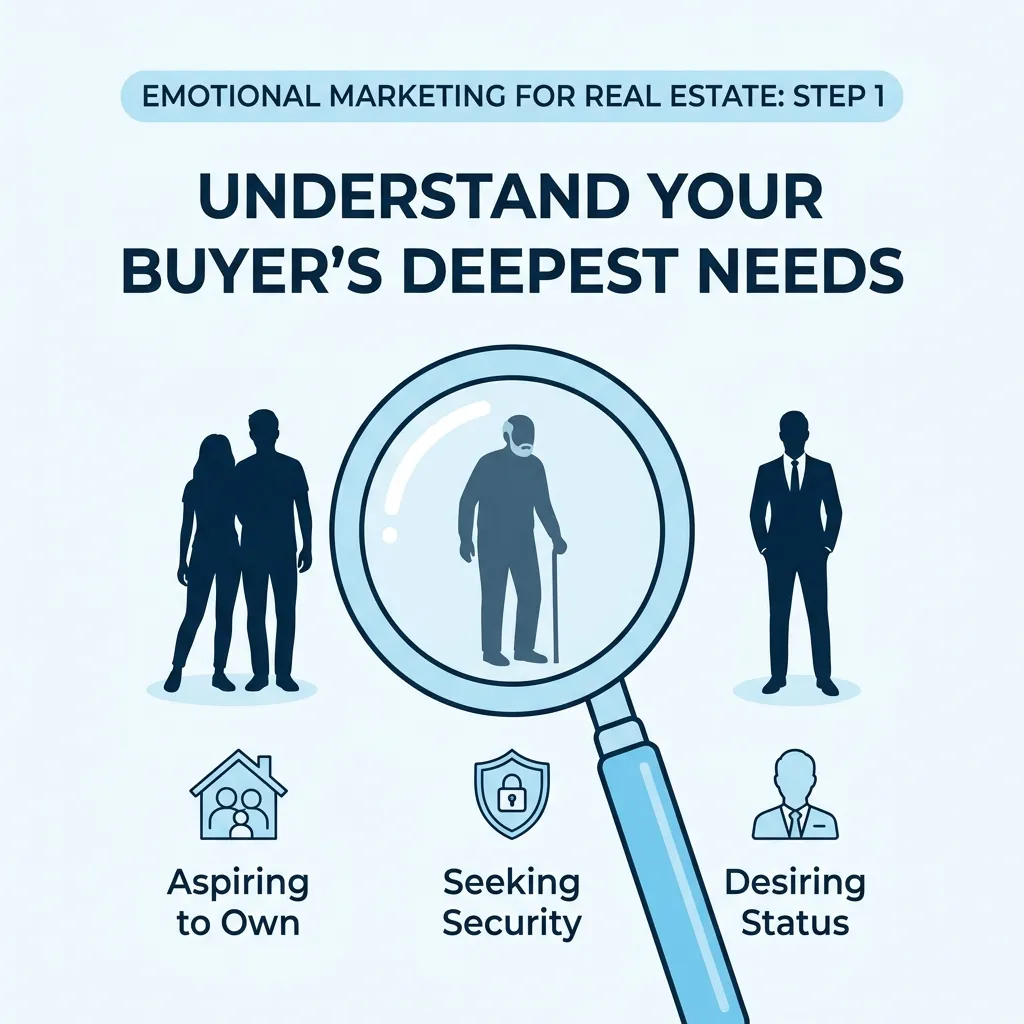
Using emotional marketing effectively requires more than adding emotional words to property descriptions. The entire customer experience should support the emotional message.
Understand the Target Buyer
Start by identifying who the property is designed for.
A young professional may prioritize:
- Independence
- Convenience
- Lifestyle
- Career access
- Modern amenities
A family may prioritize:
- Security
- Schools
- Space
- Community
- Stability
An investor may respond more strongly to:
- Growth potential
- Income
- Long-term value
- Market confidence
Different audiences require different emotional messages.
Turn Property Features Into Emotional Benefits
One of the simplest ways to apply emotional marketing is to connect every major feature with a meaningful benefit.
| Property Feature | Emotional Benefit |
|---|---|
| Large kitchen | Family connection |
| Private garden | Relaxation and freedom |
| Security system | Peace of mind |
| Balcony | Escape and personal space |
| Nearby school | Family confidence |
| Home office | Independence and productivity |
| Community park | Belonging |
| Luxury interior | Pride and achievement |
The feature provides the evidence. The emotional benefit provides the meaning.
Use Storytelling
Storytelling is one of the most effective methods of emotional marketing.
Instead of beginning with specifications, create a scenario.
For example:
“After a long day at work, you step onto your balcony, enjoy the evening breeze, and watch the city lights below. On weekends, the spacious living room becomes the place where friends and family gather.”
This kind of storytelling allows potential buyers to imagine themselves inside the property.
The goal is not to invent false experiences. The story should be based on realistic characteristics of the property and neighborhood.
Use High-Quality Visuals
Real estate is inherently visual. Photography and video should therefore support the emotional message.
Rather than showing only empty rooms, consider demonstrating how spaces can be used.
For example:
- A dining room can show a family meal.
- A balcony can show a relaxing evening.
- A garden can show outdoor family activities.
- A home office can show a productive workspace.
- A living room can demonstrate social gatherings.
Visual storytelling helps buyers mentally experience the property before visiting.
Emotional Marketing Through Real Estate Content
Content marketing provides many opportunities to create emotional connections.
Property Blog Posts
Instead of publishing only technical property descriptions, create content around lifestyle questions.
Examples include:
- How to choose a family-friendly neighborhood
- What makes a house feel like home?
- How to create a peaceful home environment
- Things first-time buyers should consider
- How a neighborhood influences quality of life
These topics allow brands to connect with emotional needs before buyers are ready to purchase.
Social Media Stories
Social media is ideal for short emotional narratives.
An agent could create a series showing:
- A neighborhood morning
- Local amenities
- The property’s best lifestyle features
- A customer experience
- A virtual property tour
- A call to schedule a viewing
The campaign becomes a story rather than a collection of advertisements.
Video Marketing
Video can combine visuals, voice, music, storytelling, and human experiences.
A property video could begin with a lifestyle scene before revealing the property itself.
For example:
“Where will your next chapter begin?”
The video could then show the neighborhood, home, amenities, and key features.
Use Customer Stories and Social Proof
Potential buyers often want reassurance that other people have made successful decisions.
Customer testimonials can provide emotional and practical evidence.
A strong testimonial might explain:
- What problem the buyer had
- Why they considered the property
- What they liked
- How the buying experience felt
- How the property fits their lifestyle
This is more powerful than a generic statement such as “Great property and excellent service.”
Social proof can also include reviews, community stories, resident interviews, and real customer experiences.
The principle connects closely with the psychology behind social proof in marketing, where people can use the experiences of others as signals when evaluating choices.
Build Emotional Real Estate Advertising Campaigns
Paid advertising gives real estate businesses an opportunity to test different emotional messages.
Family-Focused Campaign
Possible message:
“More space for the moments that matter.”
The creative could show family-oriented spaces, nearby amenities, and realistic lifestyle scenes.
First-Time Buyer Campaign
Possible message:
“Your first home. Your first chapter.”
This can appeal to emotions associated with independence, achievement, and new beginnings.
Luxury Property Campaign
Possible message:
“A home that reflects how far you’ve come.”
The campaign can focus on design, craftsmanship, privacy, and lifestyle.
Investment Campaign
Investment-oriented messaging can emphasize confidence, opportunity, and long-term planning, but claims should be supported by reliable information rather than emotional exaggeration.
Emotional Marketing and Property Photography
Photography plays a major role in creating emotional responses.
Show Lifestyle, Not Just Space
An empty bedroom tells buyers what the room looks like. A thoughtfully staged bedroom can help them imagine how the room might feel.
Use photography to communicate:
- Warmth
- Comfort
- Spaciousness
- Calm
- Luxury
- Family connection
- Modern lifestyle
Lighting, composition, staging, and realistic context can significantly influence perception.
Avoid Misleading Images
Emotional marketing should never depend on deceptive photography.
Avoid:
- Excessive image manipulation
- Misrepresenting room sizes
- Hiding significant defects
- Using unrealistic surroundings
- Creating false expectations
Long-term trust is more valuable than a temporary increase in clicks.
Emotional Marketing Across the Buyer Journey
Emotional marketing should not stop after someone discovers a property.
Awareness Stage
At the awareness stage, focus on lifestyle aspirations and emotional needs.
Examples:
- “Find a place that feels like home.”
- “A better neighborhood for your next chapter.”
Consideration Stage
At this stage, provide evidence that supports the emotional promise.
Show:
- Property features
- Neighborhood information
- Reviews
- Videos
- Floor plans
- Pricing
- Amenities
Decision Stage
Reduce uncertainty and reinforce confidence.
Useful content includes:
- Buyer testimonials
- Virtual tours
- Detailed property information
- Financing information
- Viewing options
- Transparent FAQs
Post-Purchase Stage
Emotional marketing can continue after the transaction.
Share:
- New homeowner stories
- Community events
- Homeownership tips
- Resident experiences
- Referral programs
This can turn customers into long-term advocates.
Common Mistakes in Emotional Marketing for Real Estate
Overusing Fear
Fear can attract attention, but excessive fear can damage trust.
Avoid messaging that pressures buyers with unsupported warnings or unrealistic consequences.
Creating Fake Urgency
Statements such as “Buy today or lose everything” can appear manipulative if they are not supported by genuine circumstances.
If a property actually has limited availability, communicate that information accurately.
Ignoring Rational Information
Emotional marketing should complement facts rather than replace them.
Buyers still need:
- Price
- Location
- Property condition
- Financing information
- Size
- Amenities
- Legal information
- Relevant market details
Targeting Everyone With One Message
Different buyers have different motivations.
A family-focused emotional message may not resonate with an investor, while a luxury lifestyle campaign may not appeal to a first-time buyer.
Making Promises You Cannot Support
Authenticity is essential. Never promise happiness, financial success, security, or investment returns as guaranteed outcomes.
How to Measure Emotional Marketing Performance
Emotional campaigns should still be measurable.
Track metrics such as:
- Click-through rate
- Video completion rate
- Social engagement
- Property page visits
- Lead generation
- Viewing requests
- Inquiry quality
- Conversion rate
- Cost per lead
- Sales
- Referral activity
You can compare different emotional messages through A/B testing.
For example, test:
Version A: “Modern 3-bedroom apartment near the city center.”
Version B: “Create more space for the people and moments you love.”
If Version B produces stronger qualified engagement, the emotional positioning may be more effective for that audience.
However, do not judge a campaign only by clicks. A real estate campaign should ultimately contribute to meaningful outcomes such as qualified inquiries, property visits, and sales.
Ethical Emotional Marketing for Real Estate
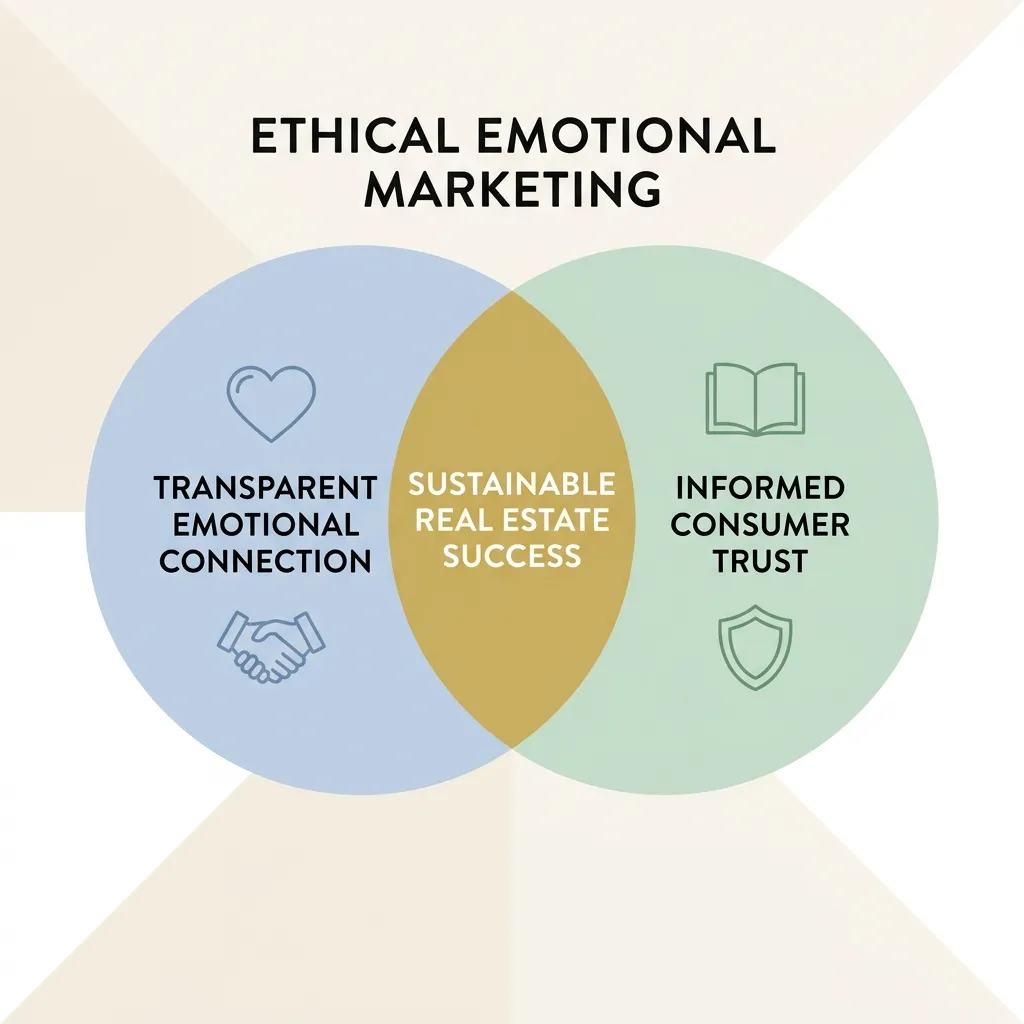
Because property purchases can have significant financial consequences, ethical standards are particularly important.
Responsible emotional marketing for real estate should:
- Present accurate property information
- Avoid discriminatory targeting or messaging
- Avoid deceptive scarcity
- Clearly communicate important conditions
- Respect buyer privacy
- Avoid unsupported financial promises
- Use authentic testimonials
- Distinguish advertising from factual information
- Focus on helping buyers make informed decisions
The strongest emotional campaigns do not manipulate people into purchasing something unsuitable. They help the right buyers understand why a property may genuinely fit their needs.
Conclusion
Emotional marketing for real estate gives property businesses a way to communicate beyond square footage, price, and amenities. By connecting property features with emotions such as security, belonging, happiness, pride, excitement, and nostalgia, marketers can help buyers imagine how a property could fit into their lives.
The most effective strategy combines emotional storytelling with accurate information. Use customer stories, lifestyle-focused photography, video, social proof, personalized messaging, and targeted advertising to create meaningful connections while maintaining transparency.
Ultimately, real estate marketing becomes more powerful when it answers not only “What does this property offer?” but also “How could this property make the buyer feel?” When those two questions are addressed together, brands can create stronger engagement, build trust, and guide potential buyers toward confident decisions.
Frequently Asked Questions
1. What is emotional marketing for real estate?
Emotional marketing for real estate uses emotions, aspirations, personal motivations, and lifestyle benefits to make property marketing more relatable and memorable.
2. Why is emotional marketing effective in real estate?
Real estate purchases are closely connected to personal goals such as security, family, independence, achievement, and belonging. Emotional marketing helps communicate these deeper motivations.
3. What emotions work best in real estate marketing?
Common emotions include security, happiness, belonging, excitement, pride, comfort, trust, and nostalgia. The most effective emotion depends on the target buyer.
4. How can real estate agents use storytelling?
Agents can tell realistic stories that help buyers imagine using the property in everyday life. Stories can focus on family moments, lifestyle, convenience, community, or personal achievement.
5. Can emotional marketing increase real estate conversions?
It can improve engagement and help differentiate properties, which may contribute to stronger conversions. However, results depend on factors such as pricing, property quality, targeting, market conditions, and campaign execution.
6. Is emotional marketing manipulative?
It can become manipulative if marketers use deception, false urgency, unsupported claims, or exploit sensitive emotions. Ethical emotional marketing focuses on authentic benefits and accurate information.
7. How does social proof help real estate marketing?
Testimonials, reviews, customer stories, and resident experiences can reduce uncertainty and provide buyers with evidence from people who have already interacted with the property or brand.
8. How can social media support emotional real estate marketing?
Social media allows agents to use videos, photos, stories, customer experiences, neighborhood content, and lifestyle posts to create emotional connections with potential buyers.
9. Should real estate advertisements focus only on emotions?
No. Effective campaigns should combine emotional benefits with rational information such as price, location, property specifications, amenities, and relevant terms.
10. Can nostalgia be used in real estate marketing?
Yes. Nostalgia can be effective when a property or neighborhood has connections to family memories, traditional architecture, local culture, or familiar community experiences.
11. How do you measure emotional marketing campaigns?
Measure engagement, video views, click-through rates, inquiries, viewing requests, qualified leads, conversion rates, cost per lead, and sales. Comparing different messages through testing can also reveal what resonates with the target audience.
12. What is the most important rule for emotional real estate marketing?
Authenticity is essential. Emotional messaging should reflect genuine property benefits, use accurate information, and help buyers make informed decisions rather than relying on manipulation or misleading promises.