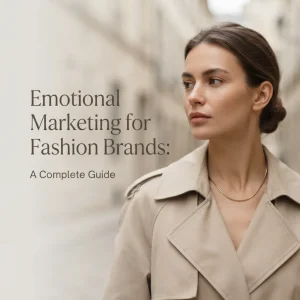
Emotional Marketing for Fashion Brands: A Complete Guide
Emotional marketing for fashion brands works because clothing has never been a purely functional purchase — it’s tied to identity, belonging, and self-expression. This guide breaks down why emotional appeals outperform pure product marketing in fashion, the specific emotional triggers that work best, real strategy patterns brands use, and how to avoid the pitfalls that come with emotion-driven campaigns.
Emotional marketing for fashion brands starts from a simple fact: fashion is one of the few categories where the product and the emotion are almost inseparable. A jacket keeps someone warm, but the decision to buy a specific jacket from a specific brand is rarely about warmth alone. It’s about how the person imagines themselves wearing it, who they picture themselves becoming, and what the brand communicates about them to others. That’s exactly why emotional marketing for fashion brands works so consistently well, and why brands that lean into it tend to build stronger loyalty than those competing purely on price or fabric specs.
This guide looks at why emotional marketing for fashion brands is especially powerful, breaks down the specific emotions that drive purchasing behavior in this category, and walks through practical strategies — from storytelling to packaging to social content — that fashion brands use to build real emotional connection. It also covers where emotional marketing for fashion brands can go wrong, since overreach in this category tends to backfire quickly.
Why Emotional Marketing Works So Well in Fashion
Clothing purchases sit close to identity in a way that many product categories don’t. What someone wears signals group belonging, aspiration, values, and personality, often before a single word is exchanged. Because of this, fashion decisions are rarely made through pure rational comparison of features and price — they’re filtered through how a garment makes the buyer feel about themselves.
This is part of why emotional marketing works so effectively across the category as a whole, but fashion in particular benefits from the visual and tactile nature of the product itself. A brand doesn’t need to explain an abstract benefit the way a software company does — it can show a feeling directly through imagery, movement, and context, which shortens the emotional path considerably.
Fashion also benefits from being highly social. Clothing is worn in public, shared on social media, and discussed among peer groups, which means the emotional payoff of a purchase extends beyond the individual buyer into how they’re perceived by others. That social dimension amplifies whatever emotional message a brand builds into its campaigns.
Key Emotional Triggers That Drive Fashion Purchases
Identity and Self-Expression
The strongest emotional marketing for fashion brands usually sells a version of who the customer wants to be, not just the garment itself. Campaigns built around individuality, confidence, and self-expression consistently outperform campaigns that focus purely on craftsmanship or material quality, because they speak to the underlying motivation for the purchase rather than its surface features.
Belonging and Community
Many fashion brands build loyalty by creating a sense of community around a shared aesthetic or set of values. Limited drops, brand collaborations, and community events all reinforce belonging — the sense that wearing the brand connects a customer to something larger than an individual purchase. Repeated emotional touchpoints like these build loyalty over time rather than through any single campaign.
Nostalgia
Fashion cycles constantly, but nostalgia remains one of its most reliable emotional levers. Revivals of past decades’ silhouettes, colors, and branding tap into memories and associations that go well beyond the garment itself. A campaign referencing a specific era doesn’t just sell a style — it sells a feeling tied to that period, whether personally remembered or culturally inherited.
Aspiration
Aspirational marketing sells an idealized version of a lifestyle — the vacation, the career, the social circle implied by wearing a particular brand. This works especially well in fashion because clothing is one of the most visible, attainable ways a person can signal aspiration in daily life, even when the larger lifestyle it implies isn’t fully accessible.
Confidence and Empowerment
Campaigns centered on confidence — feeling powerful, capable, or simply comfortable in one’s own skin — tend to build durable emotional loyalty because they connect the product to how a customer feels in ongoing daily life, not just in a single moment of purchase.
Strategies for Emotional Marketing in Fashion Campaigns
Storytelling Beyond the Product
Rather than describing fabric and fit, the strongest fashion campaigns tell a story the customer can see themselves inside. This might be a founder’s story, a community the brand supports, or a narrative built around a specific collection’s inspiration. Our guide to emotional advertising strategies covers storytelling frameworks that translate directly into fashion campaign briefs.
Visual and Sensory Cues
Because fashion is inherently visual, color, texture, movement, and setting all carry emotional weight before any copy is read. Warm, muted tones might signal comfort and nostalgia; bold, saturated colors might signal energy and confidence. These choices function as emotional shorthand, communicating a feeling almost instantly.
Influencer and Community-Driven Content
Fashion brands increasingly rely on real customers and creators rather than polished studio campaigns alone, since peer-driven content tends to feel more emotionally authentic than brand-produced advertising. Seeing someone relatable wear a garment in an everyday context often builds stronger emotional trust than a professional editorial shoot.
Packaging and Unboxing Experience
The emotional experience of a fashion purchase doesn’t end at checkout. Thoughtful packaging, personal notes, and unboxing moments extend the emotional arc of the purchase into the delivery experience itself. Our piece on emotional packaging design covers how physical details reinforce the same emotional positioning established in a brand’s advertising.
Limited Editions and Scarcity
Limited drops create urgency, but the emotional mechanism runs deeper than fear of missing out — owning something scarce reinforces identity and status, tying back to the belonging and aspiration triggers covered above. When used sparingly, scarcity reinforces emotional value; overused, it can feel manipulative and erode trust.
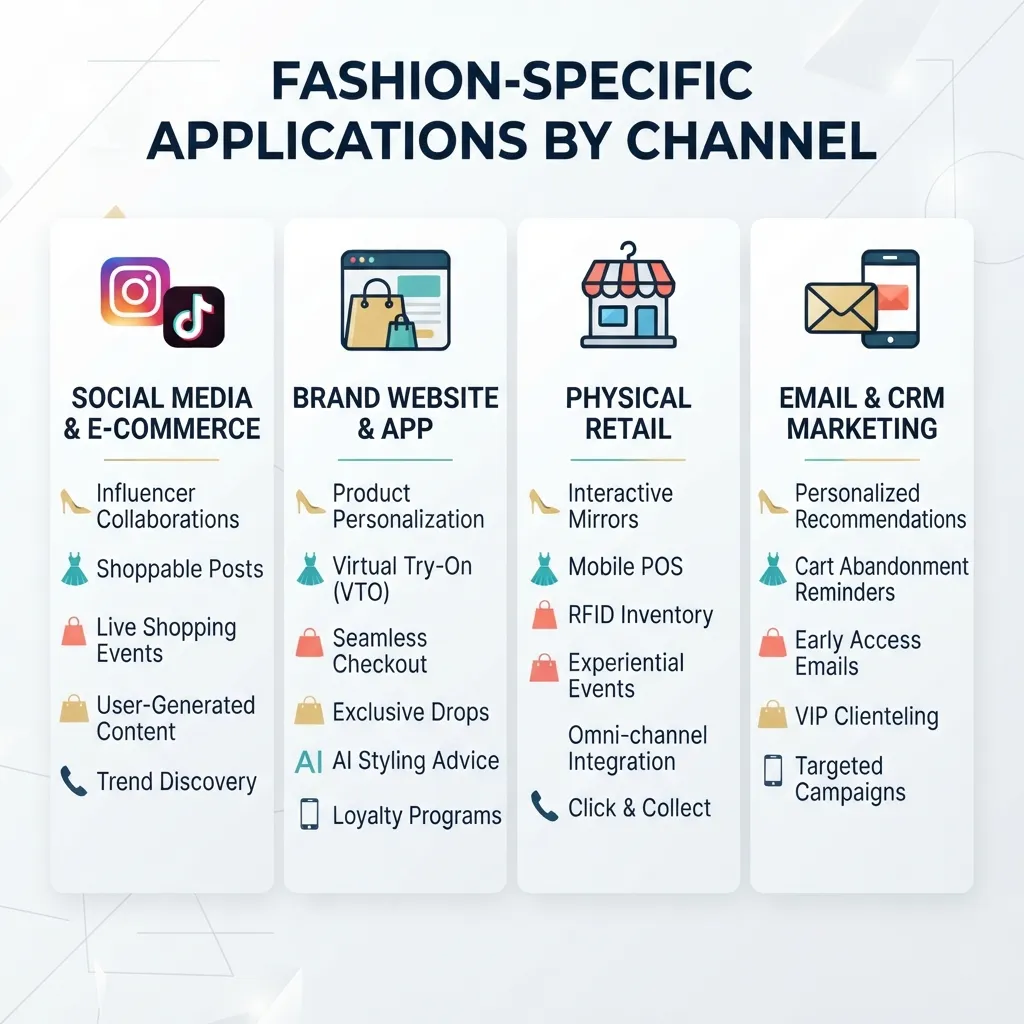
Fashion-Specific Applications by Channel
Social Media
Instagram and TikTok remain central to fashion marketing because both formats reward visual storytelling and quick emotional impact. Short-form video in particular allows a brand to convey mood, energy, and identity within seconds, which suits fashion’s fast-moving trend cycle. Structuring this kind of visual storytelling well — leading with mood before message, using cuts and pacing to build anticipation — tends to outperform content that simply describes a product in caption form.
Email and Direct Response
Even within a highly visual category, email remains effective for reinforcing emotional connection over time — welcoming new customers into a brand’s world, celebrating milestones like anniversaries or birthdays with personal touches, and building anticipation ahead of new collection launches.
In-Store and Experiential
Physical retail still plays a significant emotional role for many fashion brands, particularly for higher-end or heritage labels. Store design, in-person events, and personalized styling all extend the emotional narrative into a tactile, memorable experience that digital channels can’t fully replicate.
Real-World Patterns Worth Studying
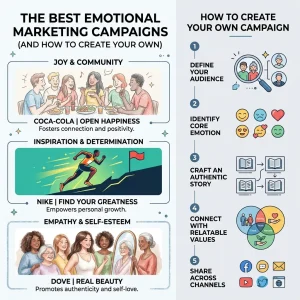
Reviewing how established brands have approached emotional marketing for fashion brands successfully is one of the fastest ways to understand what works. Our roundup of the best emotional marketing campaigns includes several fashion and apparel examples worth studying for structure and tone, even outside the fashion category specifically, since the underlying emotional mechanics — identity, belonging, nostalgia — repeat across industries with different surface details.
Fashion brands can also learn from how other trend-driven categories manage the tension between staying current and building lasting emotional equity. The broader discipline of trend-aware marketing — tracking which cultural moments are worth engaging and which will fade before a campaign even launches — is covered well in an outside resource on trend marketing in fashion, which looks at how fashion brands specifically stay ahead of shifting cultural signals without chasing every micro-trend. A related piece on general fashion marketing strategies offers additional context on how positioning and campaign planning intersect with the emotional approach covered here.
Common Mistakes in Emotional Marketing for Fashion Brands
Chasing Every Trend Emotionally
Not every cultural moment deserves an emotional campaign. Brands that attach heartfelt messaging to trends that don’t genuinely align with their identity often come across as opportunistic rather than authentic, which undermines the emotional trust they’re trying to build.
Overusing Scarcity and Urgency
Constant “last chance” and “almost gone” messaging eventually loses its emotional impact and can start to feel manipulative rather than exciting. Reserving urgency for genuinely limited moments preserves its effectiveness.
Inconsistency Between Message and Experience
A brand that markets empowerment and inclusivity but delivers inconsistent sizing, poor customer service, or exclusionary imagery creates a gap between emotional promise and lived experience. That gap is often more damaging than a purely functional campaign would have been, since it invites accusations of insincerity.
Emotion Without Substance
Emotional messaging works best when it’s grounded in something real about the brand — its values, its community, its actual product experience. Emotional language applied to a brand with nothing distinctive behind it tends to feel hollow and rarely sustains loyalty beyond a single campaign.
Measuring the Impact of Emotional Campaigns
Measuring the impact of emotional marketing for fashion brands is harder than measuring direct-response advertising, but not impossible. Useful signals include repeat purchase rate, social engagement and share rate on emotionally-driven content, brand sentiment in reviews and social mentions, and customer lifetime value compared across segments exposed to emotional versus purely promotional messaging.
Qualitative feedback matters too. Customer reviews, survey responses, and social comments often reveal whether an emotional narrative is actually landing or simply being ignored in favor of price and convenience. Brands that track both quantitative loyalty metrics and qualitative sentiment tend to catch messaging problems earlier than those relying on sales figures alone.
Building a Long-Term Emotional Strategy, Not Just a Campaign
One of the clearest patterns among fashion brands that sustain emotional marketing successfully is that they treat it as an ongoing identity rather than a campaign-by-campaign tactic. A single emotionally resonant launch can generate a spike in attention, but that spike fades quickly if the next collection reverts to purely promotional messaging. Consistency across seasons — in tone, visual language, and the core emotional territory a brand claims — is what turns individual campaigns into a recognizable brand feeling customers come to expect.
This doesn’t mean every collection needs to repeat the same emotional beat. A brand built around confidence and empowerment can explore that theme through different lenses each season — a new community partnership, a different visual style, a fresh set of real-customer stories — while staying recognizably anchored to the same underlying emotional territory. What breaks the pattern isn’t variation in execution; it’s abandoning the emotional core entirely to chase whatever trend is dominating social feeds that month.
Internal alignment matters here as much as external messaging. Emotional marketing for fashion brands works best when the emotional positioning is shared across merchandising, customer service, and product development, not confined to the marketing team’s campaign briefs. A brand promising empowerment in its advertising but offering a frustrating returns process or dismissive customer support creates the exact gap between promise and experience that erodes emotional trust fastest.
Conclusion
Emotional marketing for fashion brands works because the category was never really about fabric and fit in the first place — it’s about identity, belonging, nostalgia, and aspiration, expressed through what people choose to wear. Brands that build campaigns around these emotional drivers, supported by consistent storytelling across social, email, packaging, and in-store experience, tend to build loyalty that outlasts any single season’s trends. The brands that struggle are usually the ones chasing emotional language without the substance behind it, or leaning so hard on urgency and scarcity that the emotional connection curdles into manipulation. Done well, emotional marketing doesn’t just sell a garment — it turns a brand into part of how a customer sees themselves.
Frequently Asked Questions (FAQs)
1. Why does emotional marketing work especially well for fashion brands?
Because clothing purchases are closely tied to identity, belonging, and self-expression rather than pure function, which makes fashion naturally suited to emotional rather than purely rational marketing appeals.
2. What emotions perform best in fashion marketing?
Identity and self-expression, belonging, nostalgia, aspiration, and confidence are among the most consistently effective emotional triggers in fashion campaigns.
3. How do fashion brands build emotional storytelling into campaigns?
By focusing on a narrative the customer can see themselves inside — a founder’s story, a community the brand supports, or the inspiration behind a specific collection — rather than describing product specifications alone.
4. Does scarcity marketing count as emotional marketing?
Yes, but its emotional mechanism goes beyond urgency — scarcity often ties into identity and status, since owning something limited reinforces a sense of belonging or distinction.
5. Which social platforms work best for emotional fashion marketing?
Instagram and TikTok are particularly effective because both reward visual storytelling and allow a brand to convey mood and identity quickly, which suits fashion’s fast-moving trend cycle.
6. Can small fashion brands compete with larger brands on emotional marketing?
Yes. Smaller brands often have an advantage in authenticity and community closeness, which can create stronger emotional trust than a large brand’s more polished, distant campaigns.
7. How is emotional marketing measured in the fashion industry?
Common signals include repeat purchase rate, social engagement on emotionally driven content, brand sentiment, and customer lifetime value compared across different messaging approaches.
8. What’s the risk of overusing emotional appeals in fashion marketing?
Overuse, particularly of urgency and scarcity, can eventually feel manipulative and erode the trust the strategy was meant to build in the first place.
9. How does packaging fit into emotional fashion marketing?
Packaging extends the emotional experience beyond the purchase decision itself, reinforcing the same brand feeling established in advertising through the unboxing and delivery experience.
10. Should fashion brands follow every trending cultural moment emotionally?
No. Attaching emotional messaging to trends that don’t genuinely align with a brand’s identity tends to feel opportunistic rather than authentic, which can undermine trust.
11. Does emotional marketing work for both luxury and mass-market fashion brands?
Yes, though the specific emotional triggers often differ — luxury brands frequently emphasize aspiration and exclusivity, while mass-market brands often lean more on belonging, identity, and accessibility.
12. What’s the biggest mistake fashion brands make with emotional marketing?
Using emotional language without substance behind it — values, community, or product experience that don’t actually match the message — which tends to feel hollow and fails to sustain loyalty beyond a single campaign.