Emotional Marketing for Ecommerce and Retail Brands: The Complete Guide
Emotional marketing for ecommerce and retail brands means designing every touchpoint — product pages, packaging, checkout, post-purchase emails — to connect with how a shopper feels, not just what they need. In a category where price comparison is one click away and product differentiation is often thin, emotion has become one of the few reliable levers left for building loyalty and standing out. This guide covers why emotional marketing matters so much in ecommerce and retail specifically, the emotional triggers that consistently drive purchasing behavior in this space, and practical tactics for weaving emotional connection into a shopping experience without it feeling forced or manipulative.
Ecommerce and retail brands compete in an environment where functional differentiation is harder to maintain than ever. Two stores can sell nearly identical products at nearly identical prices, shipped in a similar number of days, yet one consistently earns repeat customers while the other struggles with one-time buyers. The difference frequently comes down to how each brand makes the shopper feel — before, during, and after the purchase. That feeling is shaped by dozens of small decisions across a brand’s website, packaging, and communication, most of which have little to do with the product’s actual features.
Emotional marketing for ecommerce and retail brands isn’t about manipulating people into buying things they don’t want. Done well, it’s about recognizing that purchasing decisions, even for practical products, are rarely made on logic alone, and building a brand experience that honestly reflects the values and feelings a customer actually cares about. This guide breaks down how that works in practice, from the product page to the unboxing moment and beyond.
Why Emotional Marketing Matters More in Ecommerce and Retail
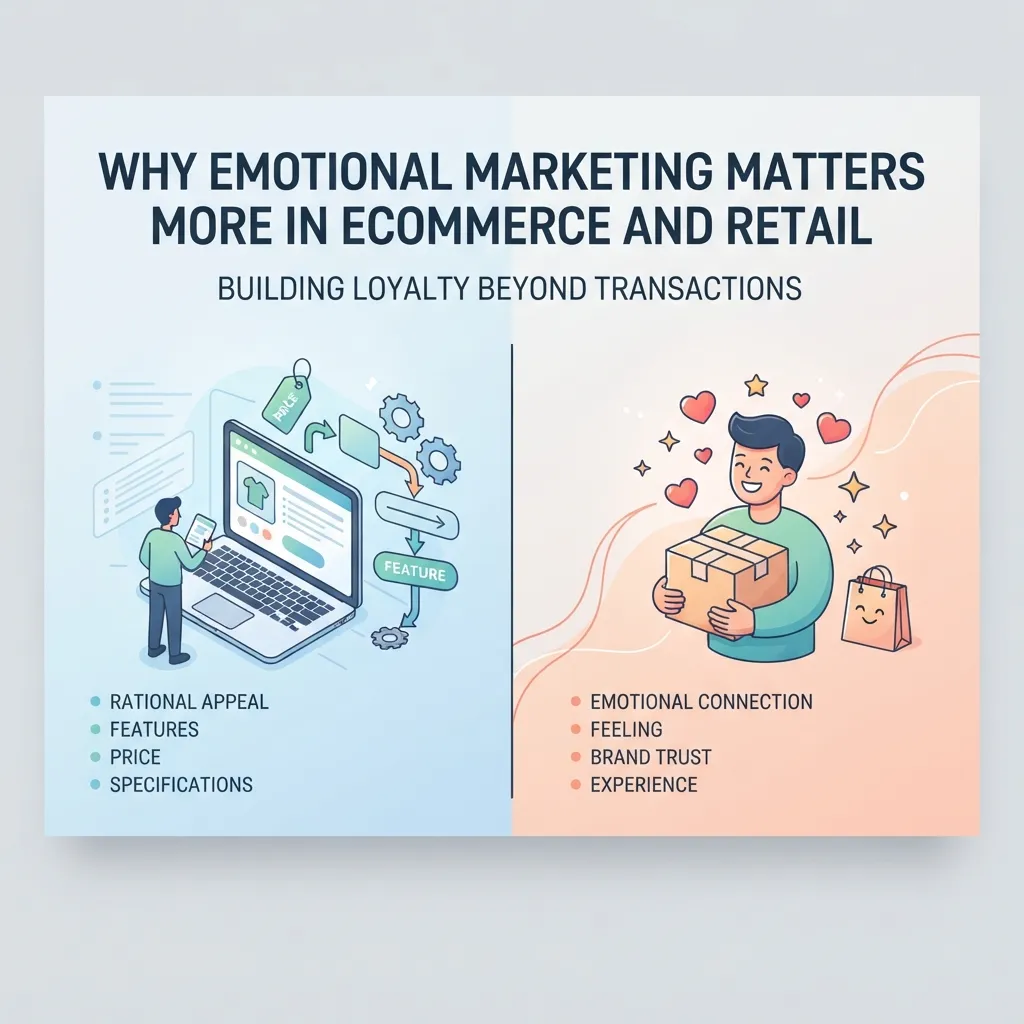
Decisions Happen Fast and Often Subconsciously
Online shopping decisions are frequently made in seconds, based on a first impression of a product image, headline, or price tag. That speed leaves little room for a lengthy logical evaluation, which means emotional response — trust, desire, urgency, comfort — often does more work in that split-second decision than a detailed feature comparison ever could.
Competition Is Only a Click Away
Because switching stores online requires almost no effort, ecommerce brands can’t rely on convenience or geographic proximity the way a physical retailer once could. Emotional connection — a brand a customer genuinely likes or identifies with — is one of the few things that meaningfully reduces the temptation to comparison-shop at checkout.
Repeat Purchases Depend on More Than Satisfaction
A customer can be satisfied with a product yet still switch to a competitor next time if nothing about the brand experience created a lasting impression. Emotional marketing turns a one-time transaction into a relationship, which is a large part of why brand loyalty in ecommerce correlates more strongly with emotional connection than with product satisfaction alone.
Reviews and Word-of-Mouth Are Emotionally Driven
Customers rarely write detailed, feature-by-feature reviews. They write about how a product made them feel, how surprised they were by the packaging, or how a brand handled a problem. Emotional experiences are simply more shareable than functional ones, which makes them a meaningful driver of organic growth.
Core Emotional Triggers in Ecommerce and Retail
Trust and Safety
Before a customer feels anything positive about a product, they need to feel safe handing over payment information to an unfamiliar store. Clear return policies, visible security badges, authentic reviews, and transparent shipping information all reduce anxiety and create the emotional safety needed before a purchase decision can happen at all.
Belonging and Identity
Many purchases, especially in fashion, beauty, and lifestyle retail, are driven by a desire to express or reinforce identity. Brands that build a clear sense of community or shared values give customers a way to feel like they belong to something, not just that they bought something.
Anticipation and Excitement
The period between placing an order and receiving it is an underused emotional opportunity. Order confirmation emails, shipping updates, and unboxing experiences that build anticipation rather than simply relaying logistics information turn a routine wait into part of the emotional journey.
Urgency and Scarcity
Limited-time offers and low-stock indicators tap into loss aversion, a well-documented driver of purchasing behavior. Used honestly — reflecting real inventory or real deadlines — these triggers can meaningfully boost conversion without damaging trust; used dishonestly, through fake countdown timers or manufactured scarcity, they tend to erode the very trust a brand needs to build long-term loyalty.
Nostalgia and Comfort
Retail brands, especially those with a long history or a specific cultural moment associated with them, can tap into nostalgia through packaging design, throwback product lines, or messaging that references a shared cultural memory, creating warmth that a purely functional pitch can’t replicate.
Delight and Surprise
Small, unexpected gestures — a handwritten note, a surprise sample, playful packaging — create a disproportionate emotional impact relative to their cost, often becoming the specific detail a customer remembers and shares.
Applying Emotional Marketing Across the Ecommerce Journey
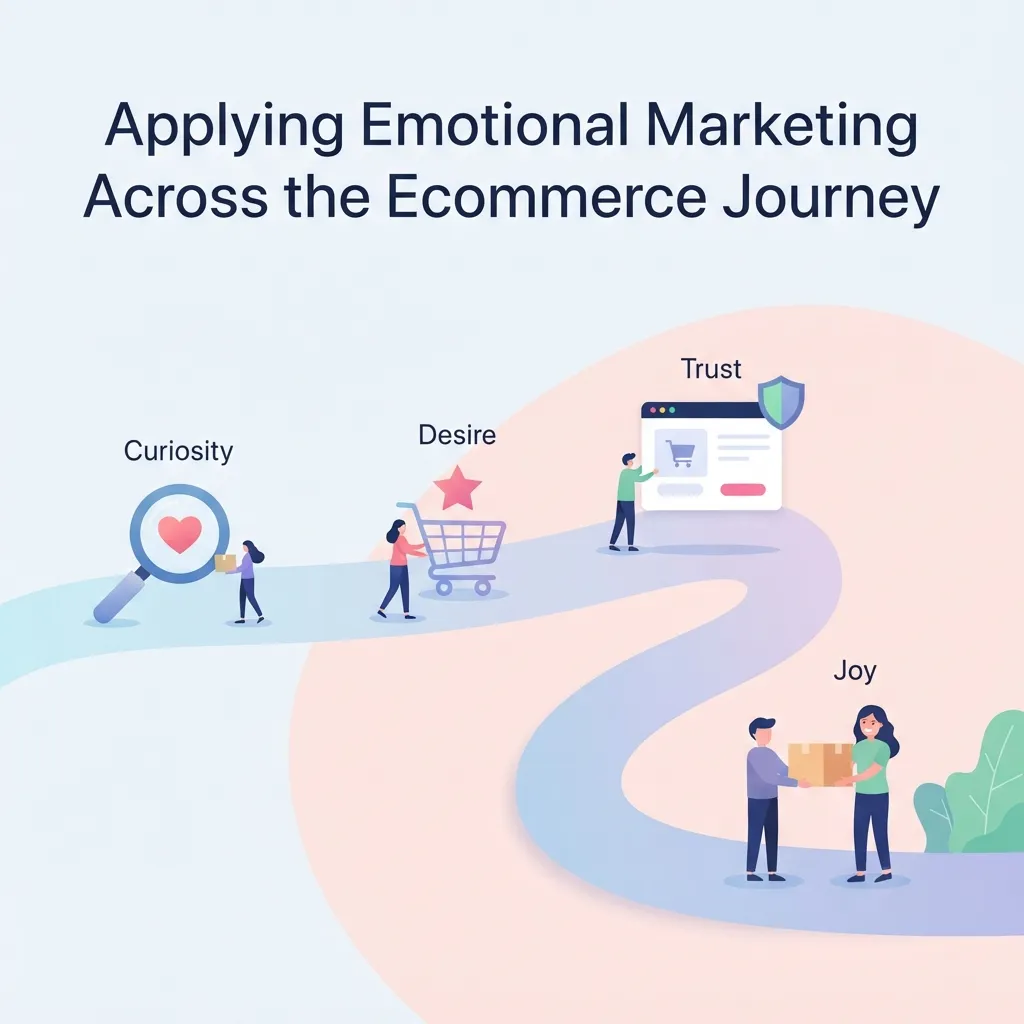
Product Pages
Product descriptions that go beyond specifications to describe how a product will make the customer feel, or the moment it’s meant for, tend to outperform purely technical copy. Photography and video that show a product in genuine use, rather than isolated on a white background, also help customers emotionally picture themselves owning it.
Checkout and Post-Purchase Confirmation
Reducing friction and anxiety at checkout — clear pricing, visible security indicators, an easy return policy — protects the emotional momentum built earlier in the journey. A warm, personal confirmation message following purchase reinforces a positive feeling right at the moment excitement about a new purchase is highest.
Packaging and Unboxing
Physical packaging remains one of the most powerful, underused emotional touchpoints in ecommerce, since it’s the first tangible interaction a customer has with a brand after clicking “buy.” Thoughtful design, a personal touch, or even simple, well-considered presentation can meaningfully shape a customer’s overall impression of the brand, independent of the product itself.
Post-Purchase Email and Retention
Follow-up emails that go beyond generic “leave a review” requests — celebrating a purchase anniversary, checking in genuinely, or sharing a relevant story — keep the emotional relationship alive well past the initial transaction. This kind of ongoing emotional engagement connects closely with how emotional triggers can be used effectively in email marketing more broadly, where timing and tone matter as much as the message itself.
Customer Service Interactions
How a brand handles a problem often creates a stronger emotional impression than a flawless transaction ever could. A genuinely empathetic, human response to an issue frequently turns a frustrated customer into one of a brand’s most loyal advocates.
Measuring the Impact of Emotional Marketing
Emotional marketing outcomes are harder to quantify directly than click-through rate, but a few measurable proxies help build a clearer picture over time:
- Repeat purchase rate. A meaningful lift in customers returning for a second or third purchase often reflects successful emotional connection rather than pure satisfaction alone.
- Customer lifetime value. Emotionally connected customers tend to spend more over time and are more resistant to switching for a small price difference elsewhere.
- Net Promoter Score and qualitative feedback. Comments that reference feeling, identity, or experience — rather than just product function — indicate emotional resonance is actually happening.
- Social sharing and user-generated content volume. Emotional experiences are disproportionately likely to be shared, making organic mentions a useful, if imperfect, signal.
- Brand search volume. Rising searches for a brand by name, rather than by generic product category, often reflects growing emotional attachment and recall.
Understanding customer emotion at this level of detail is closely tied to broader customer emotion mapping practices, which give ecommerce and retail teams a structured way to identify exactly where emotional highs and lows occur across the shopping journey.
Comparing Emotional Marketing Across Retail Verticals
Emotional marketing tactics that work well in ecommerce and general retail often echo patterns seen in other verticals, even when the products themselves are entirely different. For example, emotional marketing approaches used by real estate brands lean heavily on aspiration and identity — the feeling of a future life in a space — which maps closely onto how fashion and home goods retailers sell a lifestyle rather than just an item. Similarly, emotional marketing built for SaaS brands focuses on relief and confidence rather than pure excitement, a reminder that the specific emotional trigger worth emphasizing should always match what a purchase actually represents to the buyer, not a generic template applied across every category.
Common Mistakes in Ecommerce Emotional Marketing
- Manufacturing false urgency. Fake countdown timers or exaggerated stock warnings damage trust once customers notice the inconsistency, and many do.
- Copying emotional cues without substance. Nature imagery, feel-good language, or nostalgic branding without a real story behind them can come across as hollow rather than genuine.
- Ignoring negative emotional moments. A poor return experience or a confusing checkout process can undo the emotional goodwill built everywhere else in the funnel.
- Over-relying on discounts as the only emotional lever. Constant sales conditions customers to feel excited only about price, crowding out the deeper emotional connections a brand could otherwise build.
- Treating packaging as an afterthought. Underinvesting in the unboxing experience wastes one of the most emotionally impactful touchpoints in the entire ecommerce journey.
- Applying the same emotional playbook to every product line. A single brand voice can still flex its emotional emphasis by category, since a customer buying a gift feels differently than one restocking a household staple.
Emotional Marketing in Practice: Cross-Channel Reinforcement
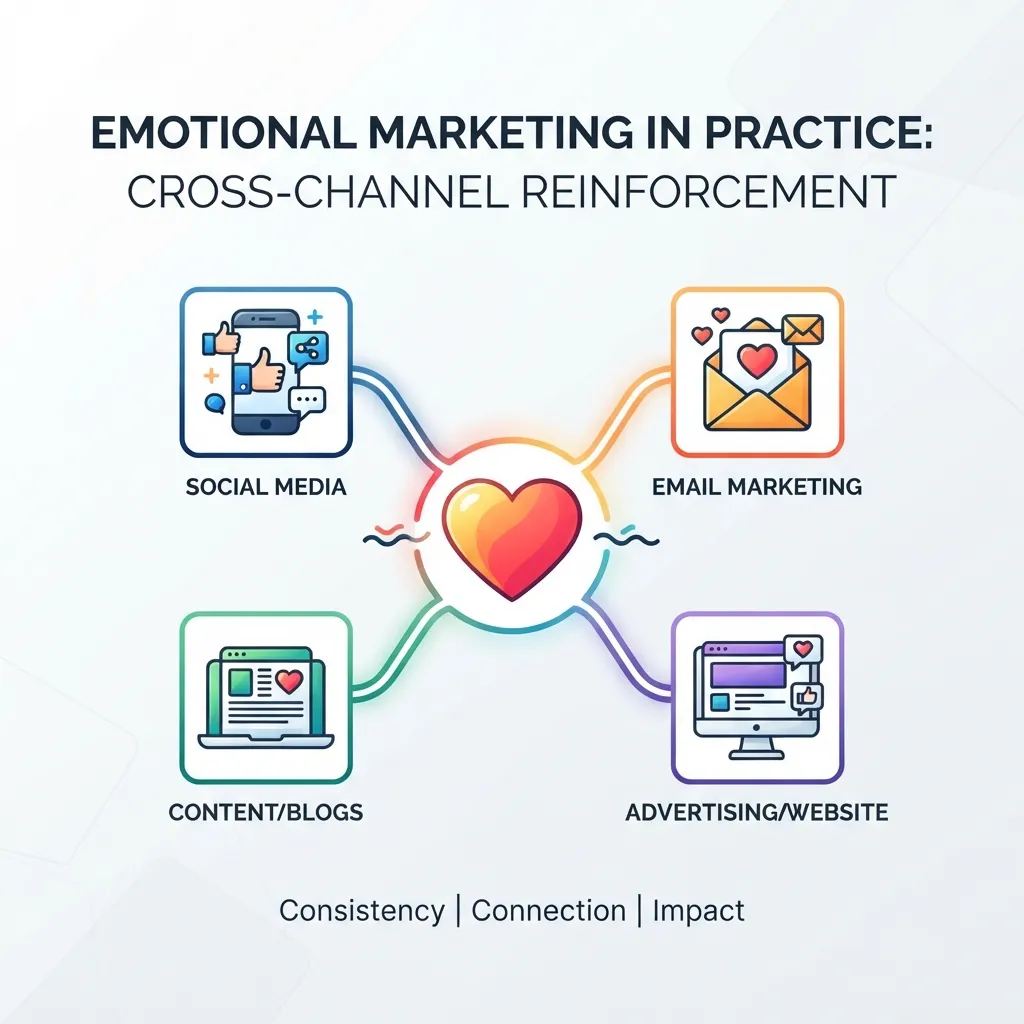
Emotional marketing works best when reinforced consistently across channels rather than isolated to a single touchpoint like the product page. Video, in particular, has become one of the strongest formats for building emotional connection in ecommerce, since it can show a product in real use and convey tone and personality in a way static images struggle to match. Reviewing video marketing approaches built specifically for ecommerce is worth doing alongside any emotional marketing strategy, since video often serves as the connective format that carries a brand’s emotional tone from ads, to product pages, to social content.
Scarcity and urgency, discussed earlier as core emotional triggers, also deserve a broader strategic framing beyond individual product pages. Retail and ecommerce brands have long used the psychology behind FOMO in marketing to drive short-term conversion spikes, and understanding that psychology more deeply helps ensure these tactics are used ethically and sparingly rather than as a constant, trust-eroding pressure tactic.
The Future of Emotional Marketing in Ecommerce and Retail
Personalization is pushing emotional marketing in ecommerce toward increasingly individualized experiences, with product recommendations, messaging, and even packaging options tailored to a specific customer’s history and preferences. At the same time, growing consumer awareness of manipulative marketing tactics is raising the bar for authenticity, making genuinely thoughtful emotional design more valuable, and manufactured emotional cues more likely to backfire, than at any point in the past. Brands that invest in real emotional understanding of their customers, rather than surface-level emotional tactics borrowed from competitors, are best positioned to build the kind of loyalty that survives a price comparison.
Conclusion
Emotional marketing for ecommerce and retail brands isn’t a single tactic bolted onto an existing strategy — it’s a lens applied across the entire customer journey, from the first product image a shopper sees to the email that arrives months after their purchase. Brands that get this right treat emotional connection as seriously as they treat conversion rate optimization, recognizing that trust, belonging, anticipation, and delight aren’t soft, secondary concerns but genuine drivers of repeat purchases and long-term loyalty. Getting started doesn’t require a complete rebrand; even auditing one or two touchpoints — the unboxing experience, or the tone of a post-purchase email — for genuine emotional resonance is often enough to reveal where the biggest opportunities are hiding. In a category where price and speed are increasingly commoditized, emotional marketing may be one of the last remaining ways to build a brand people actually choose, rather than simply the cheapest option available.
Frequently Asked Questions
1. What is emotional marketing for ecommerce and retail brands?
It’s the practice of designing product pages, packaging, and communication to connect with how shoppers feel, not just their functional needs, in order to build loyalty and encourage repeat purchases.
2. Why is emotional marketing especially important for ecommerce?
Because switching between online stores requires very little effort, emotional connection can help reduce the temptation to comparison-shop elsewhere and strengthen customer loyalty.
3. What emotional triggers work best in ecommerce?
Trust, belonging, anticipation, urgency, nostalgia, and delight are among the commonly used emotional triggers in ecommerce and retail marketing.
4. Can emotional marketing improve customer retention?
Yes. Emotionally connected customers may have higher repeat purchase rates and greater lifetime value than customers who are only satisfied with a single transaction.
5. Is using urgency and scarcity in ecommerce considered emotional marketing?
Yes. Urgency and scarcity can tap into loss aversion, a recognized psychological driver. However, these tactics should reflect genuine conditions to maintain customer trust.
6. How does packaging relate to emotional marketing?
Packaging is often the first tangible touchpoint a customer has with a brand after purchase, making it a valuable opportunity to create a positive emotional experience.
7. How do you measure the success of emotional marketing in ecommerce?
Repeat purchase rate, customer lifetime value, Net Promoter Score, and social sharing volume can provide useful indirect indicators of emotional marketing performance.
8. What’s a common mistake brands make with emotional marketing?
Manufacturing false urgency or copying emotional cues without meaningful substance are common mistakes. Both can damage credibility when customers recognize the tactics.
9. Does emotional marketing work the same way across all retail categories?
No. Effective emotional triggers vary by category. Fashion and lifestyle brands may focus on identity and belonging, while other categories may emphasize trust, convenience, or relief.
10. How does video support emotional marketing in ecommerce?
Video can communicate tone, personality, and real product use more effectively than static images, making it a useful format for strengthening emotional connections across channels.
11. Can emotional marketing replace good customer service?
No. Poor customer service or a difficult return experience can undermine positive feelings created through marketing. Both the customer experience and marketing need to work together.
12. Is emotional marketing manipulative?
It doesn’t have to be. When based on genuine value, honest messaging, and real customer understanding, it can reflect authentic customer emotions rather than pressure people into unwanted purchases.