How Emotional Decision Making Shapes Every Purchase

Emotional decision making is the process by which feelings—not just logic—drive human choices. In marketing, brands that understand and respond to customer emotions consistently outperform those that don’t. This post breaks down the neuroscience, practical tools, and strategies behind emotional decision making so businesses can build deeper, more profitable customer relationships.
Humans like to think of themselves as rational beings. They compare prices, weigh features, and read reviews before buying. But neuroscience tells a different story. Research by neuroscientist Antonio Damasio found that people with damage to the brain’s emotional centers—despite retaining full cognitive function—became almost incapable of making decisions. Without emotion, logic alone can’t close the loop.
This insight has profound implications for marketing. Every touchpoint a customer has with your brand—an ad, a product page, a support interaction—triggers an emotional response. That response either builds trust and desire, or erodes it. Understanding how emotional decision making works gives businesses a powerful advantage: the ability to design experiences that feel right, not just look good on a spec sheet.
This post explores the neuroscience of emotional decision making, how emotion recognition in marketing is reshaping customer engagement, and how brands can build a cohesive emotional branding strategy that drives loyalty and revenue. Whether you’re mapping the customer journey or refining your brand narrative, the principles here apply.
The Neuroscience of Emotional Decision Making
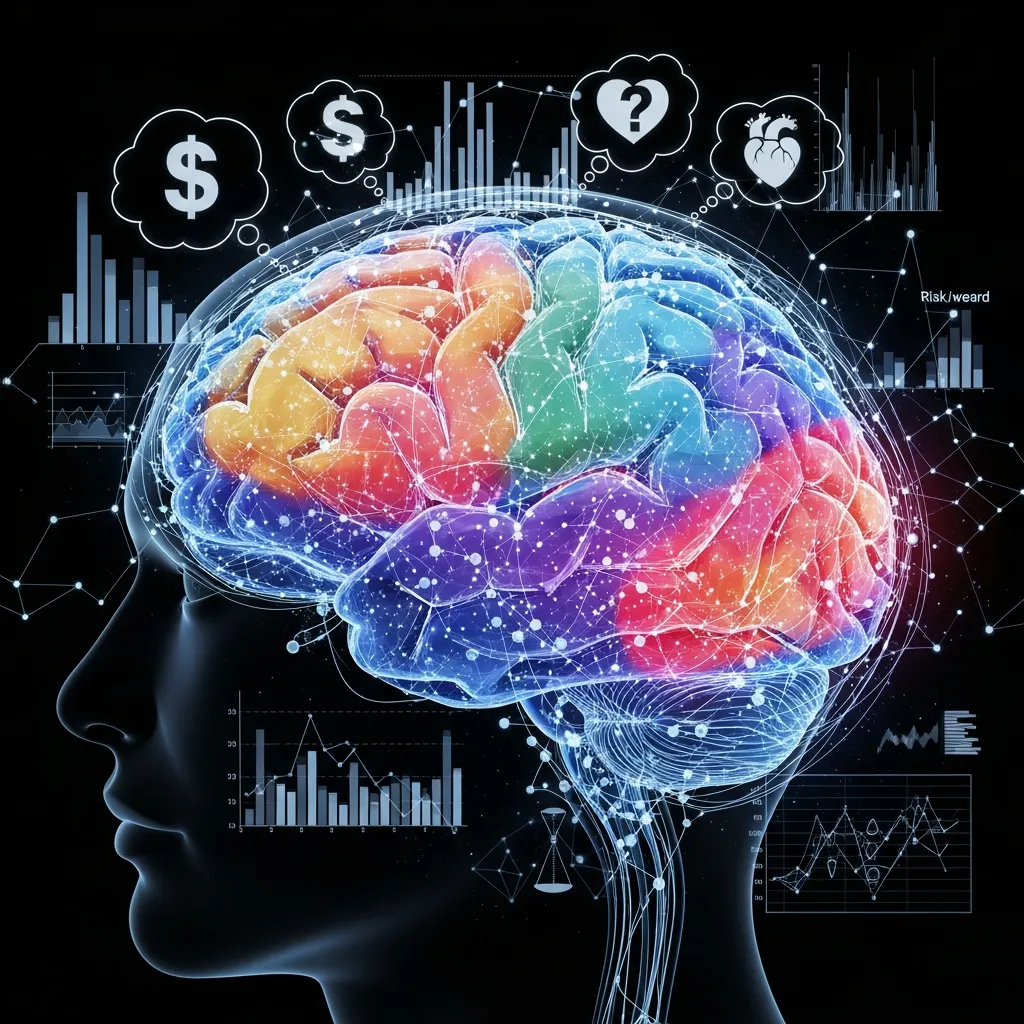
How the brain processes emotion and logic together
The brain doesn’t separate emotion from reason—it integrates them. The limbic system, which governs emotional responses, and the prefrontal cortex, which handles rational thought, work in constant dialogue. When a person encounters a purchasing decision, the amygdala (part of the limbic system) fires first, generating an emotional signal before conscious reasoning kicks in.
This is why first impressions matter so much in marketing. A customer’s gut reaction to your brand happens in milliseconds—long before they’ve read a word of copy.
The role of dopamine in buying behavior
Dopamine, often called the “feel-good” neurotransmitter, plays a central role in emotional decision making. Anticipating a reward—like unboxing a new product or receiving a personalized offer—triggers a dopamine release. Smart marketers create these anticipatory moments intentionally, through countdowns, teaser campaigns, and loyalty rewards.
Why emotional responses override rational analysis
When emotional signals are strong, the brain’s rational processing takes a back seat. This is sometimes called “affect heuristic”—the tendency to rely on emotional impressions rather than detailed analysis when making quick decisions. For marketers, this means that a compelling emotional hook in an ad can be more persuasive than a list of product specifications.
Emotion Recognition in Marketing: A New Frontier
What is emotion recognition in marketing, and how does it work?
Emotion Recognition in Marketing refers to the use of technology—including AI, facial coding, voice analysis, and biometric sensors—to detect and interpret customer emotions in real time. Tools like Affectiva and iMotions analyze micro-expressions and physiological signals to determine how consumers feel when interacting with content, products, or environments.
Retailers use emotion recognition in marketing to test packaging designs, optimize store layouts, and refine advertising creative before launch. The data produced is richer than traditional surveys because it captures unconscious responses that customers themselves may not be able to articulate.
Tools and techniques for detecting customer emotion
Key tools in emotion recognition in marketing include:
- Facial coding software: Analyzes expressions to identify emotions like joy, surprise, disgust, and confusion.
- Eye-tracking technology: Reveals where attention goes and what triggers engagement.
- Sentiment analysis platforms: Use natural language processing (NLP) to detect emotion in text, reviews, and social media posts.
- Biometric feedback: Heart rate monitors and galvanic skin response sensors measure physiological arousal in response to stimuli.
Ethical considerations in emotion recognition
Using emotional data comes with significant responsibility. Brands must obtain informed consent, be transparent about data use, and avoid manipulative applications. The EU’s GDPR and emerging AI regulations increasingly cover biometric and emotional data. Best practice is to use emotion recognition in marketing to improve customer experience—not to exploit vulnerabilities.
Customer Emotion Mapping: Charting the Customer Journey
What is customer emotion mapping?
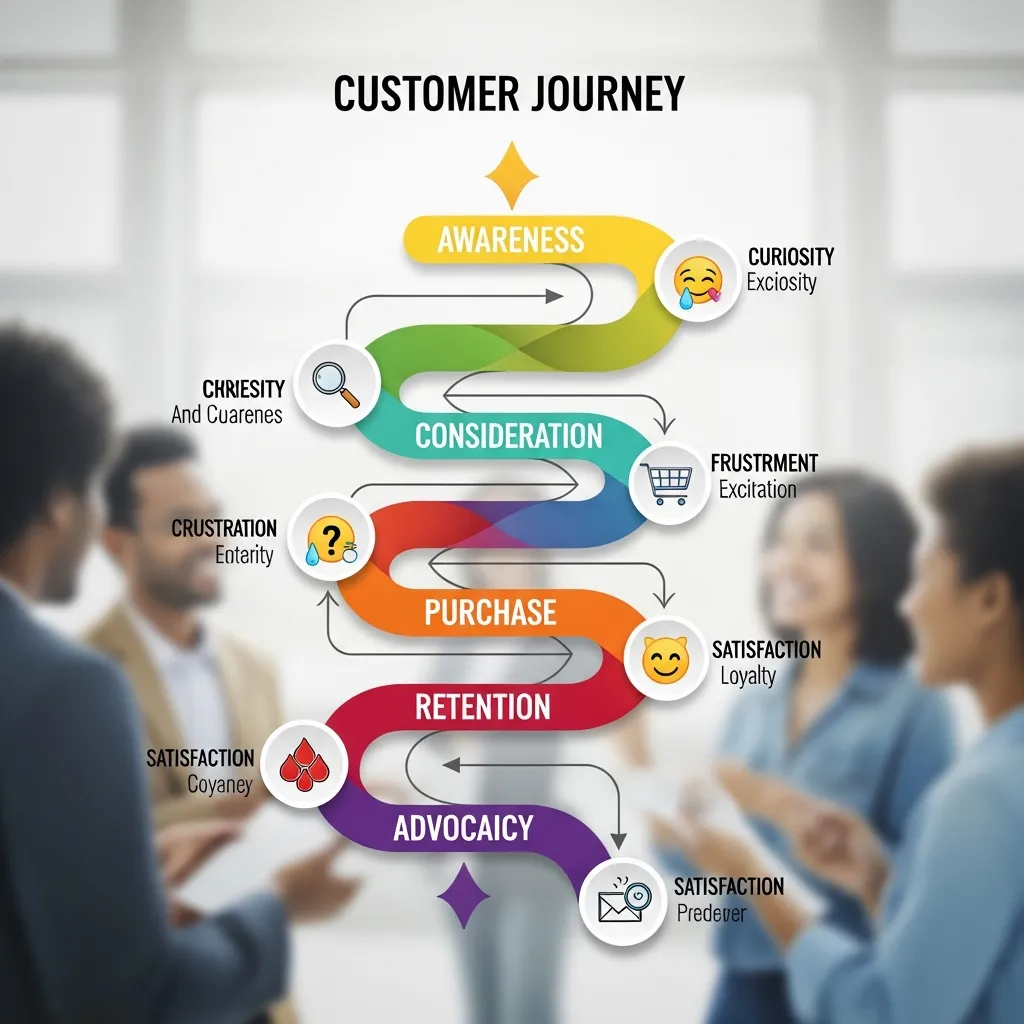
Customer emotion mapping is the process of identifying and documenting the emotional states a customer experiences at each stage of their journey—from first awareness through to post-purchase. It extends the traditional customer journey map by adding an emotional layer, revealing where customers feel delight, frustration, confusion, or trust.
This tool gives marketing and product teams a concrete way to prioritize improvements. A high-friction checkout page might be costing conversions not because of a technical flaw, but because it triggers anxiety or distrust.
How to map customer emotions across touchpoints
Effective customer emotion mapping follows these steps:
- Define your customer personas and their core emotional needs.
- List every touchpoint across awareness, consideration, purchase, and retention.
- Collect qualitative and quantitative data—interviews, NPS surveys, heatmaps, and support transcripts.
- Assign an emotional score to each touchpoint (positive, neutral, or negative).
- Identify emotional peaks and valleys and develop targeted interventions.
Real-world examples of customer emotion mapping
Airbnb uses customer emotion mapping to understand the anxiety travelers feel when booking an unfamiliar property. By identifying this emotional pain point, the company redesigned its review and host-verification systems to build reassurance at the exact moment doubt peaks.
Similarly, financial services firms have used customer emotion mapping to simplify onboarding flows after discovering that complexity triggered feelings of overwhelm that led to drop-off.
The Role of Emotional Memory in Marketing
How emotional memory shapes future purchasing decisions
Emotional memory in marketing refers to the way emotionally charged experiences are encoded more deeply in long-term memory than neutral ones. Psychologists call this the “emotional enhancement of memory” effect. A customer who had a frustrating return experience will recall that feeling vividly the next time they consider your brand—and so will one who was delighted by exceptional service.
This makes emotional memory in marketing one of the most powerful—and underappreciated—drivers of repeat purchase and brand loyalty.
Creating positive emotional brand experiences
An emotional brand experience is every interaction a customer has with your brand that produces a feeling. These experiences compound over time to form a lasting emotional impression. Brands like Apple and Nike have mastered this by engineering every touchpoint—packaging, store design, advertising, customer service—to evoke consistent emotional states: empowerment, excitement, belonging.
Using nostalgia as a marketing lever
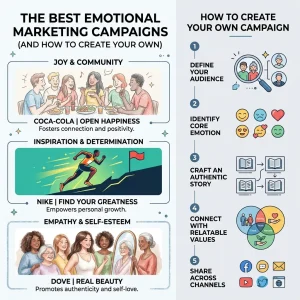
Nostalgia is one of the most potent emotional tools available to marketers. It activates emotional memory in marketing by linking a product or brand to positive past experiences. Coca-Cola’s “Share a Coke” campaign, which replaced its logo with personal names, succeeded partly because it triggered warm, nostalgic associations with personal relationships.
Crafting an Effective Emotional Branding Strategy
What are the core principles of emotional branding?
An emotional branding strategy is a deliberate plan to connect with customers through feeling rather than function alone. The core principles include:
- Authenticity: Emotional appeals only work if they feel genuine. Customers are quick to detect performative empathy.
- Consistency: Every touchpoint should reinforce the same emotional tone.
- Relevance: The emotions you target must align with your audience’s actual values and desires.
- Storytelling: Narratives activate emotion more effectively than feature lists.
Developing brand narratives that resonate emotionally
A strong emotional branding strategy starts with understanding what your customers want to feel—not just what they want to buy. Dove’s “Real Beauty” campaign didn’t sell soap; it sold self-acceptance. That emotional positioning transformed a commodity product into a cultural touchstone.
Start by asking: What emotional state does my customer want to move from, and what state do they want to move to? Your brand narrative should bridge that gap.
Maintaining emotional consistency across all channels
Inconsistency is the enemy of an emotional branding strategy. If your social media voice is warm and playful but your customer service is cold and scripted, the dissonance erodes trust. Document your brand’s emotional DNA—the core feelings you want to evoke—and apply it as a filter across every piece of content, product decision, and customer interaction.
Emotional Intelligence in Business: The Human Side of Marketing
Why emotional intelligence matters for marketers and sales professionals
Emotional intelligence (EQ)—the ability to recognize, understand, and manage emotions in oneself and others—is a foundational skill for anyone in a customer-facing role. Marketers with high EQ craft messages that resonate. Salespeople with high EQ build rapport faster and navigate objections more effectively.
According to TalentSmart research, emotional intelligence accounts for 58% of performance across all job types, and is the single biggest predictor of performance in the workplace.
How emotional intelligence enhances customer relationships
High-EQ teams listen differently. They pick up on unspoken frustrations in customer feedback, read between the lines in support tickets, and design campaigns that reflect genuine empathy rather than assumed preferences. This sensitivity translates directly into stronger customer relationships and higher lifetime value.
Building emotional intelligence within your organization
Developing emotional intelligence within a marketing team involves training in active listening, empathy mapping exercises, and structured feedback loops. Organizations like Google and Microsoft have embedded EQ development into leadership programs, recognizing that emotionally intelligent leaders build more engaged, creative, and customer-centric teams.
Practical Applications of Emotional Decision Making in Marketing
Product design and packaging that triggers positive emotion
Emotional decision making begins before a customer even uses a product. Packaging that feels premium triggers anticipatory pleasure. Colors, textures, and unboxing sequences are all emotional design decisions. Apple’s unboxing experience—deliberate, quiet, minimal—was engineered to produce calm excitement. That emotional response is part of the product.
Advertising campaigns that tap into consumer sentiment
The most shared and remembered ads are emotionally driven. According to the Institute of Practitioners in Advertising (IPA), emotional campaigns outperform rational campaigns on nearly every business metric, including profit growth, market share, and pricing power. Emotional decision making is at the heart of why a two-minute story about a dog and its owner sells insurance more effectively than a breakdown of policy benefits.
Personalization strategies grounded in emotional data
Personalization powered by emotional decision making goes beyond using a customer’s first name. It means delivering content, offers, and experiences that match a customer’s emotional state and context. Streaming platforms like Spotify use listening behavior to infer mood and serve relevant content. E-commerce brands use browsing patterns to identify intent and emotional readiness to purchase.
Challenges and Future Trends in Emotional Decision Making
Overcoming biases in emotional data interpretation
Emotional data is rich but nuanced. A furrowed brow during a product demo might signal confusion—or concentration. Misreading emotional signals can lead to poor product decisions or tone-deaf campaigns. The antidote is triangulating data: combining biometric signals with behavioral data and qualitative research before drawing conclusions.
The evolving landscape of consumer emotion post-pandemic
Consumer emotional priorities have shifted meaningfully in recent years. Trust, safety, community, and authenticity have grown in importance. Brands that mapped customer emotions before 2020 may find their emotional branding strategies are now misaligned with current sentiment. Regular emotional audits—reassessing what your customers feel and value—are essential.
The future of AI and emotional decision making in marketing
AI systems are becoming increasingly capable of detecting and responding to human emotion. Generative AI tools can now adjust tone and messaging based on user behavior signals. Multimodal AI models are beginning to interpret facial expressions, voice tone, and text sentiment simultaneously. As these capabilities mature, emotional decision making will become more deeply embedded in real-time, personalized marketing at scale.
Conclusion
Emotional decision making is not a soft concept—it’s a commercial imperative. From the neuroscience of how the amygdala processes a brand encounter, to the strategic architecture of a full emotional branding strategy, the evidence is clear: businesses that design for emotion outperform those that design for logic alone.
Customer emotion mapping helps you find where your journey creates friction or delight. Emotion recognition in marketing gives you tools to measure what customers feel, not just what they say. Emotional memory in marketing reminds you that every experience leaves a residue—positive or negative—that shapes future behavior. And emotional intelligence is the organizational capability that makes all of it work in practice.
The brands winning the long game aren’t just offering better products. They’re engineering better feelings.
Start by auditing your current customer journey through an emotional lens. Identify one touchpoint where the emotional experience is weak, and redesign it with the principles in this post. Then build outward from there.
FAQs About Emotional Decision Making
What is emotional decision making?
Emotional decision making is the process by which human emotions—rather than purely rational analysis—shape choices and behaviors. The brain’s emotional systems activate before conscious reasoning, meaning feelings often determine direction before logic refines it. In marketing, this explains why customers frequently choose brands that “feel right” over those that are objectively superior on a feature checklist.
How do emotions influence purchasing decisions?
Emotions influence purchasing decisions by serving as shortcuts to judgment. When a product or brand triggers a positive emotional response—trust, excitement, belonging—customers are more likely to buy and less likely to comparison-shop. Negative emotions like uncertainty or frustration, on the other hand, can halt a purchase even when the rational case for buying is strong.
What is emotion recognition in marketing?
Emotion recognition in marketing is the application of AI, biometric sensors, facial coding software, and NLP tools to identify and measure customer emotional states in real time. Brands use emotion recognition in marketing to test creative assets, optimize customer journeys, and personalize communications based on how customers actually feel—not just what they report.
How can customer emotion mapping benefit my business?
Customer emotion mapping helps businesses identify the specific touchpoints where customers feel frustrated, confused, or delighted. By visualizing these emotional peaks and valleys across the full customer journey, teams can prioritize the improvements most likely to increase conversion, retention, and satisfaction. It moves customer experience strategy from guesswork to evidence-based design.
Why is emotional memory in marketing important?
Emotional memory in marketing is important because emotionally charged experiences are stored more durably in long-term memory. Customers remember how your brand made them feel far longer than they remember what it said. A single exceptionally positive interaction can anchor brand loyalty for years; a single strongly negative one can permanently damage trust.
What are the key components of a strong emotional branding strategy?
A strong emotional branding strategy includes: a clearly defined emotional positioning (what feelings you want your brand to evoke), authentic storytelling that connects to those emotions, consistent emotional messaging across all customer touchpoints, and regular measurement of emotional sentiment to track alignment between intent and perception.
How does emotional intelligence relate to marketing success?
Emotional intelligence enables marketers and sales professionals to understand the emotional states of their customers and respond in ways that build trust and connection. High-EQ teams produce more resonant messaging, handle customer objections more skillfully, and design experiences that feel human rather than transactional. TalentSmart research attributes 58% of job performance across roles to emotional intelligence.
Can AI truly understand human emotions in marketing contexts?
AI can detect patterns associated with emotional states—sentiment in text, facial expressions in video, physiological arousal in biometric data—with increasing accuracy. However, AI cannot fully understand emotion the way humans do. It recognizes signals, not meanings. The most effective applications combine AI-powered emotion recognition in marketing with human interpretation to avoid misreadings and ensure ethical application.
What are the ethical considerations in using emotional data?
Key ethical considerations include obtaining informed consent before collecting emotional or biometric data, being transparent with customers about how that data is used, avoiding manipulative applications (such as exploiting vulnerability or grief), and complying with data protection regulations like GDPR. Ethical emotional marketing enhances customer experience rather than exploiting psychological weaknesses.
How can small businesses implement emotional decision making strategies?
Small businesses don’t need expensive biometric tools to leverage emotional decision making. They can start by conducting in-depth customer interviews to understand emotional motivations, auditing brand messaging for emotional consistency, training customer-facing staff in empathy and active listening, and using free sentiment analysis tools to monitor online customer emotion. Authentic storytelling is one of the most accessible and effective emotional marketing tools available at any budget.
What are the biggest mistakes to avoid in emotional marketing?
The most common mistakes include: targeting the wrong emotions (aspirational messaging for an audience whose priority is reassurance), being emotionally inconsistent across channels, using emotional appeals that feel inauthentic or manipulative, and failing to follow up emotional promises with actual customer experience. Emotional decision making works against a brand just as powerfully when the emotional experience is negative.
Where can I learn more about emotional decision making in marketing?
Recommended resources include Descartes’ Error by Antonio Damasio (neuroscience of emotion and decision making), Emotional Branding by Marc Gobé, the IPA’s effectiveness databank for empirical evidence on emotional advertising, and platforms like Nielsen Consumer Neuroscience and Forrester Research for ongoing industry research. Academic journals including the Journal of Consumer Psychology also publish peer-reviewed studies on emotional decision making.