Digital Marketing Expert: Strategies, Services, and Solutions for Business Growth

A digital marketing expert helps businesses build a strong online presence, attract potential customers, and increase sales through effective digital strategies. From search engine optimization and social media marketing to paid advertising, email campaigns, and content creation, digital marketing plays an essential role in modern business growth. Working with a digital marketing expert allows businesses to identify their target audience, improve brand visibility, and make better marketing decisions using data and performance insights. Whether you run a small business, an e-commerce store, or an established company, the right digital marketing approach can help you reach your goals, strengthen customer relationships, and remain competitive in an increasingly digital marketplace.
Digital Marketing Specialist
A digital marketing specialist helps businesses promote their products and services through online channels. These professionals understand how search engines, social media platforms, websites, and digital advertising work together to attract customers and generate meaningful results. A digital marketing expert can evaluate a company’s current online presence, identify areas for improvement, and develop campaigns that align with its business objectives.
The responsibilities of a specialist often include keyword research, content planning, search engine optimization, email marketing, and campaign performance analysis. Instead of relying on guesswork, they use audience insights and measurable data to understand which marketing activities deliver the best results. This approach helps businesses use their budgets more effectively while improving customer engagement.
Choosing the right specialist also means finding someone who understands your industry, audience, and competition. An experienced professional can recommend suitable marketing channels, establish realistic performance goals, and continuously improve campaigns as customer behavior changes.
Digital Marketing Consultant
A digital marketing consultant provides strategic guidance to businesses that want to improve their online marketing performance. Unlike a professional who focuses primarily on executing individual campaigns, a consultant often examines the bigger picture, including business objectives, customer acquisition costs, brand positioning, and long-term growth opportunities.
A digital marketing expert working in a consulting role can identify weaknesses in an existing strategy and recommend practical improvements. For example, a business might receive website traffic without generating enough leads or sales. A consultant can investigate the customer journey, review landing pages, evaluate advertising campaigns, and suggest changes that encourage visitors to take action.
Consulting services are particularly useful for businesses that have an internal marketing team but need additional expertise. Consultants can help establish priorities, select appropriate tools, improve reporting processes, and create a roadmap for sustainable growth. Their recommendations should be based on the company’s available resources, competitive environment, and measurable objectives.
Online Marketing Expert
 An online marketing expert understands how to connect businesses with potential customers across the internet. This includes optimizing websites, developing useful content, managing social media channels, running advertising campaigns, and creating email marketing programs that encourage repeat purchases.
A digital marketing expert focuses on reaching the right audience at the right time with relevant messages. For instance, a company launching a new product may combine informative blog content, targeted social media campaigns, search advertising, and follow-up emails to guide potential customers from awareness to purchase.
Successful online marketing requires consistency and a clear understanding of customer needs. Businesses should provide useful information, maintain a professional website, and ensure that their messaging remains consistent across different platforms. By monitoring engagement, conversions, and customer feedback, marketers can determine which activities deserve more attention.
Online marketing also supports businesses that want to expand beyond their local markets. With suitable targeting and a well-planned content strategy, companies can introduce their products to new audiences without relying exclusively on traditional advertising methods.
Digital Marketing Strategies
Effective digital marketing strategies begin with clear business goals. Companies should determine whether they want to increase website traffic, generate qualified leads, improve brand awareness, or encourage existing customers to purchase again. These goals influence the channels, budgets, and performance indicators used throughout a campaign.
A digital marketing expert can develop a coordinated strategy that combines SEO, content marketing, paid advertising, social media, and email communication. Rather than treating every channel separately, the strategy should create a consistent customer experience. A blog article might introduce a problem, a social media campaign could increase its visibility, and an email sequence could provide additional information to interested subscribers.
Businesses can also explore email marketing automation to deliver timely, relevant messages based on subscriber actions. Automation can support welcome emails, abandoned-cart reminders, customer education, and post-purchase follow-ups.
A successful strategy requires regular evaluation. Marketers should review campaign performance, understand changes in audience behavior, and adjust their approach when necessary. This continuous improvement process helps businesses avoid wasting resources on activities that fail to support their objectives.
SEO Marketing Specialist
Search engine optimization helps websites appear more prominently in organic search results. An SEO marketing specialist works to improve website structure, content relevance, technical performance, and authority so that search engines can better understand and recommend a website to relevant users.
A digital marketing expert with SEO experience begins by researching the terms potential customers use when searching for products or services. This research informs page titles, headings, articles, service descriptions, and other website content. However, effective SEO involves much more than repeating keywords. Content must answer genuine questions, provide accurate information, and offer a useful experience.
Technical SEO is equally important. Websites should load efficiently, work well on mobile devices, use clear navigation, and allow search engines to discover important pages. Internal linking also helps readers move between related articles and services while supporting website structure.
SEO generally requires time and ongoing effort. Rankings depend on competition, content quality, website condition, and other factors. Businesses should therefore measure progress through relevant indicators such as organic traffic, qualified leads, conversions, and visibility for important search terms instead of expecting immediate results.
Social Media Marketing Expert
Social media marketing helps businesses build relationships with audiences through platforms where people communicate, discover brands, and share information. A social media marketing expert develops content that reflects a company’s identity while encouraging meaningful interaction with its intended audience.
A digital marketing expert can help businesses select appropriate platforms based on their customers and objectives. A business targeting professionals may benefit from LinkedIn, while a visually oriented brand might prioritize Instagram or TikTok. The right choice depends on audience behavior, content capabilities, and the nature of the products or services offered.
Effective social media marketing involves more than publishing promotional messages. Businesses can share educational content, answer customer questions, demonstrate products, introduce team members, and respond to feedback. These activities help humanize a brand and create opportunities for stronger customer relationships.
Consistency matters, but every post should have a purpose. Companies should track engagement, referral traffic, audience growth, and conversions to understand what resonates with their followers. Paid social campaigns can complement organic content when a business needs to reach specific audiences or promote an important offer.
Digital Advertising Services
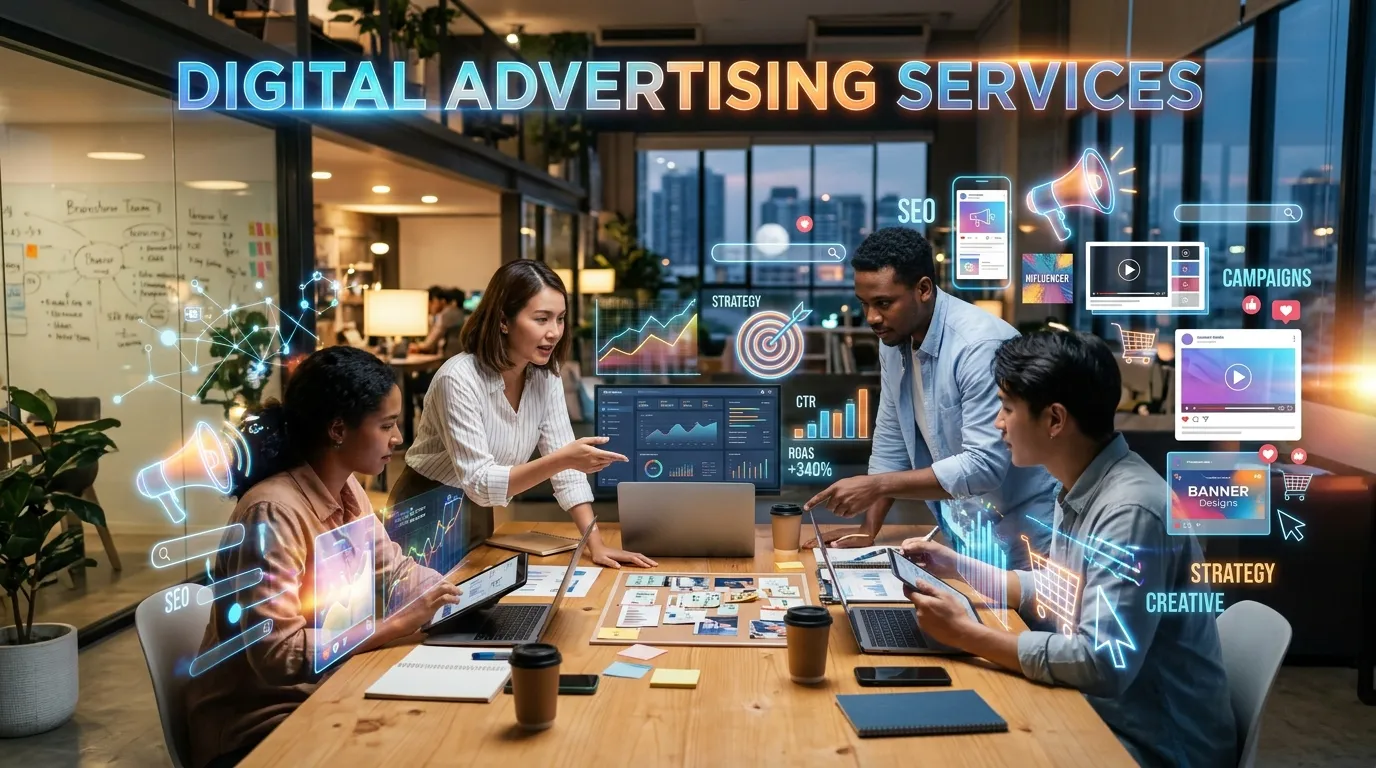 Digital advertising enables businesses to reach targeted audiences through search engines, social networks, display placements, and other online channels. Depending on the campaign objective, advertisements can generate website visits, leads, product sales, or brand awareness.
A digital marketing expert can help determine the appropriate advertising platforms, audience segments, bidding approaches, and creative formats. Search advertising may be useful when customers are actively looking for a solution, whereas social advertising can introduce a product to people who have not yet considered purchasing it.
Campaign performance depends on more than the advertisement itself. Landing page quality, offer relevance, audience targeting, and the checkout or inquiry process all influence results. Businesses should also establish a clear budget and track metrics such as cost per lead, conversion rate, and return on advertising spend.
Advertising campaigns need regular testing and optimization. Marketers can compare different headlines, images, audiences, and landing pages to discover which combinations perform best. They should also monitor frequency and audience fatigue to prevent repetitive advertising from reducing engagement.
For businesses with limited budgets, starting with a focused campaign and expanding based on reliable performance data is often more practical than investing heavily across multiple channels immediately.
Internet Marketing Professional
An internet marketing professional helps businesses coordinate their online promotional activities into a consistent customer experience. This role may include website optimization, content distribution, lead generation, analytics, reputation management, and customer retention.
A digital marketing expert can examine how customers discover a business, evaluate its offerings, and decide whether to make a purchase. Understanding this journey helps marketers identify gaps between awareness and conversion. For example, visitors may need clearer product information, stronger trust signals, or a simpler contact process before they feel comfortable taking the next step.
Internet marketing also involves maintaining accurate business information, responding professionally to reviews, and ensuring that website content reflects the company’s current offerings. These details can influence customer confidence and purchasing decisions.
Measurement is essential for evaluating performance. Analytics tools can reveal where visitors originate, which pages attract attention, and where users leave the website. Marketers can use these insights to improve content, refine landing pages, and prioritize activities that contribute to business growth.
Digital Marketing Agency
A digital marketing agency provides businesses with access to professionals who specialize in different areas of online promotion. Depending on the agency, services may include SEO, content development, paid advertising, website design, email marketing, and social media management.
Hiring a digital marketing expert through an agency can be useful when a company needs several complementary services but does not want to build a complete in-house department. An agency may offer strategic planning alongside execution, reporting, and ongoing campaign management.
However, businesses should evaluate agencies carefully. Relevant experience, transparent communication, realistic expectations, and clear reporting are more valuable than promises of guaranteed rankings or instant sales. A reliable agency explains its approach, defines measurable objectives, and provides regular updates on progress.
Companies should also establish ownership of important assets, including website accounts, advertising accounts, analytics data, and creative materials. Clear agreements help prevent confusion and make future transitions easier if business requirements change.
The best agency relationship is collaborative. Businesses provide information about their products, customers, and commercial priorities, while the agency contributes specialist knowledge and practical execution.
Digital Marketing Services for Businesses
Digital marketing services for businesses should reflect their size, industry, budget, and growth objectives. A local service provider may prioritize local SEO and customer reviews, while an online retailer may focus on product visibility, paid acquisition, and customer retention.
A digital marketing expert can help a business select services according to its most pressing needs rather than purchasing every available option. A new company may initially need a professional website, clear service pages, and basic search optimization. An established business with consistent traffic might benefit more from conversion rate optimization, audience segmentation, and marketing automation.
Businesses exploring online retail opportunities can also review e-commerce business ideas to understand different models and potential market opportunities. Selecting a suitable business model and developing a clear value proposition can make subsequent marketing decisions more effective.
Every service should support a defined objective. Companies can establish key performance indicators, review results regularly, and reallocate budgets when certain activities outperform others. This disciplined approach helps marketing become a measurable business investment rather than an expense without a clear purpose.
Digital Marketing Strategist
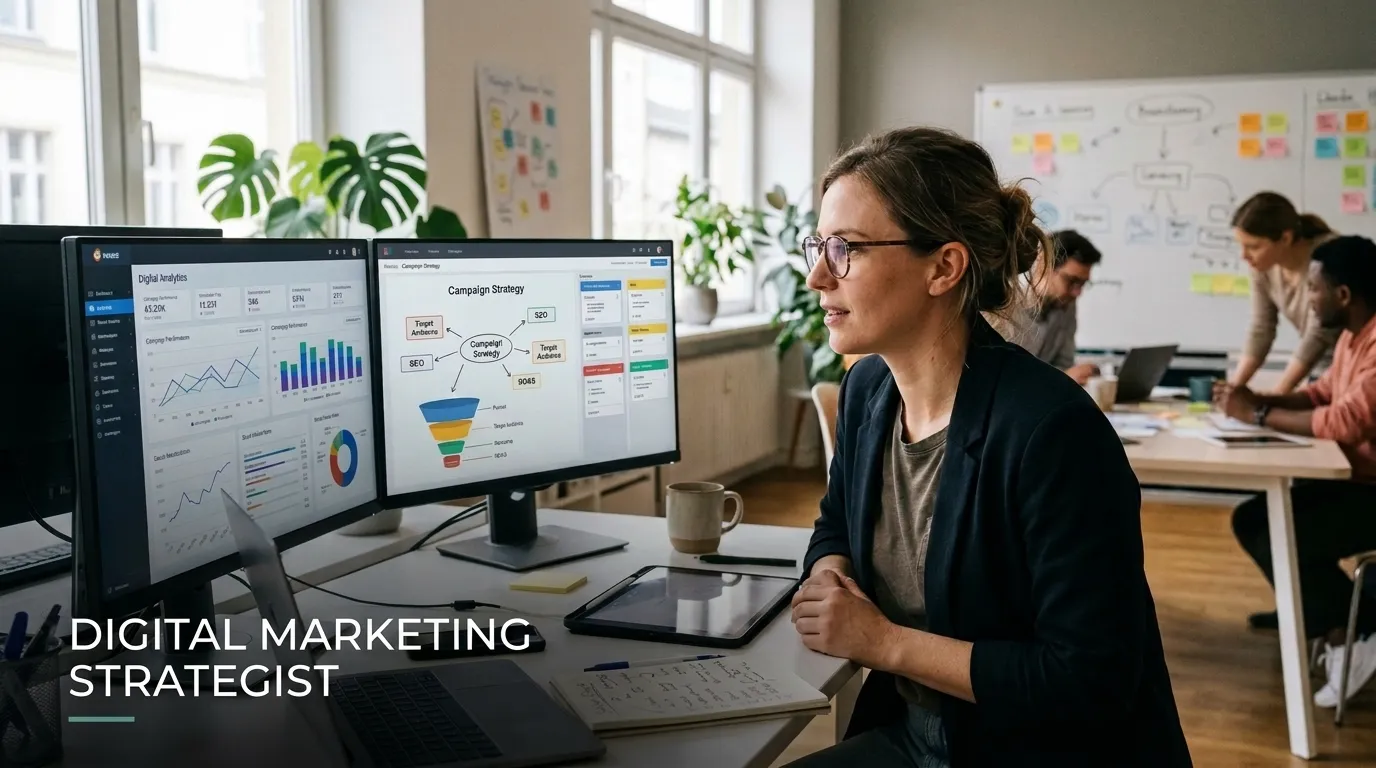 A digital marketing strategist connects marketing activities with wider business objectives. Rather than concentrating on a single platform, a strategist considers the target market, competitive positioning, customer journey, available resources, and opportunities for long-term growth. A digital marketing expert in a strategic role may begin by assessing the company’s existing performance and identifying its most valuable customer segments. The strategist then determines which channels deserve priority, how different campaigns should work together, and what results should be measured.
Businesses can strengthen this process by following a digital marketing strategy guide when developing their plans. A structured approach makes it easier to establish priorities, coordinate marketing activities, and maintain consistency across campaigns. Strategic planning should remain flexible. Market conditions, customer preferences, and platform capabilities can change, requiring businesses to reassess their assumptions. Regular performance reviews allow marketers to identify new opportunities while maintaining focus on long-term objectives. A strong strategist also ensures that marketing messages match the customer experience. Advertising claims, website information, product quality, and customer support should reinforce one another to build trust and encourage repeat business.
Professional Digital Marketing Services
Professional digital marketing services help businesses improve online visibility, attract qualified prospects, and build lasting customer relationships. These services can combine research, strategic planning, campaign execution, performance analysis, and continuous optimization into one coordinated process. A digital marketing expert should begin by understanding the company’s goals, audience, competitive landscape, and budget. This information creates the foundation for selecting suitable marketing channels and determining how success will be measured.
Businesses should also consider how digital channels interact with other forms of promotion. For example, companies that use television advertising can explore future-proofing TV advertising trends and strategies to understand how traditional media strategies may evolve alongside digital audience behavior.
Similarly, companies can adapt their campaigns to changing customer demand by reviewing seasonal marketing strategies. Seasonal promotions can help businesses prepare relevant offers, organize campaign schedules, and communicate with customers when products or services are particularly useful. Professional marketing is an ongoing process rather than a one-time activity. Regular analysis, quality content, responsible advertising, and customer-focused communication help businesses strengthen their digital presence over time. By choosing services that match their needs and evaluating results consistently, companies can build a more sustainable marketing operation.
Conclusion
Building a successful online presence requires a clear strategy, consistent execution, and a commitment to understanding customer needs. From search engine optimization and social media to advertising, email marketing, and business consulting, each channel can contribute to growth when used for the right purpose.
FAQ
1. What does a digital marketing expert do?
A digital marketing expert helps businesses promote their products and services online through SEO, social media, content marketing, paid advertising, email campaigns, and analytics. The objective is to increase relevant visibility, attract potential customers, and improve measurable business outcomes.
2. Why is digital marketing important for businesses?
Digital marketing allows businesses to reach specific audiences, communicate their value, and measure campaign performance. It can also help companies compete online, build brand awareness, generate leads, and maintain relationships with existing customers.
3. How much do digital marketing services cost?
Costs vary according to the services required, campaign complexity, competition, location, and provider experience. Some businesses pay for individual projects, while others use monthly retainers or advertising management fees. Companies should request a clear scope of work and budget breakdown before committing.
4. How long does digital marketing take to show results?
The timeline depends on the channel and objective. Paid advertising may generate traffic quickly, while SEO and organic audience development typically require sustained effort over several months. Results also depend on competition, website quality, budget, and campaign execution.
5. What is the difference between SEO and digital advertising?
SEO focuses on improving organic visibility in search results, while digital advertising uses paid placements to reach audiences. SEO can support long-term traffic growth, whereas paid campaigns offer more immediate opportunities to reach targeted customers. Many businesses benefit from using both.
6. Should a small business hire a digital marketing expert?
A small business may benefit from professional guidance when it lacks the time, skills, or resources to manage marketing effectively. A specialist can help prioritize activities, improve online visibility, and develop a strategy that fits the company’s budget and goals.
7. How do I choose the right digital marketing agency?
Review the agency’s relevant experience, service offerings, communication practices, reporting methods, and understanding of your industry. Ask about measurable objectives and account ownership. Avoid providers that guarantee specific rankings or promise unrealistic results.
8. Which digital marketing channel is best for generating leads?
The best channel depends on your audience, offer, industry, and budget. SEO can attract people actively searching for solutions, paid advertising can target specific audiences, and social media can build awareness and engagement. Testing and measurement help determine the strongest options.
9. How can I measure digital marketing success?
Businesses can monitor organic traffic, qualified leads, conversion rates, customer acquisition costs, engagement, and revenue attributed to marketing. The most useful metrics are those connected to specific business objectives rather than numbers that look impressive but do not influence decisions.
10. Can digital marketing help an e-commerce business grow?
Yes. Digital marketing can help e-commerce businesses attract shoppers, improve product discovery, recover abandoned carts, and encourage repeat purchases. Combining SEO, paid campaigns, email automation, useful product content, and customer-focused experiences can support sustainable growth.