Scarcity Marketing Psychology: How Urgency Drives Sales

Scarcity Marketing Psychology leverages the human fear of missing out to drive purchasing decisions. By creating genuine urgency and exclusivity, businesses can significantly boost conversions—provided they use these tactics ethically and consistently across their digital marketing process.
Scarcity Marketing Psychology sits at the intersection of human behavior and smart business strategy. When a product feels rare, our brains respond differently. The calm, rational part of decision-making steps aside, and a more instinctive, emotional drive takes over. That shift—from “I’ll think about it” to “I need this now”—is exactly what scarcity marketing is designed to trigger.
For digital marketers, this psychological lever is one of the most powerful tools available. From countdown timers on e-commerce pages to “only 3 seats left” alerts on booking platforms, scarcity signals are woven into virtually every high-converting digital experience. And yet, many businesses still misuse or misunderstand the technique—either overdoing it until customers stop caring, or applying it inauthentically until trust erodes entirely.
This guide digs into the psychological foundations of Scarcity Marketing Psychology, breaks down actionable strategies across multiple channels, and explores how to apply these techniques responsibly. Whether you’re refining your digital marketing process or building a campaign from the ground up, you’ll find concrete, research-backed insights here.
What Is Scarcity Marketing Psychology?
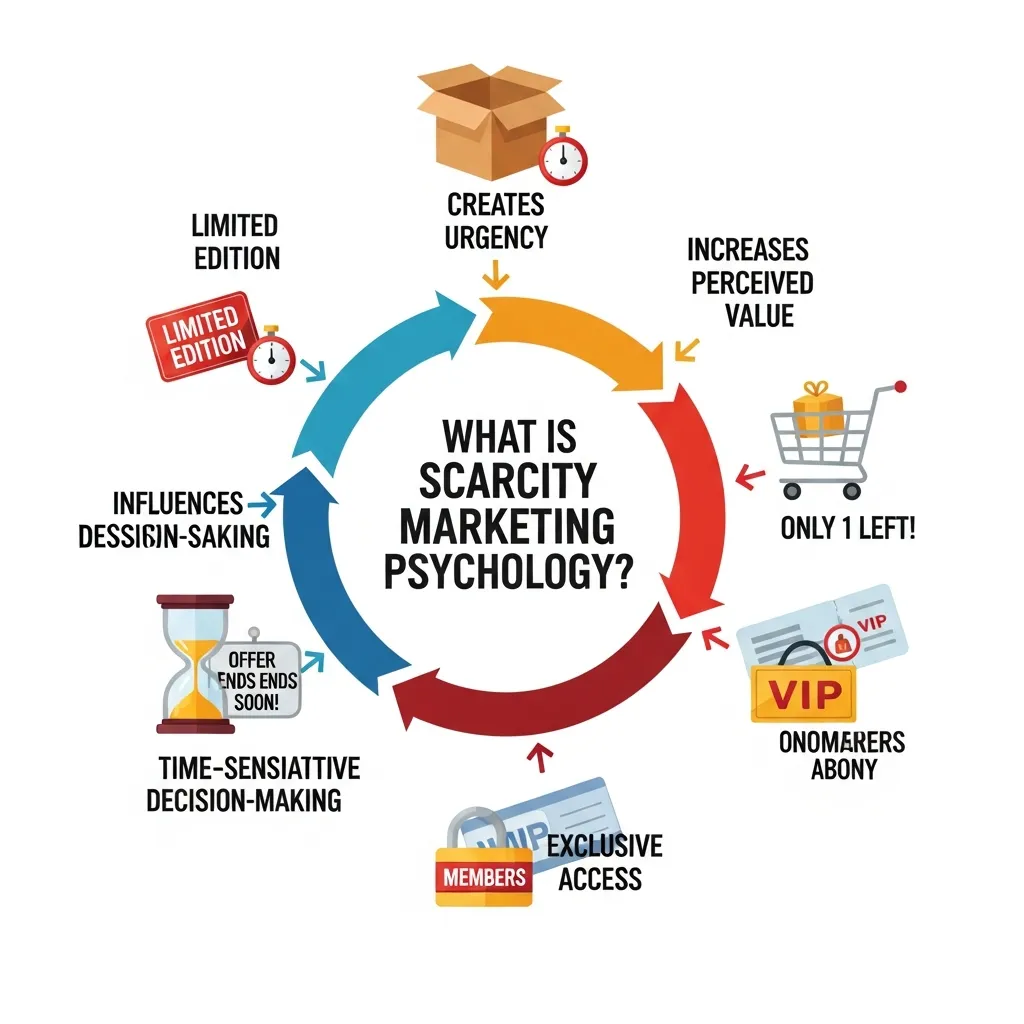
Scarcity marketing is the practice of presenting a product, service, or opportunity as limited in availability—either by time, quantity, or exclusivity—to accelerate consumer decision-making. The underlying principle is simple: people assign higher value to things they perceive as rare.
This isn’t a modern invention. Economists have long described how perceived scarcity inflates demand. Psychologist Robert Cialdini formalized it in his 1984 book Influence, listing scarcity as one of the six core principles of persuasion. His research showed that people are more motivated by the fear of losing something than by the prospect of gaining the same thing—a concept known as loss aversion.
Applied to marketing, this means that a message framing a missed opportunity (“Only 2 items left!”) is typically more persuasive than one framing a gain (“Available now!”).
Why Scarcity Works: The Psychology Behind Emotional Marketing Examples
Three core psychological mechanisms explain why scarcity marketing consistently converts.
Loss Aversion — According to behavioral economists Daniel Kahneman and Amos Tversky, people feel the pain of losing roughly twice as strongly as the pleasure of gaining. Scarcity messaging activates this bias by framing inaction as loss.
The Reactance Effect — When people believe their freedom to access something is being restricted, they want it more. This psychological phenomenon, known as reactance, is why “limited access” messaging can dramatically increase desire for a product.
Social Proof and Competition — Seeing that others are competing for the same limited resource amplifies perceived value. Amazon’s “12 people are viewing this item right now” is a textbook emotional marketing example that taps into both FOMO (fear of missing out) and social validation simultaneously.
These three forces combine to create urgency—and urgency is what closes deals.
Key Principles of Scarcity Marketing
How Do Limited-Time Offers Use Advertising Psychology Techniques?
Time-based scarcity is the most widely used form of scarcity marketing. Flash sales, countdown timers, and promotional deadlines all communicate that the opportunity won’t last forever.
Advertising psychology techniques used here include:
- Countdown timers that show hours, minutes, and seconds remaining
- Deadline language such as “Offer expires at midnight” or “Today only”
- Urgency-coded color schemes—red and orange trigger alertness and urgency associations in most Western consumers
The key is specificity. “Limited time” is vague and easily ignored. “Expires in 4 hours and 22 minutes” creates a concrete, ticking deadline that demands attention.
What Is Limited Quantity Scarcity and Why Does Exclusivity Work?
Quantity-based scarcity signals that supply is running low. Stock counters, low-inventory alerts, and “while supplies last” messaging all fall into this category.
Platforms like Booking.com and Airbnb have built near-constant scarcity cues into their UX—”Only 1 room left at this price” appears on the majority of listings, conditioning users to act immediately rather than deliberate.
Exclusivity adds another dimension. When a product is positioned as available to a select group—members only, early-access subscribers, VIP customers—it signals social status, which increases desire beyond mere availability.
How Does Uniqueness and Customization Drive Scarcity Value?
Special editions and one-of-a-kind items tap into the psychology of uniqueness—the human desire to own something others cannot. Nike’s limited sneaker drops and Apple’s product launch queues are iconic examples. These aren’t just supply constraints; they’re engineered cultural moments that make scarcity a brand identity statement.
Customization works similarly. When consumers co-create or personalize a product, they develop what psychologists call the “IKEA effect”—an inflated sense of value for things they’ve had a hand in making. Combine customization with limited availability, and you have a potent emotional marketing example.
Implementing Scarcity in the Digital Marketing Process
E-commerce: Flash Sales and Stock Counters
In e-commerce, scarcity lives in the product page. Effective implementations include:
- Real-time inventory counters: “Only 4 left in stock” beneath a product image
- Flash sale banners: Site-wide promotions with prominent timers
- Cart reservation timers: “Your cart is held for 10 minutes”—common in ticketing platforms like StubHub
Shopify merchants using urgency apps consistently report higher add-to-cart rates when scarcity indicators are present. The impact is especially strong for impulse-purchase categories.
Content Marketing: How Does Exclusive Content Access Create Scarcity?
Paywalls, gated content, and membership communities all apply scarcity logic to content. When readers know that a specific newsletter, report, or video series is only available to subscribers, perceived value rises.
This is also where YouTube emotional marketing enters the equation. Creators who announce limited-time access to course content, early video releases, or members-only livestreams leverage digital scarcity effectively. The platform’s “Members Only” badge on videos is a visible scarcity signal that drives subscription conversions.
Email Marketing: Time-Sensitive Promotions
Email remains one of the highest-ROI channels for scarcity-driven campaigns. Best practices include:
- Subject lines that signal urgency: “Last chance: 20% off ends tonight”
- Personalized stock alerts: “The item in your wishlist is almost sold out”
- Re-engagement triggers: Automated emails sent when a browsed product is nearly out of stock
According to Campaign Monitor, emails with urgency-based subject lines have open rates 22% higher than standard promotional emails. The digital marketing process here is simple: trigger, personalize, time it right.
Social Media: FOMO Tactics and YouTube Emotional Marketing
Social platforms are built for FOMO. Instagram Stories, LinkedIn event countdowns, and Twitter/X trending topics all reinforce the sense that something is happening right now—and you might miss it.
YouTube emotional marketing works through scarcity in several ways. Limited premiere events, early access for subscribers, and comment-section exclusives all create social urgency. Creators like MrBeast have built entire content formats around scarcity and competition, drawing hundreds of millions of views by making participation feel rare and time-sensitive.
For brands, Instagram Live flash sales, TikTok LIVE commerce, and limited-time Reels promotions all translate scarcity psychology directly into social revenue.
Ethical Considerations and Best Practices

Authenticity vs. Manipulation: Where Is the Line?
Scarcity marketing becomes manipulative when the scarcity is fabricated. Fake countdown timers that reset upon page refresh, false “low stock” warnings, and artificial demand signals all erode consumer trust—and increasingly violate consumer protection regulations in the US, EU, and Australia.
The authenticity test is straightforward: is the limitation real? If 500 units exist and 498 are sold, the scarcity is genuine. If the timer resets at midnight regardless of what happens, it’s deceptive.
How to Build Long-Term Trust Using Scarcity Marketing
Trust-building scarcity acknowledges the constraint clearly and explains why it exists. A brand saying “We limit each production run to 1,000 units to maintain quality” is more credible—and more compelling—than a generic “Limited stock available.”
Transparency signals confidence. Brands that explain their scarcity rather than just asserting it tend to attract customers who appreciate quality and exclusivity, not just a good deal.
How Do You Avoid Consumer Fatigue From Scarcity Tactics?
Overuse kills the effect. If every email screams “Last chance!”, none of them will be believed. Reserve scarcity messaging for genuinely limited situations—product launches, seasonal campaigns, or milestone events.
Rotating scarcity types also helps. Alternate between time-based, quantity-based, and exclusivity-based tactics so the messaging doesn’t become formulaic.
Measuring the Impact of Scarcity Campaigns
What Are the Key Metrics to Track in a Scarcity Campaign?
Scarcity campaigns should be evaluated against the following KPIs:
- Conversion rate lift: Compare conversion rates during scarcity campaigns vs. standard periods
- Average order value (AOV): Scarcity often accelerates decisions but can also boost AOV if bundled offers are time-limited
- Cart abandonment rate: A well-timed scarcity prompt should reduce abandonment
- Email open and click-through rates: Urgency subject lines should measurably outperform standard ones
- Return rate: Scarcity-driven purchases sometimes result in higher returns if buyers experience post-purchase regret—track this carefully
How Should Marketers A/B Test Scarcity Elements?
A/B testing is non-negotiable for refining scarcity tactics. Elements worth testing include:
- Timer placement (above vs. below the CTA)
- Countdown style (numerical vs. progress bar)
- Stock counter phrasing (“Only 3 left” vs. “3 units remaining”)
- Email subject line urgency levels
- The impact of scarcity on different product categories
Run tests for statistically significant periods—at least two weeks unless your traffic volume allows faster conclusions—and isolate variables to avoid muddying the results.
Case Studies: Successful Scarcity Marketing Campaigns
How Has Amazon Used Scarcity Marketing Psychology Effectively?
Amazon’s Prime Day is perhaps the world’s most sophisticated scarcity marketing event. Time-limited deals, quantity counters, lightning deals that vanish in hours—Prime Day packs every major scarcity trigger into a single 48-hour window. In 2023, Prime Day generated over $12.9 billion in sales globally (according to Adobe Analytics), with urgency-driven UX design playing a central role.
How Does the Sneaker Industry Use Scarcity to Drive Emotions Behind Investment?
Nike’s SNKRS app has turned sneaker releases into cultural events defined by scarcity. Limited drops sell out in under a minute, driving secondary market prices—and emotions behind investment—to multiples of the original retail price. Buyers aren’t just purchasing shoes; they’re purchasing access to a rare asset. The perceived investment value of limited sneakers has created an entire economy on platforms like StockX and GOAT, with some pairs appreciating 500% or more.
How Does Booking.com Apply Real-Time Scarcity in Travel Marketing?
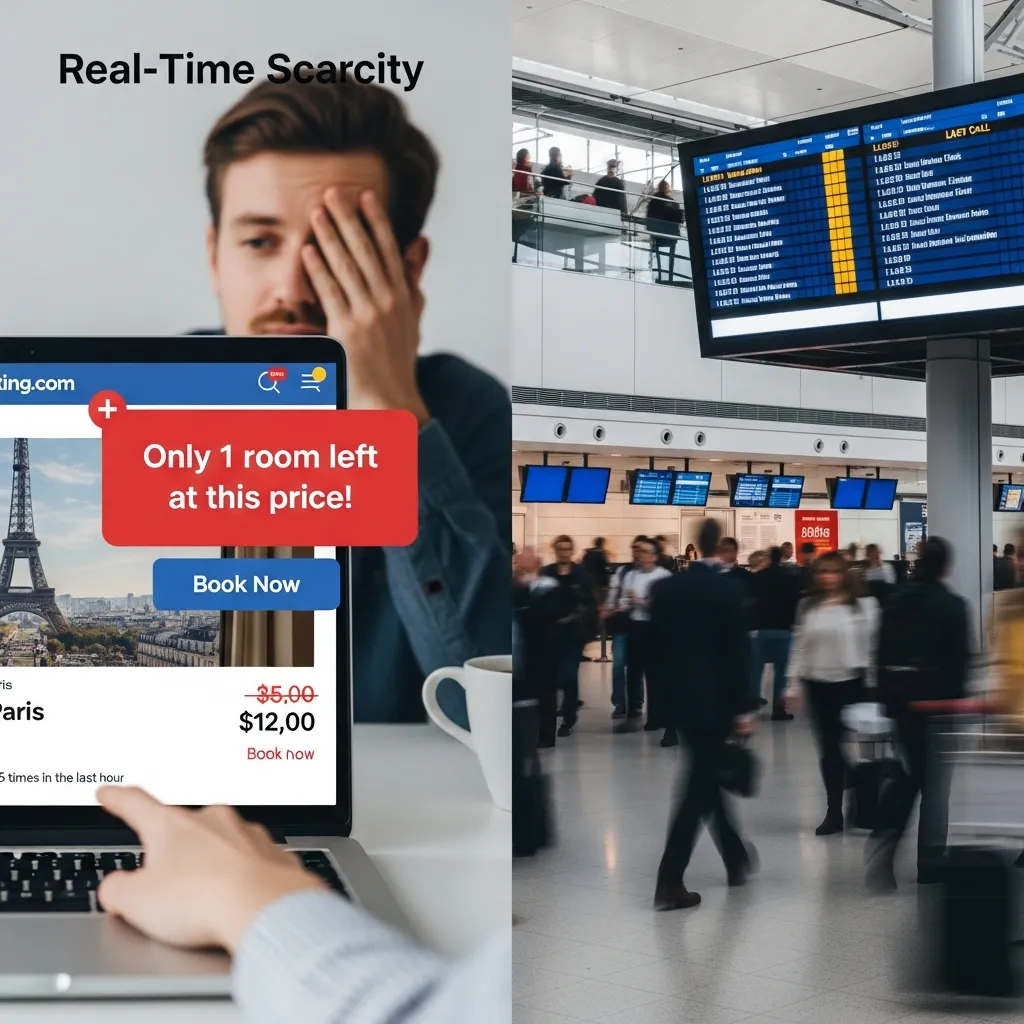
Booking.com deploys real-time scarcity across every stage of the booking funnel. Messages like “Booked 12 times in the last 24 hours,” “Only 1 room left,” and “73% of similar properties are already booked for your dates” layer multiple scarcity signals simultaneously. A Cornell University study found that urgency and social proof cues like these can increase booking conversion rates by up to 14.4%.
Conclusion
Scarcity Marketing Psychology remains one of the most well-documented and reliably effective techniques in the digital marketing process. When grounded in genuine limitation, clearly communicated, and ethically applied, it aligns with natural human psychology—helping consumers make decisions they genuinely benefit from.
The brands that get the most from scarcity marketing treat it as a long-term trust strategy, not a short-term conversion trick. They understand that every scarcity claim is a promise, and every promise kept builds the credibility needed to make the next scarcity campaign work even harder.
Use it honestly. Test it rigorously. And let the psychology do the rest.
Frequently Asked Questions About Scarcity Marketing Psychology
What is scarcity marketing?
Scarcity Marketing Psychology is the strategy of using limited availability, time-sensitive offers, or exclusive access to encourage faster buying decisions. It works by increasing perceived value and making customers feel they may miss out if they wait too long.
How does scarcity marketing affect consumer behavior?
Scarcity Marketing Psychology affects consumer behavior by triggering loss aversion and fear of missing out. When people believe a product or offer is limited, they are more likely to act quickly because the possibility of losing the opportunity feels more powerful than the benefit of waiting.
What are some examples of scarcity in advertising?
Common examples of Scarcity Marketing Psychology in advertising include countdown timers, “only a few left in stock” messages, limited-edition product launches, flash sales, and members-only offers. These tactics are designed to make the offer feel more valuable and urgent.
Is scarcity marketing ethical?
Scarcity Marketing Psychology is ethical when the scarcity is real and clearly communicated. It becomes unethical when brands use fake low-stock warnings, false deadlines, or misleading urgency messages that pressure customers without a genuine limitation behind them.
How can I use scarcity marketing for my business?
To apply Scarcity Marketing Psychology in your business, start with offers that are genuinely limited, such as seasonal products, exclusive bonuses, limited stock, or time-based promotions. Then highlight that limitation clearly through your messaging, landing pages, and email campaigns.
What is FOMO in marketing?
FOMO, or fear of missing out, is one of the strongest drivers behind Scarcity Marketing Psychology. It creates a sense of anxiety around losing access to something valuable, which often motivates people to take action more quickly than they otherwise would.
Does scarcity marketing work for all products?
Scarcity Marketing Psychology tends to work best for products that have emotional appeal, exclusivity, or strong perceived value. It may be less effective for everyday low-interest products where buyers care more about price or convenience than urgency or exclusivity.
What is the difference between urgency and scarcity in marketing?
In Scarcity Marketing Psychology, scarcity refers to limited quantity, while urgency refers to limited time. For example, “only 3 left” is scarcity, while “sale ends tonight” is urgency. Many of the strongest campaigns combine both to create even more motivation to act.
How do you avoid negative consumer reactions to scarcity tactics?
To use Scarcity Marketing Psychology without damaging trust, keep your claims honest and avoid using scarcity in every campaign. Customers respond better when the limitation is believable, relevant, and explained clearly rather than feeling like a manipulative sales tactic.
Can scarcity marketing be combined with other strategies?
Yes, Scarcity Marketing Psychology often works even better when combined with social proof, personalization, email automation, and loyalty programs. For example, showing that an item is low in stock while also highlighting positive reviews can increase both trust and urgency.
What are the main benefits of using scarcity marketing?
The main benefits of Scarcity Marketing Psychology include higher conversion rates, faster purchasing decisions, lower cart abandonment, stronger perceived value, and greater brand exclusivity. When used ethically, it can support both short-term sales and long-term customer interest.
How do you measure the success of a scarcity marketing campaign?
To measure Scarcity Marketing Psychology, track conversion rates, click-through rates, cart abandonment, average order value, and overall campaign revenue. A/B testing different scarcity messages, timer placements, and offer structures can help identify which tactics are most effective.