Why Emotional Marketing Matters in Modern Business
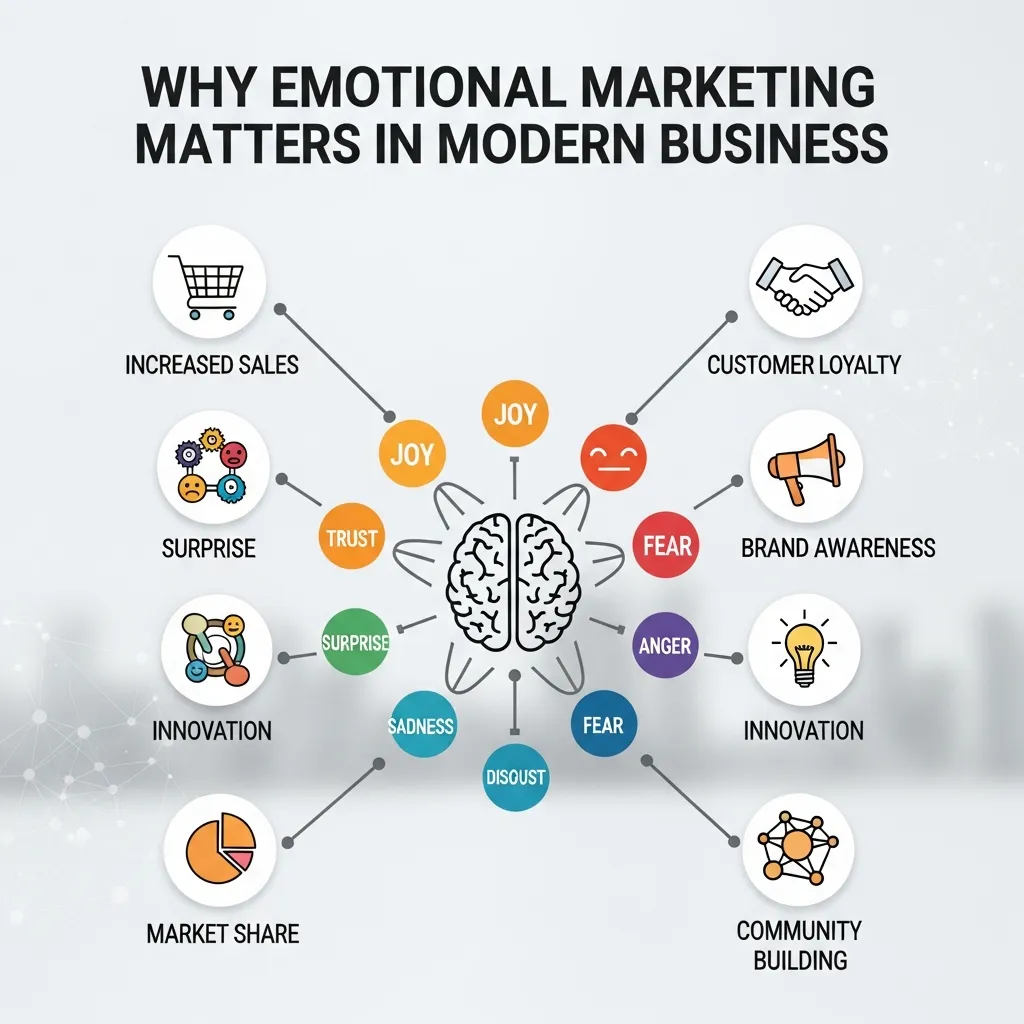
Emotional Marketing Matters because it helps brands move beyond logic and connect directly with human emotions. By using emotional triggers, authentic storytelling, and meaningful customer experiences, businesses can build stronger relationships, increase customer value, and turn casual buyers into loyal brand advocates.
Understanding why Emotional Marketing Matters enables businesses to create lasting emotional connections that inspire trust, encourage action, and drive sustainable brand growth in today’s competitive marketplace.
Understanding the True Power of Emotional Marketing
To truly grasp the power of emotional marketing, one must look at it not just as a tactic but as a fundamental shift in how brands communicate. Unlike traditional marketing, which relies heavily on logic, features, and pricing—often referred to as “rational appeals”—emotional marketing targets the heart. It recognizes that humans are emotional decision-makers. Research consistently shows that the undeniable power of emotions in marketing is what drives consumers to choose one brand over another when technical specifications are nearly identical.
What is emotional marketing according to the experts? It is the deliberate use of messaging to trigger a specific emotion, such as joy, fear, or nostalgia, to influence a consumer’s perception and behavior. When done correctly, this approach builds a bridge of trust. Instead of a customer asking, “What does this product do?” they start to feel, “This brand understands me.” This shift is the secret behind emotion-based marketing is the key to winning hearts and, ultimately, winning the market.
The Psychology Behind Emotional Branding and Memory
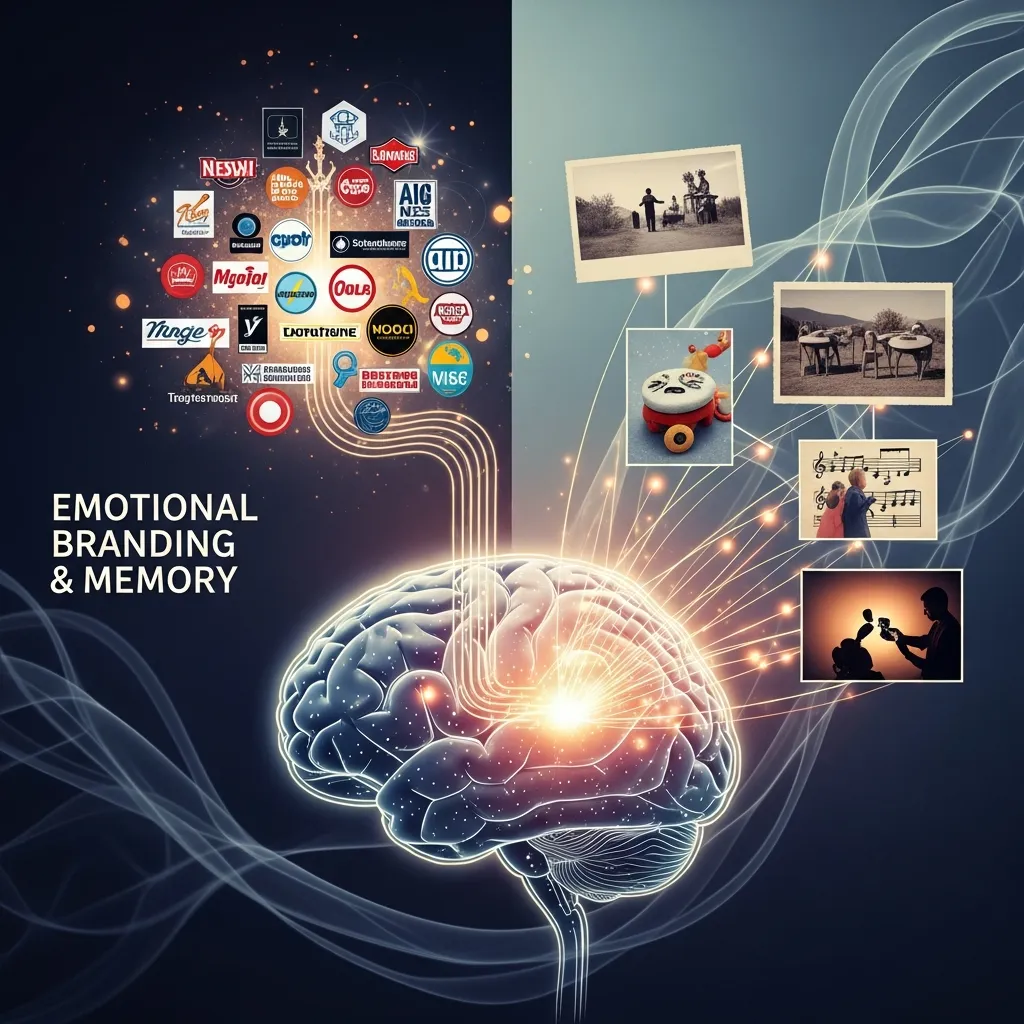
The psychology behind emotional marketing is deeply rooted in neuroscience. Our brains process emotions in the limbic system, the same area responsible for long-term memory and decision-making. This is why emotions affect consumer behavior so profoundly. When a brand triggers a strong feeling, it creates a “somatic marker”—a mental shortcut that links the brand to that specific feeling in the consumer’s memory. This is the science of brand memory in action.
Why emotional marketing beats logical appeals is simple: logic leads to conclusions, but emotion leads to action. A consumer might logically agree that a car has great gas mileage, but they will buy the car because they feel it makes them look successful or keeps their family safe. By understanding examples of emotional motivators like the desire for “freedom” or “security,” marketers can craft messages that resonate on a biological level.
Key Emotional Triggers in Marketing
To build a successful emotional appeal marketing strategy, you must know which levers to pull. Different types of emotions used in marketing produce different results. For example, high-arousal emotions like “awe” or “amusement” are highly effective for viral marketing and social sharing, while “trust” and “relief” are better for high-ticket B2B sales.
- Belonging: Tapping into the human need to be part of a group (e.g., Harley Davidson’s community).
- Fear of Missing Out (FOMO): Using marketing FOMO to drive urgency in limited-time offers.
- Nostalgia: Using nostalgia in digital branding to create an instant sense of comfort and safety.
- Aspiration: Showing the customer who they could be, a common tactic in luxury brand marketing.
| Emotional Trigger | Psychological Driver | Marketing Result |
| Awe / Excitement | Discovery / High Energy | Increased Social Sharing & Virality |
| Trust / Security | Survival / Safety | Higher B2B Brand Differentiation |
| Pride / Status | Self-Esteem / Ego | Success in Luxury Brand Marketing |
| Guilt / Empathy | Altruism / Connection | Success for Nonprofits and NGOs |
Role of Storytelling in Emotional Marketing
Mastering brand storytelling is perhaps the most potent way to deploy the power of emotional marketing. A story isn’t just a list of facts; it’s a narrative journey. In the best emotional marketing campaigns, the brand is never the hero—the customer is. The brand acts as the “mentor” (think Yoda or Gandalf) providing the tools (the product) to help the hero overcome a challenge.
How to leverage brand storytelling to elevate your marketing strategy:
- Identify the Conflict: What “pain point” is keeping your customer up at night?
- Introduce the Solution: How does your product provide the “aha!” moment?
- Show the Transformation: How is the customer’s life better, safer, or more joyful after using your product?
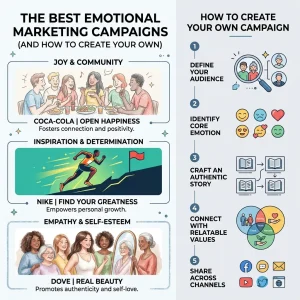
This narrative arc increases emotional involvement marketing, making the call to action feel like a natural resolution to a story rather than a forced sales pitch. It’s why nike emotional marketing strategies work so well; they don’t sell shoes, they sell the story of human perseverance.
The Power of B2B Emotional Marketing in Today’s Market
It is a common misconception that B2B buyers are purely clinical. The power of b2b emotional marketing in today’s market is actually often higher than in B2C because the stakes are greater. A B2B buyer isn’t just spending money; they are risking their professional reputation. This is why b2b emotional marketing drives better long-term ROI—it addresses the buyer’s need for “safety” and “career advancement.”
By focusing on building brand resilience and providing emotional reassurance, B2B companies can move beyond being a “vendor” to becoming a “partner.” B2B brand differentiation in crowded markets often comes down to who makes the buyer feel the most confident. This is why webinars for B2B lead generation that feature real human stories and testimonials outperform technical white papers every time.
Emotional AI: Revolutionizing Marketing Personalization
We are entering an era where Emotional AI is Revolutionizing Marketing. Through AI-powered brand analysis, companies can now detect the “mood” of their audience in real-time. Emotion AI Redefining Marketing allows for hyper-personalized branding, where the emotional tone of an email or an ad can change based on the user’s past behavior or current sentiment.
Using predictive analytics-boost ROI, brands can now forecast which emotional triggers in marketing will work best for specific segments. For instance, UGC & AI personalization digital marketing can highlight “community” stories to those who value belonging, while showing “efficiency” stats to those driven by professional security. This level of automated branding ensures that the emotional connection in marketing is always relevant and timely.
Benefits of Emotional Marketing for Brand Loyalty
The benefits of emotional marketing are most visible in long-term brand equity. According to studies, emotionally connected customers are 52% more valuable than those who are just “highly satisfied.” This is because satisfaction is a rating, but connection is a bond. Emotional marketing driving customer loyalty creates a buffer against price fluctuations. When a customer loves a brand, they are less price-sensitive and more likely to forgive occasional mistakes.
Why emotional marketing creates loyal customers:
- Decreases Churn: Emotionally attached customers stick around longer.
- Increases Referrals: People share things that make them feel something.
- Protects Market Share: Emotional bonds are harder for competitors to break than logical ones.
- Builds Brand Advocates: Loyal customers become your most powerful (and free) marketing team.
Digital Marketing and Social Media Impact
In the digital age, the power of emotions in marketing is amplified by social media. Emotional marketing videos impact engagement rates because they are highly shareable. Platforms like TikTok and Instagram thrive on meme marketing 2.0 and short-form emotional content.
How to master YouTube emotional marketing:
- Use the first 5 seconds to trigger a “hook” emotion (curiosity or surprise).
- Leverage influencer marketing to provide authentic, peer-to-peer emotional validation.
- Encourage user-generated content (UGC) to build a sense of community and shared experience.
By integrating interactive content boost marketing—like polls or gamified ads—you can increase the “dwell time” and deepen the emotional involvement marketing of your audience.
Ethical Standards and Inclusive Branding
As we harness the power of emotional marketing, we must maintain high emotional marketing ethical standards. Using fear or guilt can be effective, but if used manipulatively, it can lead to a brand crisis management disaster. Inclusive branding: designing brand experiences that embrace diversity and equality is essential for maintaining brand authenticity.
Risks of branding without ethics:
- Brand Cannibalization: When a negative emotional campaign eats away at your core values.
- Consumer Backlash: Today’s consumers are quick to spot “fake” sentiment or “greenwashing.”
- Decreased Trust: Once brand trust is broken, it is incredibly expensive and difficult to rebuild.
Focusing on sustainable branding strategies and genuine brand purpose development ensures that your emotional appeals are grounded in reality and contribute to a positive brand perception.
Building a Successful Emotional Marketing Strategy
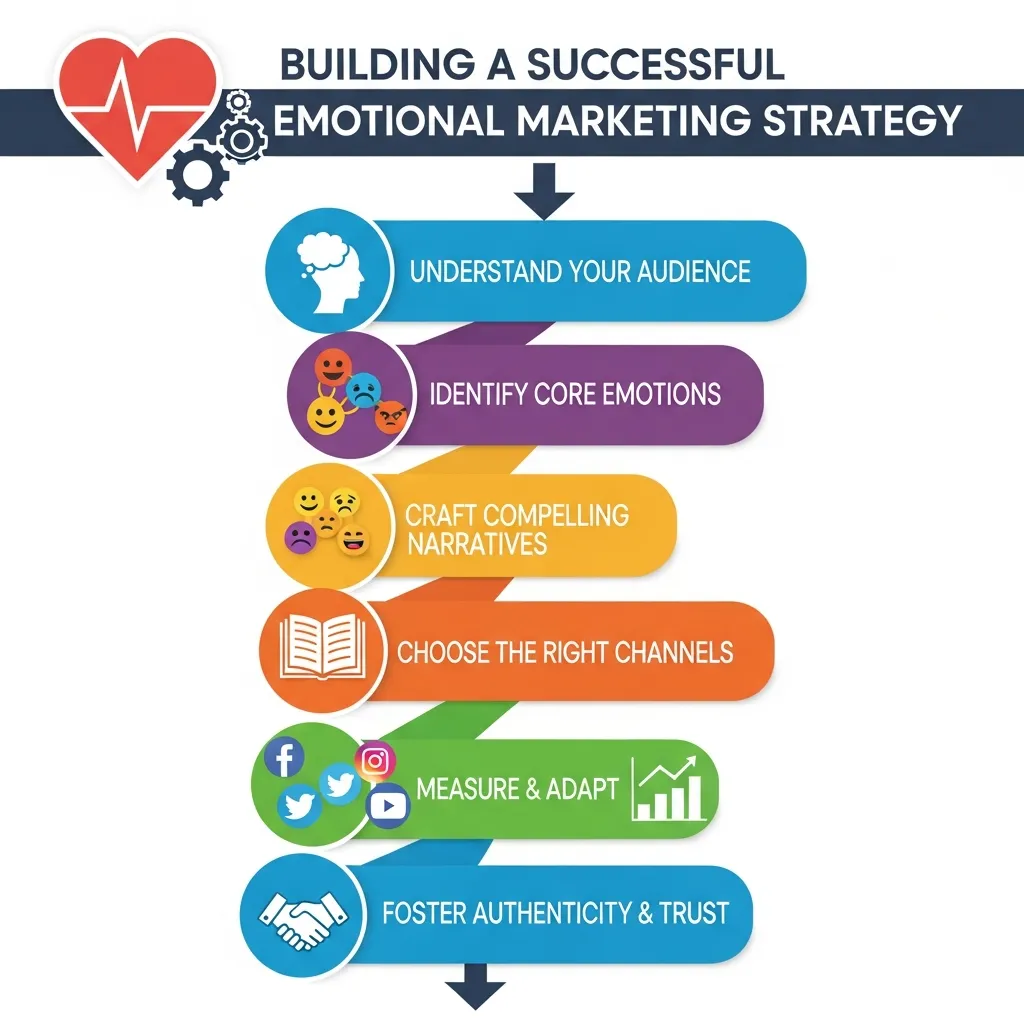
To build emotion marketing strategy that lasts, you must follow a structured framework. It’s not about one viral video; it’s about a consistent integrated brand promotion that hits the same emotional notes across all touchpoints—from your SMS marketing to your high-ticket sales webinars.
Steps to create an emotional marketing campaign:
- Conduct a Comprehensive Brand Audit: Understand your current brand personality.
- Define Your Brand Archetype: Are you the “Explorer” (freedom) or the “Caregiver” (safety)?
- Map the Customer Journey: Identify where emotions are highest (and lowest) in the buying process.
- Optimize with Emotional Triggers: Use the psychology of color in branding and sensory branding to reinforce your message.
- Test and Iterate: Use emotion analytics unlocking insights to see what truly resonates.
Conclusion
The power of emotional marketing is the ultimate competitive advantage in a world of infinite choices. By moving beyond features and tapping into the psychology behind emotional branding, you can win hearts, build unshakeable brand loyalty, and drive sustainable business growth that logic alone could never achieve. Start connecting today to transform your brand into a “must-have.”
FAQs
1. What is the power of emotional marketing in business?
The power of emotional marketing refers to the ability of a brand to use human feelings to drive engagement and sales. Studies show that emotionally connected customers are 52% more valuable than those who are just “satisfied.” By tapping into subconscious triggers like trust or joy, brands can bypass logical skepticism and create a bond that leads to long-term brand loyalty and a higher ROI compared to purely rational advertising.
2. How do emotional triggers in marketing work?
Emotional triggers in marketing work by activating the brain’s limbic system, which processes emotions and memories. When a brand uses a trigger like marketing FOMO (Fear of Missing Out) or nostalgia, it creates an immediate physiological and psychological response. This response compels the consumer to act quickly—whether that’s making an impulse buy or sharing a post—because the brain prioritizes emotional signals over complex logical analysis.
3. Why is storytelling important for emotional marketing?
The role of storytelling in emotional marketing is to give the emotion a context and a narrative. Stories are 22 times more memorable than facts alone. By mastering brand storytelling, you allow your audience to see themselves in your brand’s narrative. This increases emotional involvement marketing, making the brand’s message feel like a personal experience rather than a corporate pitch, which is essential for building brand authenticity.
4. Can emotional marketing be used for B2B brands?
Absolutely. The power of b2b emotional marketing in today’s market is significant because B2B decisions involve high stakes and personal risk for the buyer. Successful B2B strategies focus on emotions like “professional security,” “trust,” and “pride of choice.” Research indicates that B2B buyers are nearly 50% more likely to purchase when they see personal value in the brand, proving that b2b brand differentiation is often emotionally driven.
5. What are the benefits of emotional marketing for brand loyalty?
The primary benefits of emotional marketing include decreased price sensitivity, higher retention rates, and increased word-of-mouth. Emotional marketing creates loyal customers who feel a personal tie to the brand’s mission. These “advocates” are more likely to forgive brand errors and stay loyal during economic shifts, providing a foundation for building brand resilience and long-term brand equity.
6. How does AI play a role in emotional marketing?
Emotional AI is Revolutionizing Marketing by allowing brands to analyze massive amounts of data to understand “sentiment.” Through Emotion AI Redefining Marketing, businesses can deliver hyper-personalized branding that reacts to a customer’s mood. AI-powered brand analysis can help a digital marketing agency identify which emotional hooks are working in real-time, allowing for a more agile and effective emotional appeal marketing strategy.
7. Are there risks to using emotional marketing?
Yes, there are risks of branding using heavy emotional appeals if they are perceived as manipulative or insincere. If a brand’s actions don’t match its emotional message, it can lead to a brand crisis management situation. Furthermore, overusing negative emotions like fear or guilt can alienate customers over time. Maintaining emotional marketing ethical standards and brand authenticity is crucial to avoid damaging your brand reputation.
8. How does color psychology relate to emotional marketing?
The psychology of color in branding is a key tool in an emotional appeal marketing strategy. Different colors evoke specific feelings: blue for trust, red for urgency, and yellow for happiness. By aligning your visual design with your emotional goals, you enhance sensory branding and create a cohesive “feel” for the brand. This visual consistency is a major factor in improving brand recognition in marketing.
9. How can small businesses use emotional marketing?
Small businesses can use the power of emotional marketing by focusing on their unique “origin story” and building a brand community. By utilizing social listening as a brand strategy tool and engaging in humanizing your brand, small businesses can create more intimate connections than large corporations. Using UGC (User-Generated Content) and personalized SMS marketing are cost-effective ways to foster these emotional bonds.
10. What is the difference between emotional branding and performance marketing?
Branding vs marketing (specifically performance marketing) is a matter of goal setting. Performance marketing focuses on immediate metrics like clicks and sales through logical offers. Emotional branding focuses on the long-term “feeling” and brand perception. However, the best emotional marketing campaigns combine both—using emotional hooks to drive the “click” while building the long-term relationship that ensures the customer returns.