FOMO Marketing: The Psychology Behind Urgency and Sales
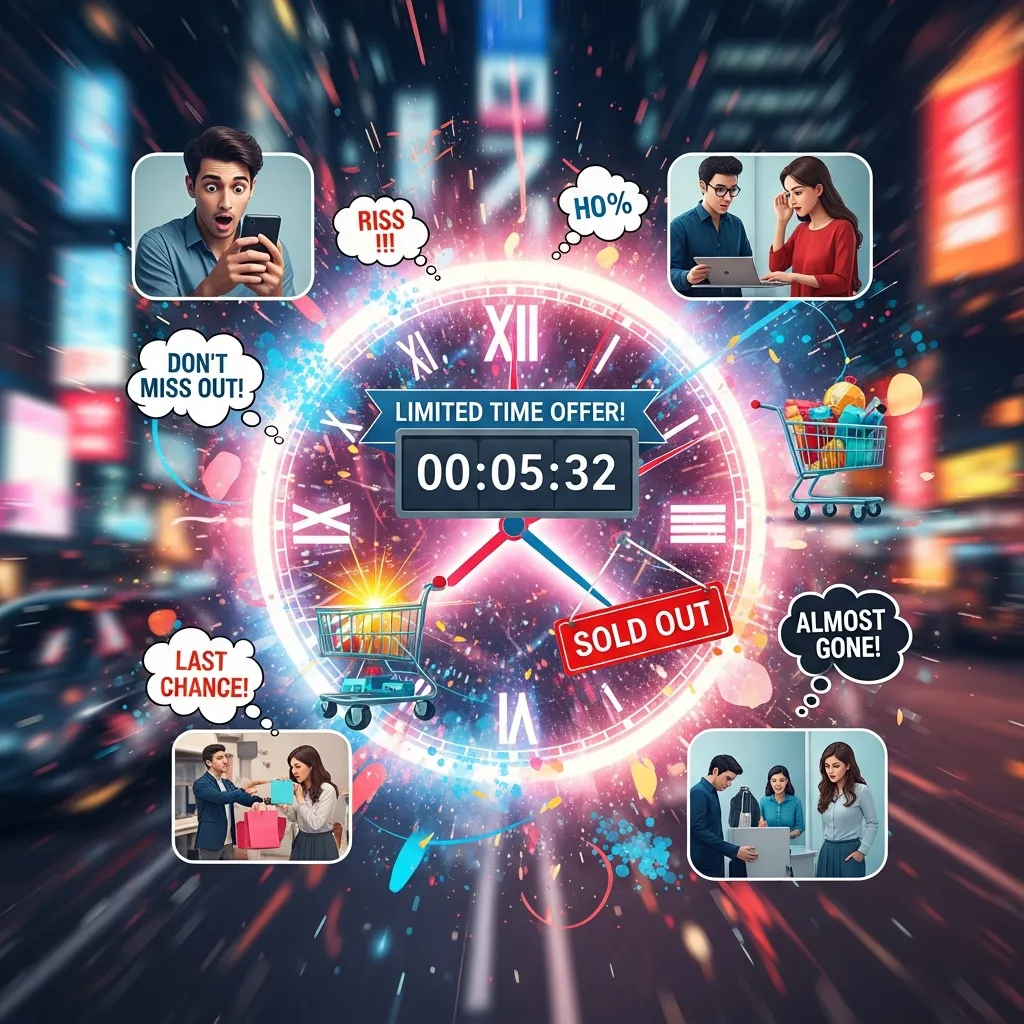
Fear of Missing Out (FOMO) Marketing is a psychological strategy that leverages scarcity, social proof, and urgency to drive consumer action. When implemented ethically, FOMO Marketing can significantly boost conversion rates, customer engagement, and long-term brand loyalty across virtually every industry.
There’s a reason you’ve clicked “Buy Now” on a countdown-timer deal you weren’t planning to make. Or rushed to book a hotel room after seeing “Only 2 rooms left!” flash across your screen. That’s Fear of Missing Out (FOMO) Marketing at work—and it’s one of the most powerful forces in modern consumer psychology.
FOMO Marketing taps into a deeply human anxiety: the fear that others are experiencing something valuable that you’re not. Digital platforms have amplified this instinct dramatically. According to a 2013 study published in Computers in Human Behavior, 56% of social media users reported experiencing FOMO. That number has only grown since then.
For marketers, this presents a significant opportunity. Fear of Missing Out (FOMO) Marketing drives urgency, shortens decision cycles, and can transform passive browsers into active buyers. But like any powerful tool, it demands careful, ethical handling.
This guide covers everything you need to know about Fear of Missing Out (FOMO) Marketing—from the neuroscience that makes it work, to scarcity marketing psychology, social proof psychology in marketing, and how to avoid market fluctuation emotions that erode trust.
What Is Fear of Missing Out (FOMO) Marketing and How Does It Work?
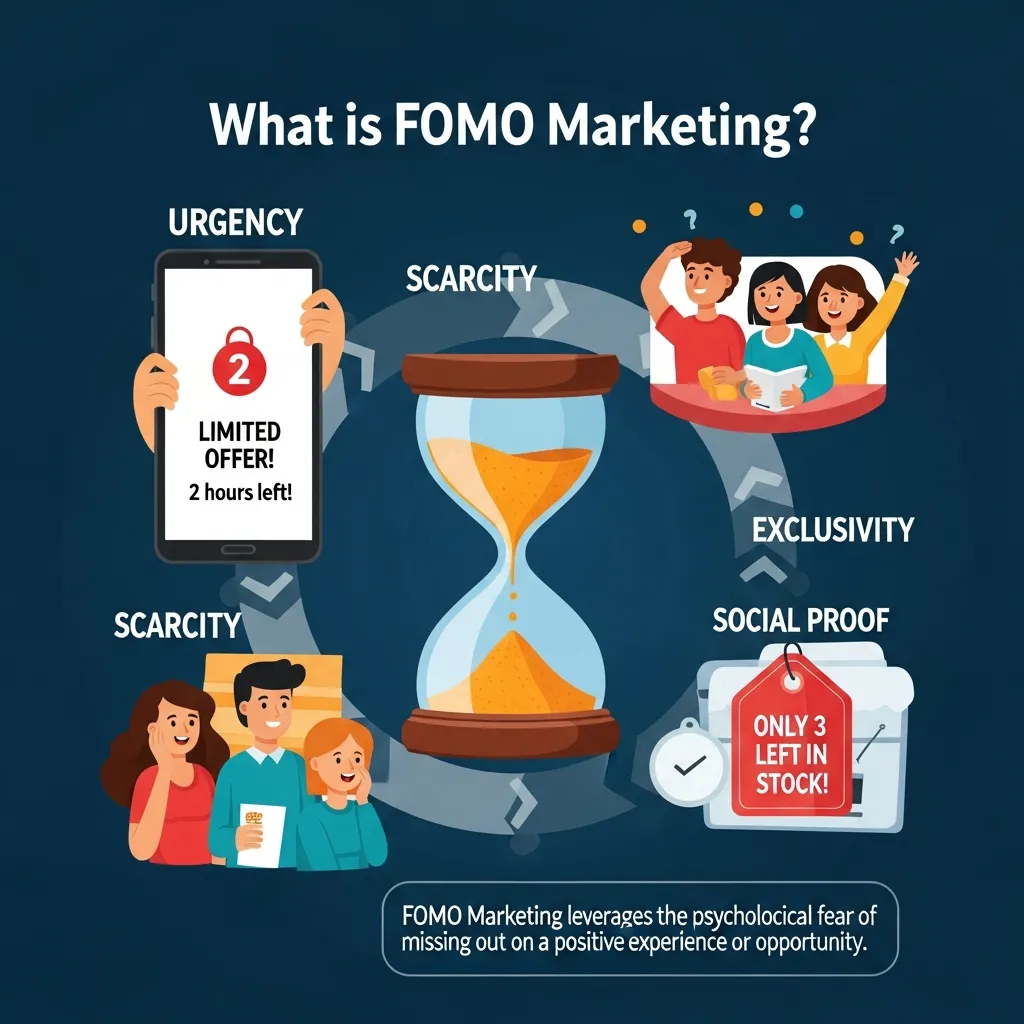
Fear of Missing Out (FOMO) Marketing is a strategy that activates a consumer’s emotional response to perceived scarcity, exclusivity, or social validation. Rather than focusing purely on product features, FOMO Marketing positions the act of not buying as the risk.
What happens in the brain during FOMO Marketing triggers?
At a neurological level, FOMO Marketing activates the brain’s dopamine system. When people anticipate a reward—like securing a limited-edition product—dopamine release increases. Simultaneously, the amygdala, which processes fear and anxiety, registers the possibility of loss.
This combination creates a compelling push-pull effect. The brain both craves the reward and dreads the loss, making inaction feel uncomfortable. Fear of Missing Out (FOMO) Marketing exploits this tension deliberately.
How does FOMO Marketing differ from traditional marketing?
Traditional marketing typically communicates value—”Here’s why this product is great.” Fear of Missing Out (FOMO) Marketing communicates risk—”Here’s what you’ll lose if you don’t act now.” The shift is subtle but psychologically profound.
Traditional campaigns focus on rational persuasion. FOMO Marketing works on emotional urgency. Both have their place, but in high-competition digital environments, the emotional pull of FOMO Marketing consistently outperforms purely rational appeals.
Real-world examples of successful FOMO Marketing campaigns
- Amazon Prime Day: A time-limited event that creates massive urgency and drives billions in sales within 48 hours.
- Booking.com: Real-time scarcity alerts like “8 people are viewing this right now” and “Last room available” are textbook Fear of Missing Out (FOMO) Marketing.
- Spotify Wrapped: An annual personalized campaign that generates enormous social sharing and community FOMO among non-users.
- Supreme: Deliberately limited product drops that create queues and instant sell-outs, reinforcing brand exclusivity.
Scarcity Marketing Psychology: Why Less Is More
Scarcity Marketing Psychology is one of the foundational pillars of effective FOMO Marketing. The concept traces back to Robert Cialdini’s influential book Influence (1984), in which he identified scarcity as one of six core principles of persuasion.
How does scarcity create perceived value and urgency?
When something is rare, people assign it greater value. This is known as the scarcity heuristic—a cognitive shortcut the brain uses to assess worth quickly. Fear of Missing Out (FOMO) Marketing leverages this heuristic by making products or offers appear limited, whether by quantity, time, or access.
What is the psychological impact of limited-time offers?
Limited-time offers create a clear deadline for decision-making. Without a deadline, consumers default to delay—what psychologists call “decision fatigue” or “status quo bias.” A well-placed expiry window disrupts this tendency and compels action.
Research from the Journal of Consumer Research found that time-limited promotions increase purchase intent by making the cost of inaction feel concrete and immediate.
How do limited inventory strategies affect customer behavior?
Inventory scarcity (“Only 3 left in stock!”) activates loss aversion—a principle established by behavioral economists Daniel Kahneman and Amos Tversky. People are roughly twice as motivated to avoid a loss as they are to acquire an equivalent gain. Fear of Missing Out (FOMO) Marketing transforms purchase decisions into loss-prevention decisions.
How do you balance authenticity with scarcity tactics in FOMO Marketing?
Authenticity is everything. Fake scarcity—manufacturing urgency that doesn’t reflect reality—destroys trust the moment consumers notice it. Effective scarcity marketing psychology relies on real limitations. Genuine limited batches, actual reservation waitlists, and real-time inventory data all reinforce credibility while amplifying Fear of Missing Out (FOMO) Marketing effectiveness.
Social Proof Psychology in Marketing: Trust at Scale
Social Proof Psychology in Marketing operates on a simple premise: people model their behavior on what others do, particularly when they’re uncertain. In the context of Fear of Missing Out (FOMO) Marketing, social proof signals that others have already made a valuable choice—and you haven’t yet.
What are the main types of social proof in marketing?
Social proof comes in several forms:
- Customer reviews and star ratings
- User-generated content (UGC)
- Expert endorsements
- Influencer testimonials
- Usage statistics (“Over 50,000 customers served”)
- Media mentions and certifications
Each type contributes to Fear of Missing Out (FOMO) Marketing differently, but all share the same underlying mechanism: they reduce perceived risk by demonstrating that others have already made—and benefited from—the same decision.
How do customer reviews enhance FOMO Marketing?
Reviews serve a dual function in Fear of Missing Out (FOMO) Marketing. First, they validate quality. Second, they signal demand. A product with thousands of positive reviews implies widespread adoption—and that gap between “everyone buying this” and “you haven’t yet” is precisely where FOMO lives.
According to BrightLocal’s 2023 Local Consumer Review Survey, 98% of consumers read online reviews for local businesses. Reviews are no longer optional for effective Social Proof Psychology in Marketing—they’re essential infrastructure.
How does user-generated content function as a FOMO Marketing tool?
User-generated content (UGC) is particularly powerful because it’s perceived as unscripted and trustworthy. When real customers post about a product on social media, they’re doing Fear of Missing Out (FOMO) Marketing organically. Seeing peers enjoy an experience creates authentic FOMO that branded content rarely achieves.
What role do influencers play in FOMO Marketing?
Influencer endorsements combine aspirational identity with social validation. When a respected figure in a community recommends a product—especially with a time-limited discount code—they activate both scarcity marketing psychology and social proof psychology in marketing simultaneously.
Implementing FOMO Marketing Strategies: Practical Tactics That Work
Understanding the psychology is one thing. Executing Fear of Missing Out (FOMO) Marketing effectively is another. Here are the core tactics that deliver results.
Countdown timers and urgency notifications
Countdown timers are among the most direct applications of FOMO Marketing. They make time scarcity visible and visceral. Email campaigns featuring countdown timers have been shown to increase click-through rates significantly—some studies from Experian report open rate lifts of up to 20% with urgency-based subject lines.
Urgency notifications—like “Your cart expires in 15 minutes”—serve the same function within checkout flows, recovering sales that would otherwise be abandoned.
Flash sales and exclusive deals in FOMO Marketing
Flash sales compress the decision window dramatically. By offering steep discounts for a very short period, Fear of Missing Out (FOMO) Marketing transforms a casual browser into an urgent buyer. The key is genuine exclusivity. Flash sales lose their power when overused.
Membership and VIP exclusivity programs
Exclusivity is a quieter but durable form of FOMO Marketing. VIP programs, early access lists, and membership tiers create two psychological dynamics: the current members feel rewarded and retained, while non-members experience Fear of Missing Out (FOMO) Marketing passively, motivating them to upgrade or join.
Real-time activity alerts and social validation notifications
Notifications like “Sarah from Chicago just purchased this” or “12 people are viewing this item” apply Social Proof Psychology in Marketing in real time. These alerts simulate a busy marketplace and suggest that inaction means falling behind. When used honestly, they’re a highly effective Fear of Missing Out (FOMO) Marketing tactic.
Avoiding Market Fluctuation Emotions: The Ethics of FOMO Marketing
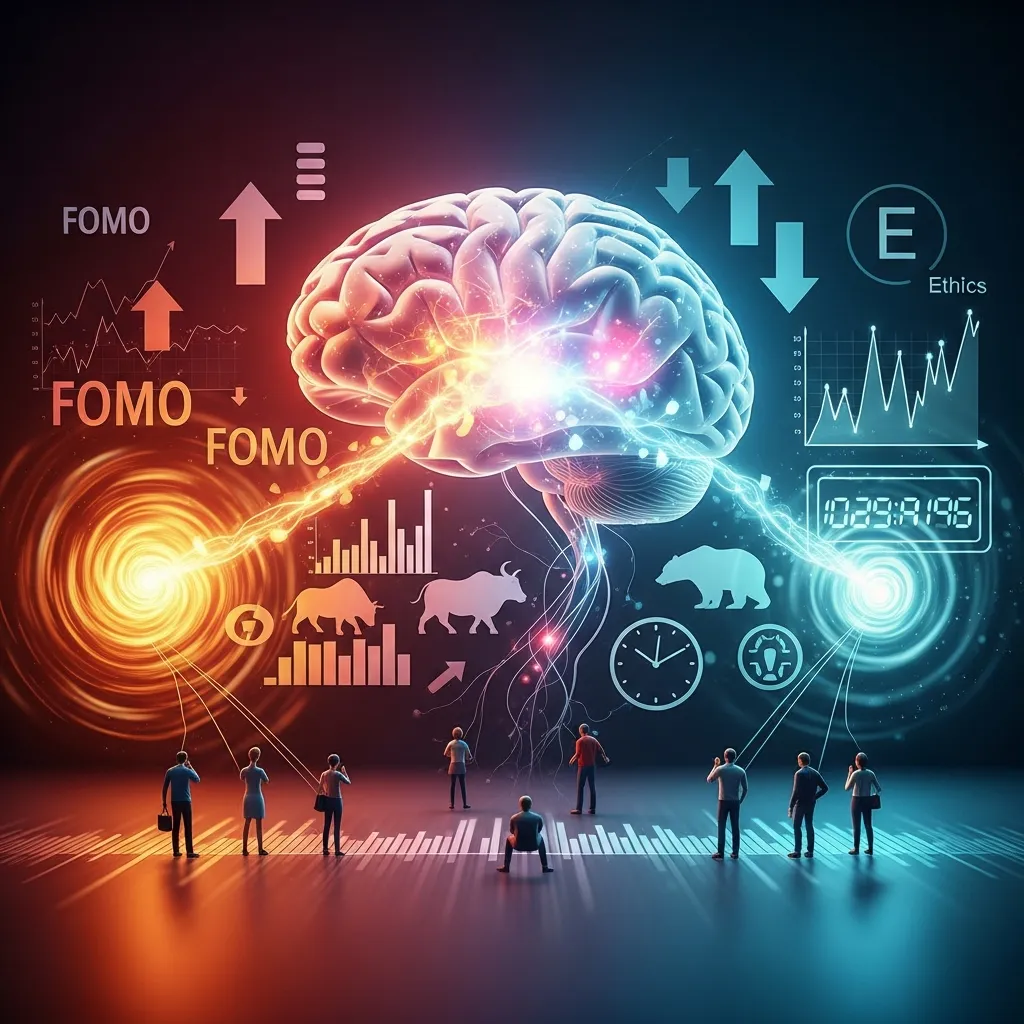
Not all urgency is created equal—and consumers are increasingly sophisticated at detecting manufactured pressure. One of the greatest risks in Fear of Missing Out (FOMO) Marketing is crossing the line from persuasion into manipulation.
How do you distinguish genuine scarcity from artificial manipulation?
Genuine scarcity reflects real-world constraints: limited production runs, actual time-sensitive pricing, or authentic early-access windows. Artificial scarcity involves fabricating urgency that doesn’t exist—resetting countdown timers, inflating “limited” stock, or falsely claiming high demand.
The difference matters enormously for brand reputation. Avoiding market fluctuation emotions—the buyer’s remorse, distrust, and brand resentment that follow deceptive tactics—requires a commitment to transparency.
How do you maintain customer trust through transparent FOMO Marketing?
Transparent Fear of Missing Out (FOMO) Marketing communicates why something is scarce or time-limited. “We only produce 500 units per batch because we source ethically” is more credible—and more compelling—than a generic “Limited Stock!” label. Honesty converts skeptics.
How do you manage customer expectations and prevent backlash?
Set clear terms for all FOMO Marketing offers. Ensure discount conditions, expiry dates, and eligibility requirements are obvious before purchase. Hidden restrictions are a leading cause of post-purchase resentment and negative reviews—exactly the opposite of what Social Proof Psychology in Marketing aims to build.
When does FOMO Marketing hurt long-term relationships?
Chronic, high-pressure Fear of Missing Out (FOMO) Marketing creates transactional relationships. Customers who only engage during promotions aren’t loyal—they’re opportunistic. Effective long-term FOMO Marketing is punctuated rather than constant. It reinforces genuine brand value rather than replacing it.
Start Using FOMO Marketing Responsibly Today
Fear of Missing Out (FOMO) Marketing is among the most psychologically compelling strategies available to modern marketers. Rooted in scarcity marketing psychology and social proof psychology in marketing, it activates deep-seated human motivations—the fear of loss, the desire for belonging, the pull of exclusivity.
Used ethically, Fear of Missing Out (FOMO) Marketing drives real business results: higher conversion rates, stronger engagement, and meaningful customer relationships. Used recklessly, it erodes trust and invites the exact market fluctuation emotions you want to avoid.
The most effective practitioners of Fear of Missing Out (FOMO) Marketing treat it as a trust-building exercise, not just a conversion tool. They ground urgency in reality, validate it with genuine social proof, and build communities where customers want to belong.
As AI-driven personalization continues to advance, Fear of Missing Out (FOMO) Marketing will become increasingly precise—tailored to individual behavioral patterns and real-time emotional states. The brands that master this shift will lead their categories. The ones that misuse it will be the ones consumers warn each other about.
Apply Fear of Missing Out (FOMO) Marketing principles thoughtfully. Lead with authenticity. And remember—the best FOMO is the kind your customers feel when they haven’t joined your community yet.
Frequently Asked Questions About FOMO Marketing
What is the difference between Fear of Missing Out (FOMO) Marketing and manipulation?
Fear of Missing Out (FOMO) Marketing becomes manipulation when urgency or scarcity is fabricated. Ethical FOMO Marketing reflects genuine constraints—real deadlines, actual limited inventory, or authentic social proof. Manipulation involves deceiving consumers to create false pressure, which ultimately damages brand credibility and customer relationships.
How often should I use Fear of Missing Out (FOMO) Marketing tactics?
Fear of Missing Out (FOMO) Marketing works best when used selectively. Overuse desensitizes consumers and reduces the impact of urgency signals. A good rule of thumb is to reserve high-intensity FOMO Marketing tactics—like flash sales or countdown timers—for genuine events, product launches, or seasonal campaigns rather than continuous everyday promotions.
Can Fear of Missing Out (FOMO) Marketing work for all industries?
Yes. Fear of Missing Out (FOMO) Marketing is adaptable across industries, from e-commerce and SaaS to hospitality, education, and financial services. The specific tactics differ—a software company might use limited early-access pricing, while a hotel chain uses real-time room availability alerts—but the underlying scarcity marketing psychology applies broadly.
What are the risks of overusing Fear of Missing Out (FOMO) Marketing?
Overusing Fear of Missing Out (FOMO) Marketing leads to consumer fatigue, brand distrust, and increased opt-outs. If every email contains a “last chance” offer or every product page shows fake scarcity, consumers stop responding. Worse, they may begin to associate your brand with pressure tactics, harming long-term loyalty.
How do I measure the effectiveness of Fear of Missing Out (FOMO) Marketing?
Key metrics include conversion rate lift during FOMO campaigns, click-through rates on urgency-based emails, cart abandonment recovery rates, and time-to-purchase. Compare performance during FOMO Marketing campaigns against baseline periods to isolate their impact. Customer sentiment surveys can also reveal whether tactics are perceived as helpful or manipulative.
Is Fear of Missing Out (FOMO) Marketing ethical?
Fear of Missing Out (FOMO) Marketing is ethical when grounded in honesty and real value. The ethical boundary lies at deception—if the scarcity is real, the social proof is genuine, and the customer has enough information to make an informed decision, FOMO Marketing is a legitimate persuasion strategy. Fabricating urgency or inflating demand crosses an ethical line.
How does social proof enhance Fear of Missing Out (FOMO) Marketing?
Social proof psychology in marketing amplifies Fear of Missing Out (FOMO) Marketing by showing that others have already benefited from a decision the consumer hasn’t made yet. This gap between “everyone else” and “you” is where FOMO lives. Reviews, UGC, live purchase notifications, and testimonials all provide concrete evidence that validates urgency.
What’s the best platform for Fear of Missing Out (FOMO) Marketing?
There’s no single best platform—Fear of Missing Out (FOMO) Marketing works across email, social media, e-commerce product pages, and paid ads. Email marketing is particularly effective for time-limited offers because of its directness. Instagram and TikTok excel at social proof and UGC-driven FOMO Marketing. Choose platforms based on where your target audience is most active and receptive.
How do I create authentic scarcity in Fear of Missing Out (FOMO) Marketing?
Authentic scarcity comes from real product or supply constraints, time-sensitive pricing tied to genuine business events, or access limitations like beta programs and member-only sales. Communicating the reason for scarcity—ethical sourcing, small-batch production, seasonal availability—adds credibility and reinforces the value of the offer.
Can Fear of Missing Out (FOMO) Marketing improve customer retention?
Yes, when applied beyond acquisition. Fear of Missing Out (FOMO) Marketing enhances retention through loyalty programs with exclusive perks, early-access benefits for existing customers, and community membership that rewards continued engagement. Making current customers feel like insiders—rather than just targeting new ones—builds lasting loyalty.
How do I optimize Fear of Missing Out (FOMO) Marketing for mobile users?
Mobile optimization for Fear of Missing Out (FOMO) Marketing requires clear, fast-loading urgency signals: visible countdown timers, concise push notifications, and one-tap checkout flows. Mobile users are impulsive and time-pressed—FOMO Marketing must be frictionless to convert. Personalized push notifications tied to browsing behavior are particularly effective for mobile-first FOMO campaigns.
What metrics should I track for Fear of Missing Out (FOMO) Marketing success?
Core metrics include: conversion rate during urgency campaigns, average order value, email open and click-through rates for FOMO-themed messages, bounce rate on landing pages with scarcity signals, repeat purchase rate, and Net Promoter Score (NPS) as a trust indicator. Monitor both short-term conversion lifts and long-term customer sentiment to ensure your FOMO Marketing strategy is sustainable.