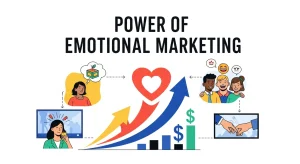
How Emotional Content Marketing Transforms Brands Into Movements

Emotional content marketing goes beyond selling products, it connects with audiences through feelings, values, and storytelling. By understanding their emotional triggers and delivering authentic, consistent content across all touchpoints, brands can build trust, loyalty, and long-term relationships. This approach turns customers into passionate advocates, strengthens engagement, and helps brands stand out in competitive markets, transforming everyday interactions into meaningful experiences.
The Science of Emotional Marketing in Psychology
Why Emotions Drive Purchase Decisions
Research has continually provided evidence of the importance of emotions in consumer behavior. People whose emotional centers in their brains are damaged have difficulty making even relatively simple decisions, according to studies conducted by the pioneering neuroscientist Antonio Damasio. This points to something profound: our emotions are not merely along for the ride — they are in the driver’s seat.
Harvard Business School’s Gerald Zaltman discovered that 95% of purchase decisions occur in the subconscious, where emotions are king. And the reasons may be logical later, but what pushes us to must be first is almost always emotion.
The Emotional Spectrum in Marketing
The Best Emotional Content Marketing Initiates Feelings At Both Ends Of The Spectrum. Successful emotional content marketing incorporates a range of emotions:
Positive Emotions:
-
Laughter, joy, and fun make for shareable moments.
-
Trust builds long-term relationships.
-
Identity and values have a relationship with pride.
-
Excitement generates anticipation and buzz.
Negative Emotions:
-
It’s the fear of missing out (FOMO) in action that creates urgency.
-
Discontent identifies problems that your product resolves.
-
Sadness can also beget empathy and social connection.
-
Anger motivates action and change.
The answer is not to steer clear of negative emotions, but rather to cultivate their responsible and authentic use in building the sorts of connections that are really meaningful.
Basic Tenets of Emotional Content Marketing

Authenticity Over Perfection
Today’s consumers can detect inauthentic marketing instantly. Effective emotional content marketing means genuinely understanding your audience’s desires and challenges. Patagonia’s focus on sustainability exemplifies this principle perfectly. Check out our guide on how to do emotional marketing effectively for strategies..
Patagonia exemplifies this principle perfectly. Their focus on the environment isn’t a marketing ploy; it’s ingrained in the company culture. When they say “Don’t buy this jacket” to their customers — to tout the sustainability of their products — the message becomes authentic because it reflects who they are as a company.
Storytelling as the Foundation
Humans are hardwired for stories. Successful brand stories adhere to timeless forms: character development, conflict, resolution, and transformation. Explore the role of storytelling in emotional marketing to see why narratives drive engagement.
Successful brand stories adhere to timeless story forms:
-
Character development (relatable protagonists)
-
Conflict (challenges your audience faces)
-
Resolution (how your brand solves the problem)
-
Transformation (the best future you help shape)
Consistency Across Touchpoints
Emotional content marketing isn’t something that applies only to ads or social media. It needs to extend to all customer-facing conversations, from website copy to how customer service responds to complaints. And when you have no consistency, you lose trust and that emotional connection you’re trying to win.
Building Your Emotional Content Strategy
Understanding Your Audience’s Emotional Landscape
Before producing emotional content, understand the fears, hopes, and aspirations of your audience. Research methods include interviews, social media monitoring, customer support analysis, and empathy mapping. For examples of emotional triggers in marketing, see our in-depth guide.
Research Methods:
-
Interview current customers Interview your existing customers (tolola and back).
-
Monitor social media discussions and comments.
-
Review customer support tickets for pain points.
-
Develop in-depth buyer personas with emotional triggers.
-
Map out feelings at every point in the sales process with empathy mapping.
Identifying Your Brand’s Emotional Territory
Every brand has its own emotional territory — the specific feelings and associations that you want to own in the minds of your customers. This territory should resonate with what your brand stands for, mission, and the real emotions your product or service can bring to the table.
Questions to Chart Your Emotional Territory:
-
How does our leading customer feel about what I sell?
-
What feelings do we want people to experience when they spend time with us?
-
What is the desire we satisfy with our product beyond its utility?
-
What is it that makes us different from competitors on an emotional level?
Creating Emotional Content Frameworks
Establish roadmaps for your team so they can repeatedly deliver emotionally sensitive content:
The Emotional Arc Framework:
-
Accomplishment: Let the audience know where they are emotionally right now
-
Tension: Introduce conflict or challenge
-
Solution: Present your brand as the solution
-
Transition: Bring in the happy feelings/transitions you’re aiming for.
The Values-Based Framework:
-
Find points of value that are important to your audience.
-
How can you create content that depicts these values?
-
Align your brand as a partner in embodying these values.
-
Share realistic examples of your values in play
Categories of Emotional Content That Engage
User-Generated Content and Community Stories
Real stories from real people tend to forge deeper human connections than anything else. UGC -through real user experiences as the inspiration -tells strong emotional stories.
Airbnb’s “Belong Anywhere” campaign exemplifies real stories of strangers-becoming-stranger when hosts and guests land in surprising situations. These tales speak to deep human desires for connection and real-life experiences, and turn the brand into an enabler of meaningful memories, rather than simply a booking engine.
Behind-the-Scenes Content
Transparency creates trust, and trust is emotional at its core. Behind-the-scenes footage can also add a human aspect to your brand by demonstrating the people (and passion) behind your offerings.
This kind of content is especially effective in:
-
Telling the stories of team members
-
Wearing the work, or care, that goes into your merchandise
-
Equating your company’s values with operational behaviors
-
Showing you care about things that matter to your audience
Cause-Related Content
Positioning your brand alongside worthy causes can foster powerful emotional bonds, but only when it’s genuine. For your group, the cause-oriented content must authentically come from company values, and not be derived from opportunistic trend-hopping.
For decades, Ben & Jerry’s has proclaimed its stance on social justice issues. Their content consistently touches on climate change, social justice and democracy — not just because it’s of the moment, but because these issues are central to their identity.
Educational Content with Emotional Hooks
When educational content touches both the emotional mind as well as the informational mind, we are engaged. Great educational materials make people feel more confident, capable or inspired.
Emotional Educational Content Examples:
-
How to guides that take the stress out of new tasks
-
Industry expertise that makes readers feel like they are “in the know.”
-
Skill-building content that boosts confidence
-
Problem-solving guides that provide relief
Measuring Emotional Content Marketing Success

Beyond Vanity Metrics
Traditional metrics like likes, shares and clicks tell only half the tale. Emotional content marketing demands more sophisticated forms of measurement which capture the quality of engagement, not just the quantity.
Meaningful Metrics:
-
Analyze comments and mentions for sentiment
-
Surveys of brand perception that measure emotion associations
-
Customer retention and lifetime value
-
Net Promoter Score (NPS) improvements
-
Quality of engagement (time, comments made, return visits)
Emotional Engagement Indicators
Here are the signs of real emotional connection:
-
Personal detailed comments and stories from the audience
-
Unprompted sharing with personal commentary
-
Customer-initiated conversations and questions
-
Volunteer brand advocacy and defense
-
Increased participation in brand communities
Long-Term Relationship Building
Emotional content marketing is a slow burner. The immediate buzz of a single piece of content is one thing, but building up robust relationships over time provides the most value.
Track relationship-building metrics:
-
Retention rates and return purchase rates
-
Referral and word-of-mouth recommendations
-
Community growth and engagement depth
-
Brand mention sentiment over time
-
Customer support interaction quality
Common Emotional Content Marketing Mistakes

Manipulation vs. Genuine Connection
Emotional marketing and emotional manipulation can be closely intertwined. “Manipulation typically involves creating a false sense of urgency, offering the illusion of limited supply, or playing on people’s desire or fear without providing any real value. A true emotional connection meets genuine needs and brings real solutions.
Inconsistent Emotional Messaging
Incongruency created a confused audience and less (and more) of an emotional bond. When your people-facing content can range from corporate and sterile to warm and intimate, audiences have no idea what’s coming and what or who they can trust.
Ignoring Negative Emotions
Most brands shy away from negative emotions altogether, which is a missed opportunity to solve real problems and get ideas with real impact. Making your brand look more human and trustworthy, acknowledging challenges, and struggles.
Cultural Insensitivity
Cultural, generational, and community differences in emotional triggers are considerable. What may strike one segment of the audience as perfect can also be regarded in other quarters as tone-deaf or offensive. never forget that background when you are making emotional content.
The Next Era: Emotional Content Marketing

Personalization at Scale
Harnessing technology to serve up an emotional experience at scale like never before. AI and machine learning can also track a person’s emotions and preferences, which paves the way for more precisely targeted emotional content.
Immersive Emotional Experiences
Virtual & augmented reality are reshaping the field of emotional content marketing opportunities (and challenges) ahead! These sort of experiential activations can create more powerful emotional connections than through sight alone, even providing what your brand represents; an unforgettable, shared experience.
Micro-Moment Marketing
Consumers who now demand they recognize and respond to their emotional state in the moment. Doing so, however, requires the right content systems that can adapt to locally and emotionally relevant end user contexts, as they traverse expectations from one side of journey to the other.
Responding to emotional states in real-time enhances relevance and engagement. Check why your marketing fails without emotional drivers to understand the importance of emotional context.
Emotional Connection: How to Step Up Your Marketing Game
Emotional content marketing is not a manipulative advertising technique — it’s about connecting with real people in an increasingly digital space. Brands who master this aren’t just selling products, but they are creating communities, leading movements and forming a small piece of each of their customer’s identities.
The best emotional content marketing operations are rooted in audience insight, speak directly to the values of the brand in an authentic and consistent manner across touchpoints. They understand that decisions are based on feelings, but don’t prey on that; they leverage the feeling to create something real instead.
Begin by digging deeper into your audience’s emotional motivators. Chart their emotional trajectory as they traverse their customer journey. What are the genuine emotions of which your brand can be part? Then, build content frameworks that enable your team to consistently access these emotions throughout your marketing.
It’s important to keep in mind that emotional content marketing is a long-term play. The impact of individual campaigns may be instant engagement but the true value here is the relationship that only strengthens over time, converting customers into advocates. You need to focus on the authentic, consistent, value adding stuff and your emotional content marketing efforts can not only change your marketing, but the way in which you connect with people.
Emotional storytelling helps brands connect with audiences on a deeper level—a crucial advantage when navigating competitive spaces like e-commerce markets, where trust and loyalty drive long-term growth.
Frequently Asked Questions (FAQ)
What is emotional content marketing in simple terms?
Emotional content marketing is the practice of creating content that connects with people on a human level by appealing to their feelings, values, and aspirations rather than just product features. It focuses on building trust, loyalty, and long-term relationships.
Why is emotional content more effective than feature-based marketing?
Because people make decisions emotionally first and justify them logically later. Feature-based marketing informs, but emotional content motivates. When audiences feel understood, they are more likely to engage, remember, and choose a brand.
Can emotional content marketing work for B2B brands?
Yes. B2B decisions are still made by humans who experience fear, ambition, pride, and uncertainty. Emotional content in B2B builds confidence, credibility, and reassurance—especially in high-stakes or long sales cycles.
How do you avoid emotional manipulation in marketing?
By grounding emotional messaging in real value, honest communication, and genuine customer benefit. If the emotion you evoke aligns with what your product actually delivers, it builds trust instead of exploiting vulnerability.
How long does it take to see results from emotional content marketing?
Emotional content marketing is a long-term strategy. While individual pieces may generate short-term engagement, the real impact appears over time through higher retention, stronger brand loyalty, and organic advocacy.
Is emotional content measurable?
Yes, but not through surface-level metrics alone. Emotional impact is reflected in sentiment, repeat engagement, brand mentions, customer loyalty, and the depth of audience interaction rather than just clicks or impressions.