Stop Losing Sales: Decision Fatigue in Buyers Explained
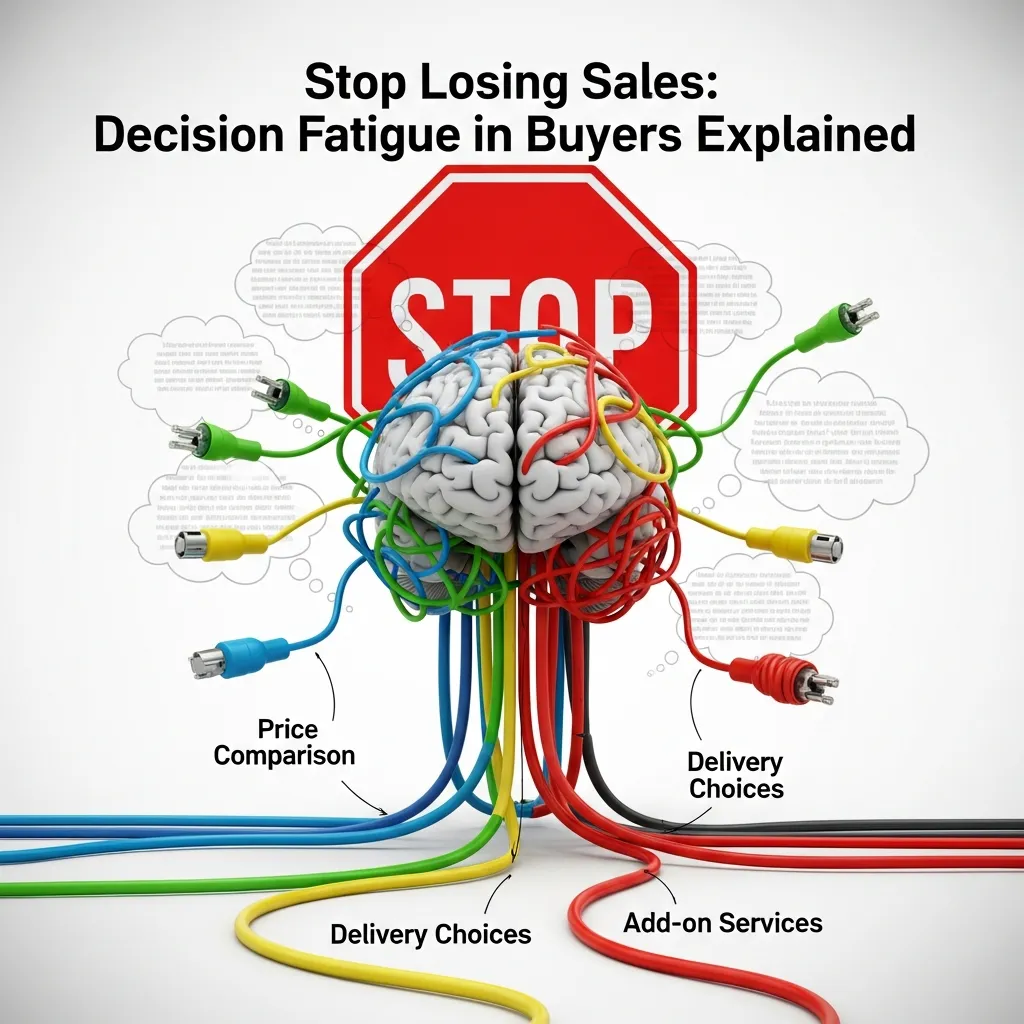
This post explores Decision Fatigue in Buyers, a phenomenon where prolonged decision-making leads to poorer choices. We explore its causes, impacts on purchasing behavior, and strategies businesses can employ to alleviate it. We also examine related concepts like the Anchoring Effect in Pricing and Cognitive Bias in Marketing, and how understanding Customer Journeys with Predictive Analytics can help mitigate this fatigue, culminating in a comprehensive FAQ section.
We make thousands of choices every single day. From choosing what to eat for breakfast to selecting the right software for a company, the human brain constantly processes options. Eventually, this mental energy drains. This psychological drain directly impacts commerce, leading to a phenomenon known as Decision Fatigue in Buyers.
When a shopper encounters too many choices, their cognitive load maxes out. They stop evaluating options logically. Instead, they default to the easiest action available, which often means abandoning the purchase entirely. Understanding Decision Fatigue in Buyers is critical for businesses that want to increase conversion rates and foster customer loyalty.
By recognizing the signs of Decision Fatigue in Buyers, companies can actively design better shopping experiences. This guide breaks down the science behind choice overload. You will learn how to identify friction points in your sales funnel and implement proven strategies to keep your customers confident, engaged, and ready to buy.
The Science Behind Decision Fatigue

Every choice you make draws from a finite reserve of mental energy. The brain processes decisions using the prefrontal cortex, the area responsible for logical thinking and impulse control. As a person makes consecutive choices, this cognitive reserve depletes.
Psychologists refer to this depletion as ego depletion. A depleted brain looks for shortcuts to save energy. It typically chooses one of two paths: impulsive action or complete avoidance. In retail and B2B sales, this translates directly to Decision Fatigue in Buyers.
Think about a trip to a large grocery store. You compare dozens of brands of cereal, evaluate different sizes of milk, and pick out produce. By the time you reach the checkout aisle, your willpower is low, making that candy bar highly appealing. Similarly, when a B2B client reviews fifty different software configurations, Decision Fatigue in Buyers sets in, causing them to delay the project indefinitely.
Impact of Decision Fatigue on Purchasing Behavior
Decision Fatigue in Buyers significantly alters how consumers behave. The most obvious consequence is cart abandonment. Shoppers who feel overwhelmed by options simply leave the website to avoid the stress of choosing.
Suboptimal choices also rise when Decision Fatigue in Buyers occurs. A mentally exhausted customer might select a basic package that does not actually meet their needs, simply because it was the first option they saw. This leads to buyer’s remorse, higher return rates, and customer service complaints.
Furthermore, Decision Fatigue in Buyers makes shoppers highly susceptible to external pressures. They might fall for aggressive sales tactics just to end the interaction. While this might secure a short-term sale, it destroys trust. Ultimately, Decision Fatigue in Buyers reduces long-term engagement and severely damages brand loyalty.
Identifying Sources of Decision Fatigue in the Customer Journey
To eliminate Decision Fatigue in Buyers, businesses must first identify what causes it. The most common trigger is an overwhelming number of product choices. A catalog featuring hundreds of nearly identical items forces the consumer to work too hard.
Complex pricing structures also contribute heavily to Decision Fatigue in Buyers. When customers cannot easily determine the total cost of ownership, their cognitive load spikes. This is where the Anchoring Effect in Pricing often comes into play, sometimes confusing the buyer if the initial price point is vastly different from the final configured cost.
Too many customization options create a similar problem. Asking a buyer to configure twenty different features on a single product often leads to paralysis. Additionally, a lack of clear information or a protracted purchasing process forces the buyer to hunt for answers. Every extra click, confusing description, and hidden fee amplifies Decision Fatigue in Buyers.
Strategies for Businesses to Combat Decision Fatigue

Companies must actively streamline the shopping experience to combat Decision Fatigue in Buyers. The goal is to make the path to purchase as effortless as possible.
Simplify Choices
The most effective way to reduce Decision Fatigue in Buyers is to offer fewer, better options. Curate your selections. Instead of displaying fifty variations of a product on one page, categorize them neatly and highlight the top three bestsellers.
Streamline Information
Clear, concise product descriptions prevent cognitive overload. Use bullet points, bold text, and simple language. Implement comparison tools so customers can evaluate two or three items side-by-side without opening multiple tabs.
Guided Decision-Making
Help the customer choose. Interactive quizzes and product configurators can drastically reduce Decision Fatigue in Buyers. By asking the user a few simple questions, you can automatically recommend the perfect product for their specific needs.
Optimize Pricing Presentation
Transparent pricing builds trust and preserves mental energy. Simplify your pricing tiers. Use the Anchoring Effect in Pricing strategically by placing a premium option next to your standard option, making the standard option look like an easy, logical choice. Keep the presentation clear to avoid confusing the buyer.
Personalization through Predictive Analytics
Anticipate what your customer wants before they even search for it. Mapping Customer Journeys with Predictive Analytics allows you to present highly relevant products based on past behavior. This level of personalization essentially eliminates the need for the customer to search, drastically lowering Decision Fatigue in Buyers.
Breaking Down Complex Decisions
If your product requires a complex purchasing process, break it into smaller, manageable steps. A phased approach keeps the buyer moving forward without feeling overwhelmed by the entire scope of the decision.
Leveraging Social Proof and Expert Endorsements
When humans are tired, they look to others for cues. Displaying clear social proof, customer reviews, and expert endorsements reduces the burden of choice. If thousands of other people highly rate a specific item, the buyer feels safe choosing it, effectively bypassing Decision Fatigue in Buyers.
Related Concepts and Their Interplay
Understanding Decision Fatigue in Buyers requires looking at the broader psychological landscape of marketing and sales. Several other concepts overlap with choice exhaustion.
The Anchoring Effect in Pricing plays a major role in how buyers perceive value. The first price a customer sees becomes the anchor. All subsequent prices are judged against this initial number. If the anchor is clear, it simplifies the decision. If a business uses multiple, conflicting anchors, it confuses the customer and accelerates Decision Fatigue in Buyers.
This ties directly into Cognitive Bias in Marketing. Marketers must recognize biases like choice overload and the paradox of choice. The paradox of choice states that while we believe more options make us happier, they actually cause anxiety. Recognizing Cognitive Bias in Marketing helps businesses design interfaces that align with human psychology rather than fighting against it.
Finally, analyzing Customer Journeys with Predictive Analytics connects these behavioral theories to hard data. By tracking where users drop off, businesses can see exactly where Decision Fatigue in Buyers peaks. Predictive analytics allow companies to proactively simplify the journey precisely when the data shows the customer is getting tired.
Case Studies of Successful Implementation
Many leading companies have successfully redesigned their sales funnels to prevent Decision Fatigue in Buyers.
Consider a major streaming service. Instead of forcing users to scroll through thousands of titles, they use algorithms to recommend a highly curated “Top Picks for You” list. This application of predictive data removes the stress of choosing, keeping users engaged on the platform.
A prominent B2B software company noticed a massive drop-off on their pricing page. They originally offered highly customizable plans with dozens of individual toggles. To combat Decision Fatigue in Buyers, they consolidated these options into three simple tiers: Basic, Pro, and Enterprise. By utilizing the Anchoring Effect in Pricing and reducing the number of choices, their conversion rate increased by nearly thirty percent.
Empowering Buyers for Long-Term Growth
Decision Fatigue in Buyers is a silent conversion killer. When businesses overwhelm their audience with endless options, complex pricing, and convoluted checkout processes, they force potential customers to walk away.
By taking steps to simplify choices, you empower your customers to make confident decisions. Utilizing strategies like clear comparison tools, understanding Cognitive Bias in Marketing, and optimizing Customer Journeys with Predictive Analytics creates a frictionless buying experience.
The businesses that thrive in the future will be those that respect their customers’ cognitive limits. Eliminating Decision Fatigue in Buyers not only boosts immediate sales but builds the long-term trust required for lasting brand loyalty. Take a hard look at your sales funnel today, and start removing the obstacles that are tiring your buyers out.
Frequently Asked Questions (FAQ)
1. What is Decision Fatigue in Buyers?
Decision Fatigue in Buyers is the psychological exhaustion that occurs when a consumer is forced to make too many choices. This mental drain leads to poor decision-making, impulsive buying, or abandoning the purchase altogether.
2. How does Decision Fatigue in Buyers impact sales?
It directly lowers conversion rates. Exhausted buyers often leave websites without buying anything, abandon full shopping carts, or choose cheaper, suboptimal products just to finish the transaction.
3. Can product variety cause Decision Fatigue in Buyers?
Yes. While businesses often think more options attract more customers, excessive variety triggers choice overload. This paralyzes the shopper and increases Decision Fatigue in Buyers.
4. What is the Anchoring Effect in Pricing?
The Anchoring Effect in Pricing is a cognitive bias where people rely heavily on the first piece of information (the “anchor”) they receive. In pricing, showing a high initial price makes subsequent lower prices seem like a better deal.
5. How can Customer Journeys with Predictive Analytics help?
Customer Journeys with Predictive Analytics use historical data to anticipate a user’s needs. By predicting what the customer wants, a business can present the exact right product immediately, removing the need for the customer to search and choose.
6. What are some examples of Cognitive Bias in Marketing?
Common examples include the anchoring effect, the bandwagon effect (social proof), and the paradox of choice. Understanding Cognitive Bias in Marketing helps brands design experiences that feel natural rather than overwhelming.
7. How can I simplify my product offerings?
Group your products into clear categories. Highlight bestsellers, remove redundant options, and create curated bundles. This drastically lowers Decision Fatigue in Buyers.
8. Does a long customer journey contribute to Decision Fatigue in Buyers?
Absolutely. Every extra step, form field, and page load drains the buyer’s mental energy. Keeping the journey short and intuitive is vital for maintaining high conversions.
9. Why do buyers experience remorse after decision fatigue?
When suffering from Decision Fatigue in Buyers, people make rushed choices without proper evaluation. Later, when their mental energy restores, they realize the product doesn’t meet their needs, leading to buyer’s remorse.
10. How do product quizzes reduce choice overload?
Quizzes act as a digital guide. Instead of making the customer filter through hundreds of items, a quiz asks a few simple questions and recommends one or two perfect matches, eliminating Decision Fatigue in Buyers.
11. Is it better to have three pricing tiers or ten?
Three. Three tiers provide enough variety for different budgets without overwhelming the brain. Ten tiers require too much comparison, rapidly accelerating Decision Fatigue in Buyers.
12. How does social proof help exhausted buyers?
When buyers are tired, they want a safe, guaranteed outcome. Social proof, like reviews and testimonials, provides a mental shortcut. The buyer trusts the crowd’s decision, bypassing their own Decision Fatigue in Buyers.