The Complete Nostalgia Marketing Guide: How to Win Hearts with the Past
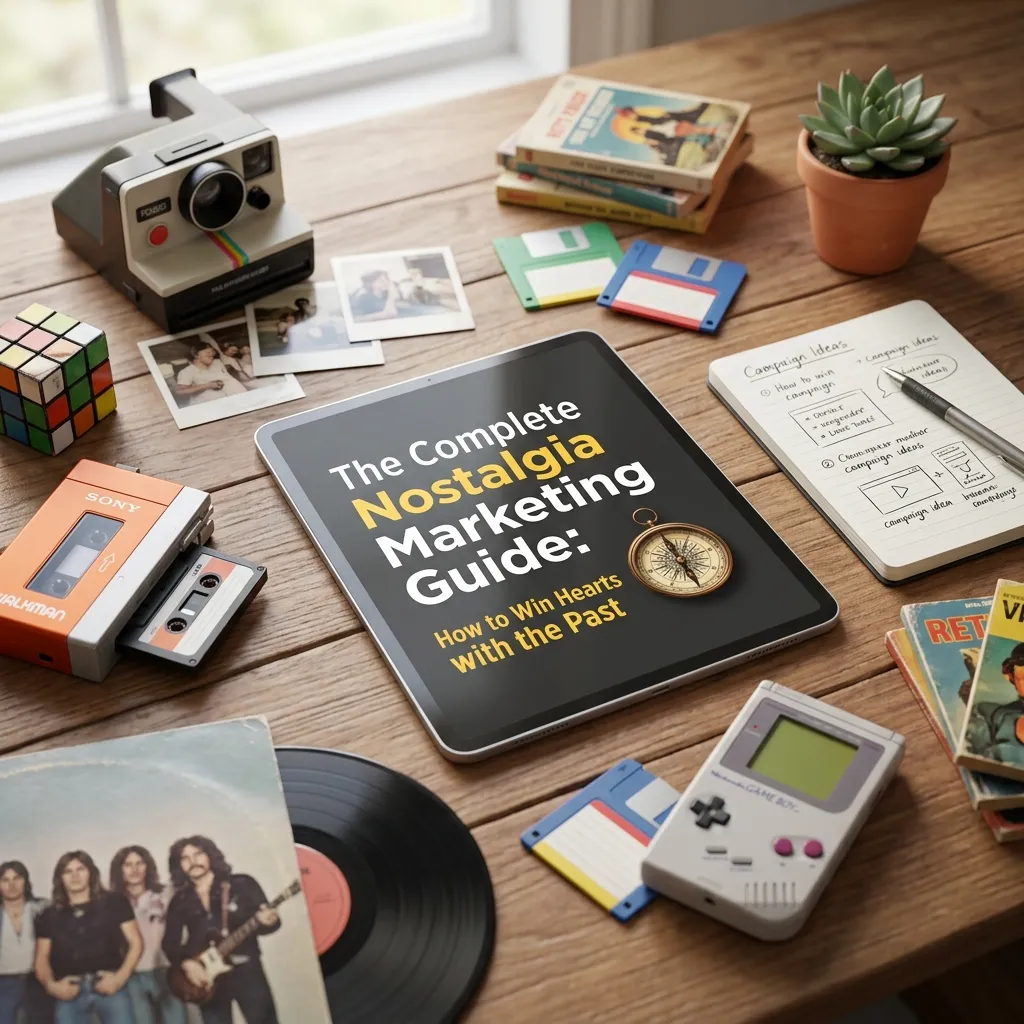
Nostalgia marketing is one of the most powerful emotional triggers in modern branding. This nostalgia marketing guide breaks down the psychology, strategy frameworks, execution tactics, and real-world examples that drive engagement and loyalty. You will learn how to select the right era, balance retro aesthetics with modern utility, measure campaign impact, and avoid the pitfalls that make nostalgia feel forced. Whether you are a startup or an enterprise brand, this nostalgia marketing guide gives you a repeatable playbook for turning fond memories into revenue.
Every generation reaches a point where the past feels better than the present. Smart brands know this is not just sentimentality — it is a measurable marketing lever. A well-executed nostalgia marketing guide helps you tap into that longing without crossing into kitsch. The difference between a viral throwback campaign and a cringe-worthy one comes down to strategy, timing, and authenticity.
In this nostalgia marketing guide we cover the science behind why nostalgia sells, a step-by-step framework for building campaigns, channel-specific tactics, measurement models, and twelve common questions marketers ask before launching. By the end you will have a practical nostalgia marketing guide you can hand to your creative team and execute next quarter. This nostalgia marketing guide is designed to be a living document, not a one-time read.
Why Nostalgia Works: The Psychology
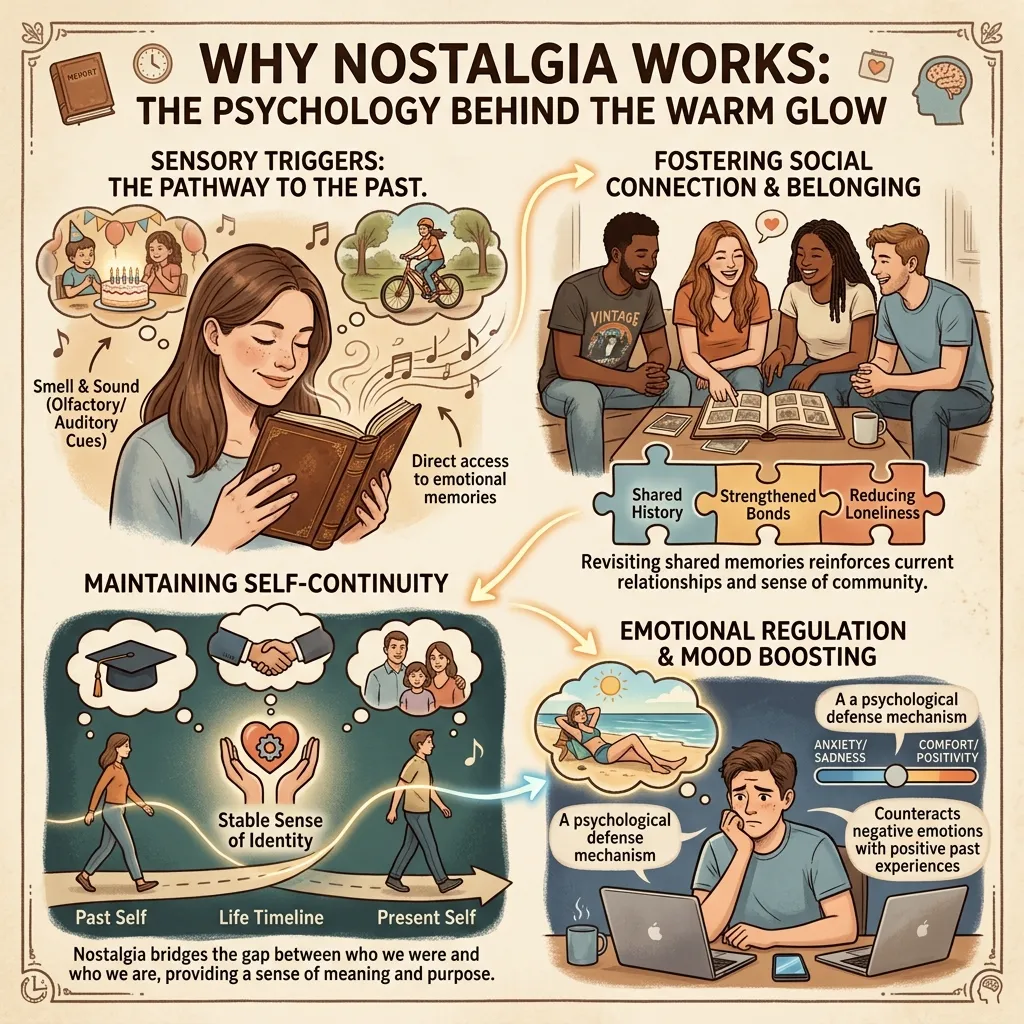
Nostalgia is a bittersweet emotion — a blend of joy for what was and sadness that it is gone. Neuroscience shows it activates the brain’s reward circuitry (ventral striatum) and the memory hub (hippocampus) simultaneously. The result is a feeling of comfort, belonging, and optimism about the future.
Research from the Journal of Consumer Research finds that nostalgia increases willingness to pay, strengthens brand attachment, and reduces price sensitivity. A solid nostalgia marketing guide starts here: the emotion is not a gimmick; it is a biological response brands can ethically harness.
Three psychological drivers make a nostalgia marketing guide effective:
- Self-continuity — People use nostalgic cues to connect their past identity with their present self.
- Social connectedness — Shared memories create instant community, even among strangers.
- Existential meaning — Nostalgia buffers against loneliness and anxiety, making people more open to messaging.
When your nostalgia marketing guide aligns creative with these drivers, campaigns feel meaningful instead of manipulative.
Building Your Nostalgia Marketing Guide Framework
A repeatable nostalgia marketing guide follows five phases. Skip one and the campaign usually feels off.
Phase 1: Audience Era Mapping
Not every generation responds to the same decade. A Gen Z nostalgia marketing guide leans into Y2K aesthetics (early 2000s), while Millennials respond to 90s cartoons, dial-up sounds, and Tamagotchis. Gen X connects with 80s synth, VHS tracking lines, and Saturday morning cartoons. Boomers light up for 60s rock, drive-in theaters, and vinyl.
Your nostalgia marketing guide should start with a simple matrix: target cohort → formative decade → cultural touchstones (toys, TV, music, tech, fashion, slang). Validate with social listening and search trends before creative begins.
Phase 2: Asset Archaeology
Dig through your brand’s own archives. Old logos, packaging, jingles, print ads, and product designs are gold for a nostalgia marketing guide because they carry authenticity — you are not borrowing someone else’s past, you are reclaiming your own. If your brand is new, partner with cultural icons from the target era (a discontinued snack, a classic game, a retro font foundry) to borrow credibility.
Phase 3: Modern Utility Layer
Pure retro is a museum exhibit. A high-converting nostalgia marketing guide always adds a modern utility layer: a QR code on vintage packaging that unlocks AR content, a re-released product with updated ingredients, a limited drop sold through a TikTok Shop livestream. The past draws attention; the present converts it.
Phase 4: Channel Strategy
Different channels serve different roles in a nostalgia marketing guide:
- TikTok / Reels — Fast, participatory trends (duets with old jingles, transition videos)
- Instagram — Curated aesthetic grids, carousel deep-dives on era details
- YouTube — Long-form documentaries, “history of” series, creator collabs
- Email / SMS — Personalized “remember this?” sequences with dynamic product recommendations
- OOH / Experiential — Pop-up installations that recreate era-specific environments
Match the channel to the funnel stage in your nostalgia marketing guide.
Phase 5: Measurement Model
Track three tiers in your nostalgia marketing guide dashboard:
- Top: Sentiment lift (social listening), share-of-voice vs. competitors, earned media mentions
- Middle: Engagement rate, video completion rate, UGC volume, hashtag adoption
- Bottom: Conversion rate on nostalgia SKUs, average order value, repeat purchase rate, LTV of nostalgia-acquired customers
A data-driven nostalgia marketing guide proves ROI and secures budget for the next cycle.
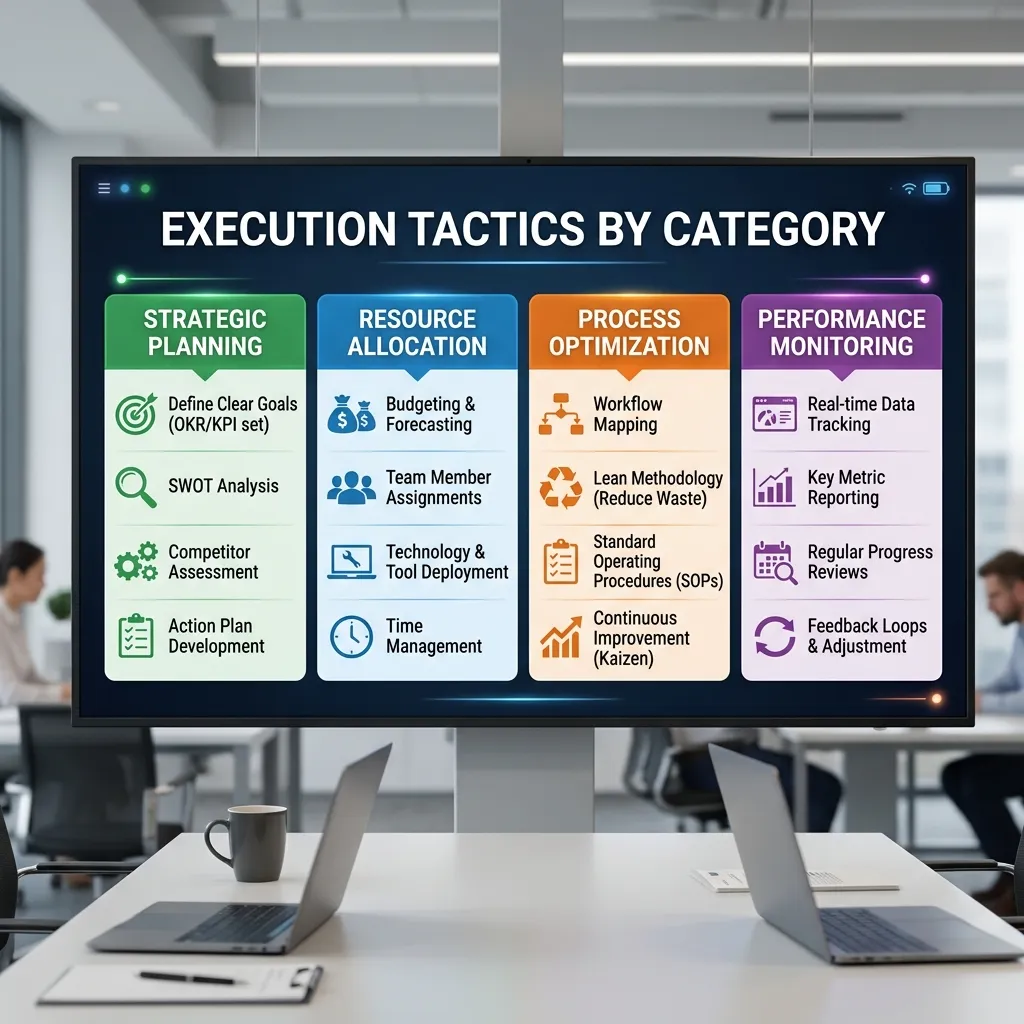
Execution Tactics by Category
Product & Packaging
Re-release hero SKUs in original packaging with a modern twist (recyclable materials, updated nutrition). Number the run (“Batch 1 of 1985”) to create scarcity. A nostalgia marketing guide for CPG brands lives here — limited editions drive velocity and press.
Content & Storytelling
Produce mini-documentaries on the cultural history of your category. Interview the original designers, early customers, or pop-culture historians. This builds authority and feeds owned channels. Our piece on the revolutionary implications of emotional storytelling shows how narrative depth turns a campaign into a cultural moment.
Influencer & Community
Recruit creators who genuinely grew up in the target era. Their personal stories (“I used to save allowance for this cereal”) outperform scripted ads. Build a Discord or Facebook Group for “Era Enthusiasts” where the brand facilitates but does not dominate. Community-owned nostalgia scales faster than brand-owned.
Partnerships & Co-Branding
Cross-pollinate with non-competing brands from the same era. A sneaker label + a retro soda. A streaming service + a vintage arcade bar. The partnership expands reach and signals cultural fluency. Your nostalgia marketing guide should include a partnership scorecard: audience overlap, brand-fit, activation feasibility, legal complexity.
Common Pitfalls (And How Your Nostalgia Marketing Guide Avoids Them)
| Pitfall | Symptom | Fix in Your Nostalgia Marketing Guide |
|---|---|---|
| Lazy referencing | Just slapping a pixel font on a landing page | Require a cultural insight brief before creative kickoff |
| Wrong era | Gen Z campaign uses 80s references | Mandate audience-era mapping (Phase 1) |
| No modern hook | Campaign feels like a history lesson | Enforce modern utility layer (Phase 3) |
| Inauthentic voice | Copy sounds like “how do you do fellow kids” | Hire era-native creators; use community feedback loops |
| Over-indexing on aesthetics | Beautiful visuals, zero conversion path | Tie every asset to a measurable CTA in the measurement model |
A disciplined nostalgia marketing guide treats these as gate checks, not afterthoughts.
Real-World Examples Deconstructed
Nintendo (NES Classic Edition)
- Era: Mid-80s gaming
- Tactic: Mini hardware replica, original controllers, HDMI output
- Why it worked: Product was the nostalgia; no forced storytelling needed
- Lesson for your nostalgia marketing guide: Sometimes the artifact itself is the campaign.
Spotify (“Wrapped” + “Your 2010s”)
- Era: User’s personal listening history
- Tactic: Data-driven personalized nostalgia at scale
- Why it worked: Every user gets their own era; shareability built in
- Lesson: Personalization beats broad-era targeting when data allows.
Pepsi (Throwback Series with Real Sugar)
- Era: Pre-HFCS formulation (70s/80s)
- Tactic: Limited-run cane sugar formula in vintage cans
- Why it worked: Taste is the memory; product change validated the claim
- Lesson: If you claim “back to the original,” the product must deliver.
Integrating With Broader Emotional Strategy

Nostalgia is one lever in a larger emotional toolkit. It pairs powerfully with:
- Storytelling — The past is a narrative; see our breakdown of revolutionary implications of emotional storytelling
- Brand identity — Nostalgia reinforces who you have always been; explore the psychology behind emotional branding
- Consumer psychology — The cognitive biases nostalgia triggers are mapped in our guide to the psychology behind emotional marketing
A holistic nostalgia marketing guide sits inside your emotional marketing architecture, not beside it.
Conclusion
A nostalgia marketing guide is not a trend-chasing playbook — it is a structured way to harness one of the most reliable emotional drivers in human psychology. When you map the right era, excavate authentic assets, layer modern utility, distribute on the right channels, and measure with a three-tier model, nostalgia becomes a repeatable growth engine instead of a one-off stunt.
Start small: pick one cohort, one era, one hero SKU or content series. Run the five-phase framework. Measure. Iterate. The brands that win the next decade will be the ones that make the past feel useful today. Use this nostalgia marketing guide as your template, and turn memory into momentum. Every strong nostalgia marketing guide starts with a single era and scales from there.
For deeper emotional strategy, explore our analysis of the revolutionary implications of emotional storytelling, the psychology behind emotional branding, and the psychology behind emotional marketing.
External reference: Batcho, K. I. (2013). Nostalgia: The bittersweet history of a psychological concept. University of Hartford — foundational academic work on nostalgia’s psychological functions. APA PsycNet
Frequently Asked Questions
1. What is a nostalgia marketing guide?
A nostalgia marketing guide is a strategic framework that helps brands use positive memories and familiar cultural moments to increase engagement, loyalty, and sales. It typically covers audience research, era selection, creative execution, channel planning, and campaign measurement.
2. Why does nostalgia marketing work so well?
Nostalgia connects positive emotions with familiar memories, creating feelings of comfort, belonging, and optimism. A strong nostalgia marketing guide uses these emotional responses to build deeper connections between customers and brands.
3. How do I choose the right era for my nostalgia marketing guide?
Start by identifying your target audience’s formative years, usually between ages 10 and 25. For example, Gen Z may respond to Y2K and early-2000s culture, while Millennials may connect strongly with the 1990s. Use search trends and social listening to validate your choice.
4. Can a new brand use a nostalgia marketing guide?
Yes. New brands can work with recognizable products, cultural references, creators, or intellectual properties from a specific era. Your nostalgia marketing guide should focus on creating authentic connections rather than simply copying an old visual style.
5. What is the biggest mistake in a nostalgia marketing guide?
One common mistake is treating nostalgia as only a visual trend. Adding a retro filter or old-fashioned design without a meaningful cultural connection can feel forced. Effective nostalgia marketing combines emotional relevance with modern value and usefulness.
6. How do I measure ROI from a nostalgia marketing guide?
Measure performance at different stages of the funnel. Track sentiment and brand awareness first, followed by engagement and user-generated content. Finally, measure conversions, average order value, and customer lifetime value to understand the campaign’s business impact.
7. Which channels work best for a nostalgia marketing guide?
TikTok and Instagram Reels work well for nostalgic trends, while Instagram is useful for visual storytelling. YouTube can support longer-form content, and email or SMS can create personalized nostalgia campaigns. Choose channels based on your audience and campaign goals.
8. How do I avoid cultural appropriation in a nostalgia marketing guide?
Focus on authentic representation and give credit to the communities that created the culture you’re referencing. Working with era-specific creators, cultural experts, and original voices can help your nostalgia marketing guide remain respectful and authentic.
9. Can B2B brands use a nostalgia marketing guide?
Absolutely. Nostalgia can work with professional audiences too. For example, a SaaS company could use early-internet references such as dial-up connections or outdated website designs to show how dramatically technology has evolved.
10. What budget should I allocate for a nostalgia marketing guide campaign?
Start with a small pilot campaign before committing a large budget. Test one nostalgic theme, measure audience response and conversions, and use those results to determine whether the campaign deserves additional investment.
11. How often should I refresh my nostalgia marketing guide?
Review your strategy at least once a year. Cultural trends change quickly, so update your audience research, nostalgic references, creative assets, and creator partnerships regularly to keep campaigns relevant rather than outdated.
12. Where can I find authoritative research to support my nostalgia marketing guide?
Look for research from reputable academic journals and established marketing publications. Sources such as the Journal of Consumer Research and Harvard Business Review can provide useful insights into nostalgia, consumer behavior, emotional branding, and customer decision-making.