Emotional Marketing for Travel & Tourism: A Complete Guide

Emotional marketing for travel and tourism works because a trip is never really sold on logistics — it’s sold on the feeling of anticipation, escape, and memory a destination promises. This guide breaks down the emotional drivers unique to travel marketing, the channels and formats that carry them best, and the mistakes that cause otherwise beautiful campaigns to fall flat.
Emotional marketing for travel and tourism starts from a basic truth: no one books a flight because of the aircraft. They book it because of what waits on the other end — a beach they’ve imagined for months, a city they’ve wanted to walk through since childhood, a chance to disconnect from routine entirely. Travel is one of the purest categories for emotional marketing precisely because the purchase itself is intangible until the trip actually happens. A hotel room photo can’t convey a feeling; the story around it has to do that work.
This guide looks at why it performs so consistently well, the specific emotions that drive booking decisions, and the practical strategies destinations, hotels, airlines, and tour operators use to turn a browsing visitor into a confirmed booking. It also covers where these campaigns tend to go wrong, since travel marketing carries its own specific risks around overpromising an experience reality can’t match.
Why Emotional Marketing Works So Well in Travel
Unlike most purchases, a trip can’t be evaluated before it’s bought, which is exactly why emotional marketing for travel and tourism carries more weight than it does in categories where a buyer can compare specs directly. There’s no test drive, no sample, no return policy that recovers the actual experience. That uncertainty means a traveler is buying almost entirely on trust and imagination — trust that the destination matches what’s being promised, and imagination about how the trip will feel once they’re there. Emotional marketing fills exactly that gap, giving a traveler a vivid enough picture of the experience to commit before it exists for them personally.
Travel purchases also tend to carry outsized emotional weight relative to their price. A vacation is often tied to a milestone — a honeymoon, a graduation, a long-awaited reunion, a solo trip marking a fresh start. Marketing that acknowledges this emotional context, rather than treating every trip as an interchangeable transaction, tends to build far stronger connection than marketing focused purely on price or itinerary details.
Key Emotional Triggers That Drive Travel Bookings
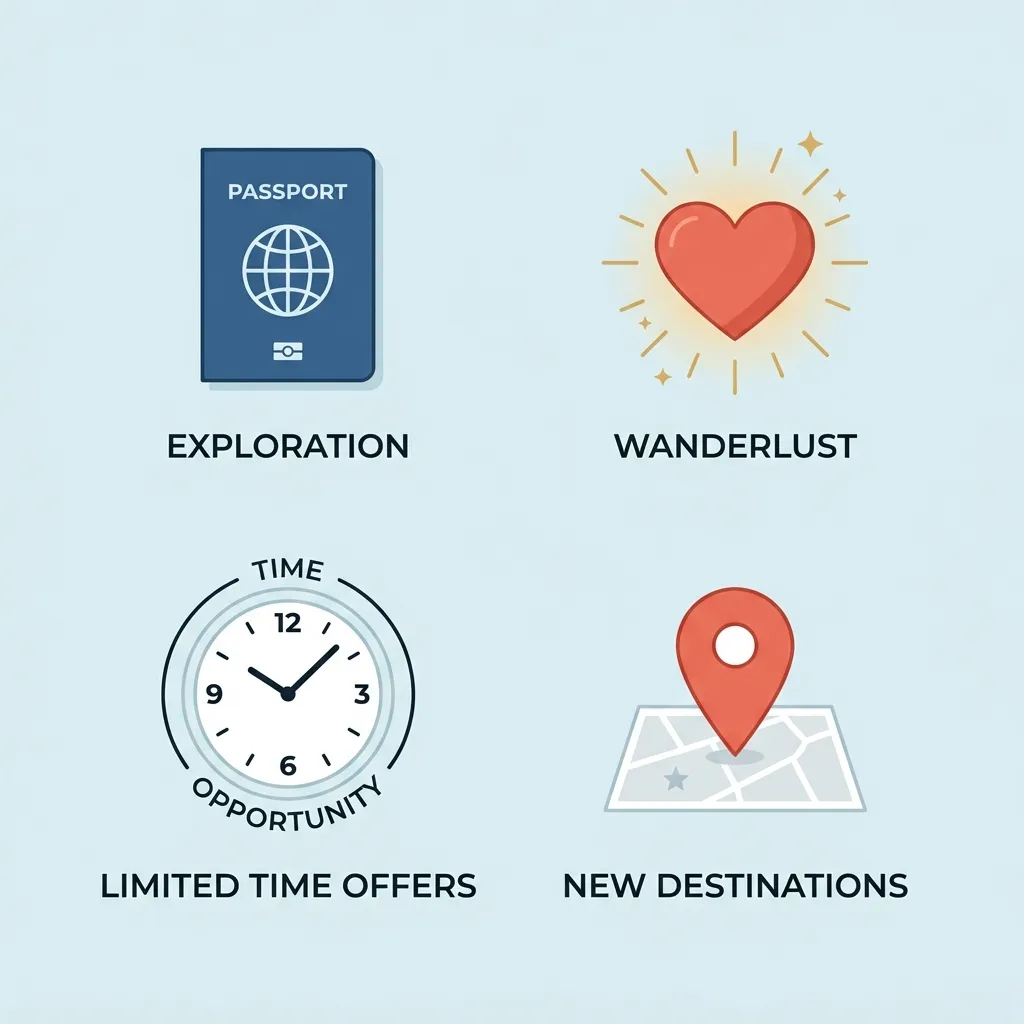
Anticipation
The period between booking and departure is often as emotionally significant as the trip itself, and travel brands that understand this build marketing around the anticipation phase rather than only the destination. Countdown messaging, pre-trip content, and community around an upcoming trip all extend the emotional payoff of a booking well before departure.
Escape and Transformation
Much of travel marketing sells a break from ordinary life — the promise that a destination offers not just new scenery but a different version of the traveler themselves, even temporarily. This transformation angle works particularly well for wellness travel, solo trips, and any campaign built around personal reset rather than simple sightseeing.
Nostalgia
Nostalgia plays a distinct role in travel marketing, whether it’s a campaign evoking a traveler’s own childhood memories of a place, or one tapping into cultural nostalgia for an era or aesthetic associated with a destination. Our guide on how nostalgia marketing works covers the psychological mechanics behind this trigger in depth, and travel is one of the categories where it converts most reliably, since many trips are explicitly framed as returning to or recreating a cherished memory.
Belonging and Shared Experience
Group travel, family reunions, and destination weddings all tap into belonging — the sense that a trip connects people to each other, not just to a place. Marketing built around shared experience rather than solo discovery resonates strongly with this segment, since the emotional payoff being sold is relational as much as geographic.
Fear of Missing Out
Limited-time offers, seasonal windows, and “before it changes” messaging around destinations facing overtourism or environmental change all tap into a very real form of urgency in travel marketing. Used honestly, this can prompt genuine action; used cynically, it risks feeling manipulative, particularly around sensitive topics like climate-vulnerable destinations.
Strategies for Emotional Marketing in Travel Campaigns
Story-Led Destination Content
Rather than listing amenities or attractions, the strongest travel campaigns build a narrative arc — a traveler’s day, a local’s perspective, a moment of discovery — that the audience can imagine themselves inside. Our guide to emotional advertising strategies covers storytelling frameworks that adapt well to destination marketing specifically, particularly around structuring a narrative that builds toward a clear emotional payoff rather than simply cataloguing features.
Visual and Sensory Immersion
Travel marketing leans more heavily on visual and sensory cues than almost any other category, since the entire point is helping someone imagine being somewhere they’ve never been. Color, light, sound design in video, and even the pacing of a photo carousel all shape the emotional tone before a single word of copy is read.
User-Generated and Traveler-Told Stories
Real traveler photos, reviews, and short-form video increasingly outperform polished studio campaigns in emotional marketing for travel and tourism, since peer-told stories carry a credibility that brand-produced content struggles to match. Seeing someone relatable experience a destination tends to build stronger booking intent than an idealized campaign shoot.
Pre- and Post-Trip Emotional Touchpoints
The emotional arc of a trip extends well beyond the booking moment. Anticipation-building content before departure and memory-reinforcing content after return — photo recap emails, loyalty recognition, an invitation to share their own story — both extend the emotional relationship and increase the likelihood of a repeat booking. Our piece on the emotional buying journey explains how this extended arc applies across categories, and travel is one of the clearest examples of a purchase journey that continues well past the transaction itself.
Video as a Primary Format
Because travel is inherently experiential, video consistently outperforms static imagery for conveying the feeling of a destination. An outside resource on hotel video marketing examples that drive bookings shows how hospitality brands specifically use video to shorten the imaginative gap between browsing and booking, and the broader discipline of interactive video storytelling offers additional structure for building immersive, choice-driven travel content that lets a viewer explore a destination rather than simply watch it.
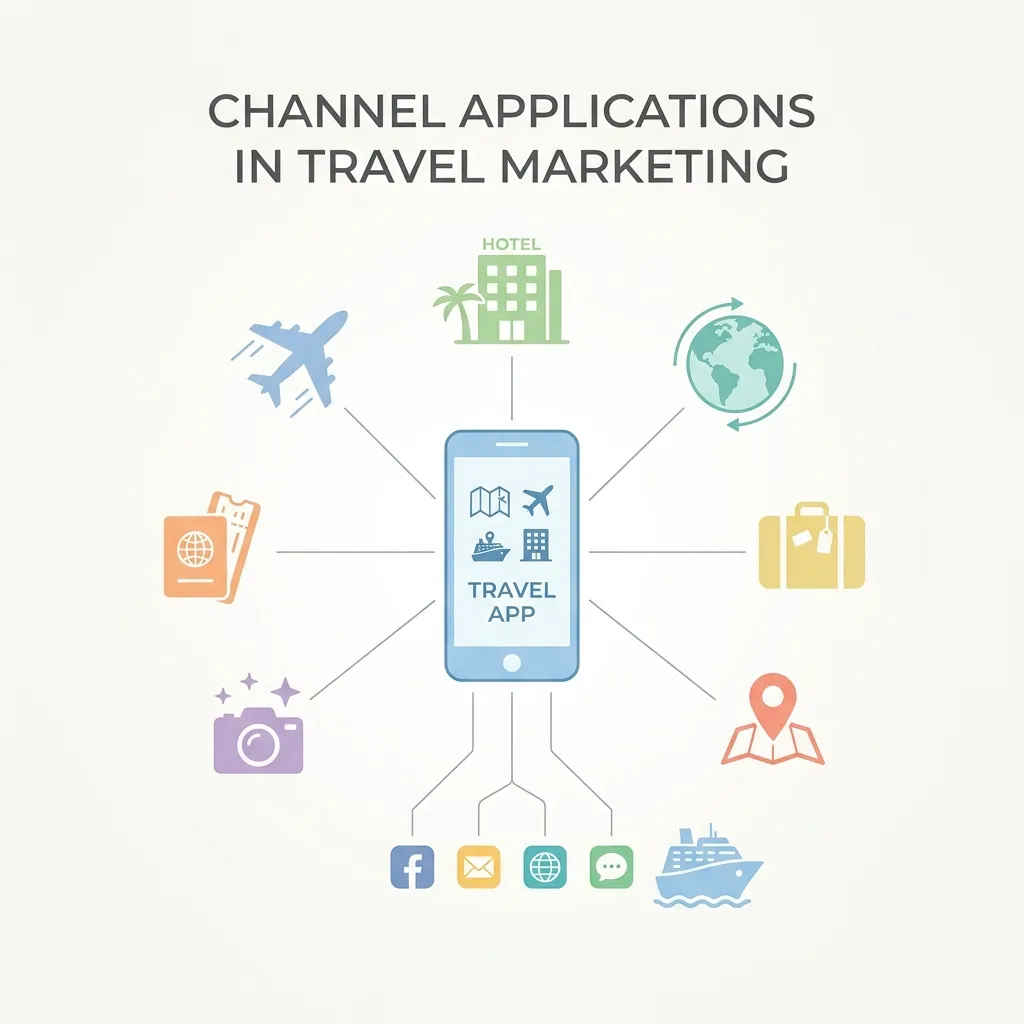
Channel Applications in Travel Marketing
Social Media
Instagram and TikTok remain central to travel discovery, with short-form video and destination reels often functioning as a traveler’s first exposure to a place they later book. Emotional pacing matters here — content that opens with mood and visual impact before any explicit sell tends to outperform content that leads with logistics or price.
Email and Retargeting
Travel purchase cycles are often long, with significant time between initial interest and final booking. Email sequences that build anticipation, share traveler stories, and reintroduce a destination at the right emotional moment — rather than purely price-driven retargeting — tend to convert better over that extended consideration window.
On-Site and Booking Experience
The emotional narrative built through advertising needs to carry through to the booking site itself. A beautifully emotional campaign that leads to a confusing, purely transactional booking flow creates a jarring shift that can undercut the trust built earlier in the journey.
Influencer and Creator Partnerships
Travel creators occupy a unique position in this category because their content often functions as both inspiration and evidence simultaneously — a creator’s trip serves as proof that the destination delivers on its promise while also generating the emotional pull that makes a viewer want to go themselves. The most effective partnerships give creators enough creative freedom to tell an authentic story rather than reciting brand talking points, since audiences are generally skilled at detecting content that feels scripted. Micro-influencers with smaller, more engaged audiences often outperform larger creators on emotional trust specifically, even when their reach is considerably smaller, because their recommendations feel closer to a friend’s advice than an advertisement.
Common Mistakes in Emotional Marketing for Travel and Tourism
Overpromising the Experience
Because travel can’t be sampled before purchase, the gap between marketing promise and lived reality is unusually visible and unusually damaging when it’s too wide. Campaigns that oversell a destination’s beauty, exclusivity, or ease of access risk generating disappointment that surfaces publicly in reviews and social content.
Ignoring Seasonal and Cultural Sensitivity
Emotional campaigns tied to a specific season, holiday, or cultural moment can misfire badly if timing or framing feels tone-deaf to the destination’s actual community or current circumstances, particularly around destinations affected by natural disasters, political instability, or overtourism concerns.
Treating Every Traveler the Same
A solo wellness traveler, a family planning a reunion, and a couple booking a honeymoon are drawn to very different emotional triggers. Broad, undifferentiated messaging that tries to appeal to everyone often ends up resonating strongly with no one.
Underinvesting in Post-Booking Experience
Many travel brands pour resources into pre-booking emotional marketing and then treat the actual trip and post-trip relationship as an afterthought. This wastes an opportunity, since a traveler’s post-trip sentiment strongly influences whether they book again and what they say publicly about the brand.
Measuring Emotional Campaign Impact in Travel
Emotional marketing for travel and tourism can be measured through a mix of behavioral and sentiment signals: repeat booking rate, average consideration window length, engagement and save rate on destination content, review sentiment after the trip, and referral or word-of-mouth bookings tied to a specific campaign. Because the consideration window in travel is often long, short-term conversion metrics alone can understate a campaign’s actual influence, making assisted-conversion and multi-touch tracking particularly important in this category.
Building a Full-Journey Emotional Strategy
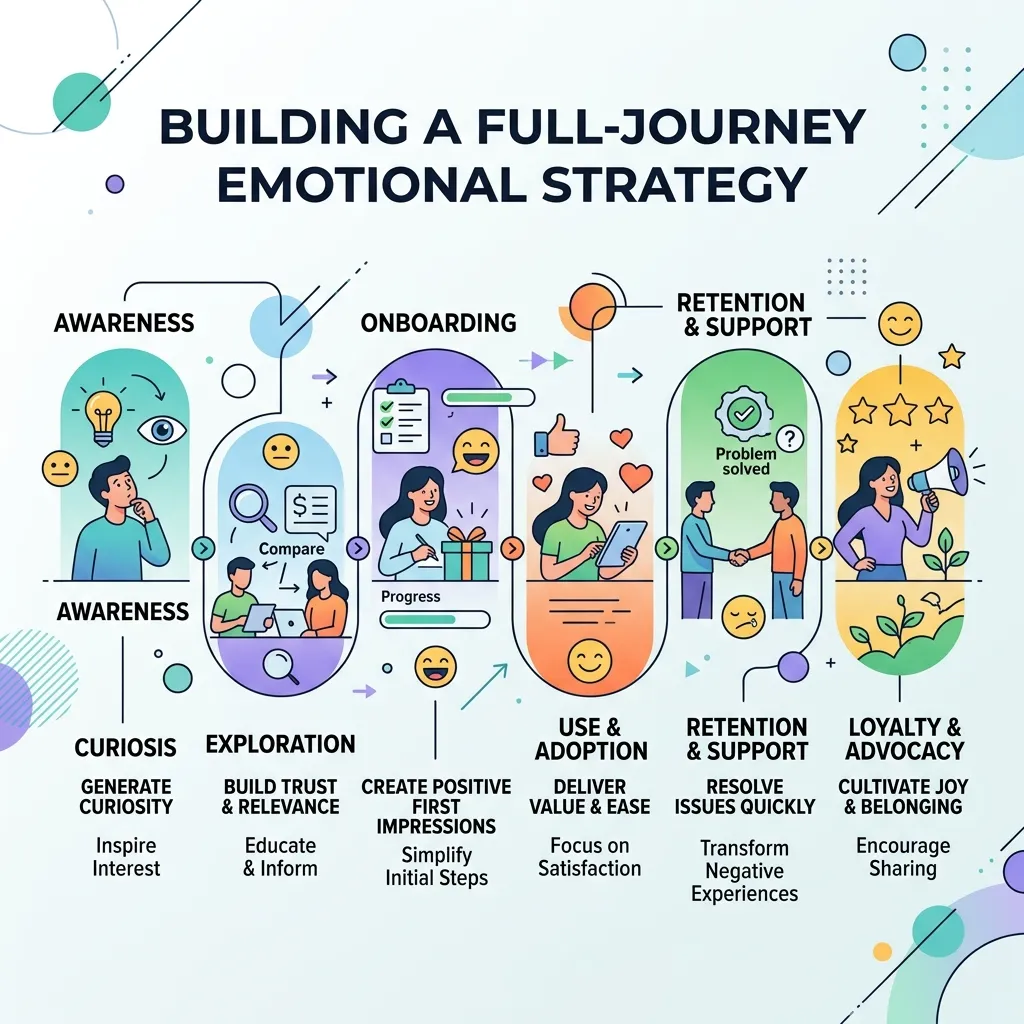
The brands that sustain strong results in this category over time tend to treat the emotional narrative as continuous across the entire traveler journey rather than concentrated only in top-of-funnel advertising. The same visual language, tone, and emotional territory that draws someone in during the discovery phase should carry through booking confirmation, pre-trip communication, and the destination experience itself. A campaign built around escape and transformation loses credibility fast if the booking confirmation email reads like a generic transaction receipt with no connection to the story that prompted the purchase.
This continuity also extends to how a brand handles the inevitable gap between marketing and reality. No destination photographs perfectly under every condition, and no itinerary runs flawlessly every time. Brands that acknowledge this honestly — showing real weather, real crowds, real logistics alongside the aspirational imagery — tend to build more durable trust than those presenting an unrealistically polished version of the experience. Travelers who arrive with accurately calibrated expectations report higher satisfaction and are considerably more likely to leave positive reviews than those who feel let down by a gap between promise and delivery.
Cross-functional alignment matters here as much as it does in any other emotionally driven category. Marketing, customer service, and on-the-ground operations all shape whether a traveler’s actual experience matches what was promised. Our resource on emotional marketing for ecommerce and retail brands covers a related version of this challenge — ensuring the emotional promise made in advertising is backed up by the actual purchase and fulfillment experience — and the same discipline applies directly to travel, where the “product” is an entire multi-day experience rather than a single delivered item.
Conclusion
Emotional marketing for travel and tourism works because the product being sold was never really the flight, the room, or the itinerary — it’s the anticipation, the escape, the memory, and sometimes the sense of belonging that a trip represents. Brands that build campaigns around these specific emotional drivers, carried through consistent story, visuals, and post-trip experience, tend to build the kind of loyalty that pure price competition never achieves. The brands that struggle are usually the ones that oversell a destination beyond what it can deliver, or that treat every traveler’s motivation as identical when the emotional reasons for booking a trip are rarely the same from one traveler to the next.
Frequently Asked Questions About Emotional Marketing in Travel and Tourism
1. Why Is Emotional Marketing Especially Effective for Travel and Tourism?
Because a trip cannot be sampled before purchase, travelers often rely on trust and imagination. Emotional storytelling can therefore play an important role alongside practical information about the destination and service.
2. What Emotions Drive Travel Bookings Most Often?
Anticipation, escape, transformation, nostalgia, belonging, and urgency around limited-time opportunities are common emotional triggers used in travel marketing.
3. Does User-Generated Content Work Better Than Professional Travel Photography?
Often, yes, particularly for building trust. Real traveler stories and photos can feel more authentic and credible than highly polished promotional campaigns, even when their production quality is lower.
4. How Long Is the Typical Travel Purchase Consideration Window?
It varies by trip type, destination, and traveler, but travel often involves a longer consideration period than many everyday purchases. Sustained pre-booking content can therefore be useful throughout the decision-making process.
5. What’s the Risk of Overpromising in Travel Marketing?
Because a destination cannot be tested before booking, an oversold experience can create a significant gap between expectations and reality. This can contribute to negative reviews and unfavorable social media content after the trip.
6. Should Travel Brands Market Differently to Different Traveler Types?
Yes. Solo travelers, families, and couples can have different needs and motivations. Segmenting messaging around these differences can make emotional campaigns more relevant to each audience.
7. How Important Is Video in Travel and Tourism Marketing?
Video can be highly effective because it communicates the sensory and experiential qualities of a destination through movement, scenery, sound, and atmosphere in ways that static images may not fully capture.
8. Does Emotional Marketing Continue After a Trip Is Booked?
Yes. Pre-departure anticipation content can maintain excitement before travel, while post-trip content can reinforce positive memories and encourage future engagement or repeat bookings.
9. How Can Travel Brands Measure the Impact of Emotional Campaigns?
Common signals include repeat booking rates, engagement with destination content, post-trip review sentiment, referral bookings, and conversion metrics. Looking at several indicators provides a broader view of campaign impact.
10. What’s the Danger of Urgency-Based Messaging in Travel Marketing?
Overused urgency can make campaigns feel manipulative rather than motivating. This can weaken customer trust, particularly when messaging involves sensitive issues such as climate-vulnerable destinations.
11. Can Small Tour Operators Compete With Large Travel Brands on Emotional Marketing?
Yes. Smaller operators can use authentic, personal storytelling to build emotional connections and trust. Direct knowledge of destinations and personalized customer experiences can also strengthen their storytelling.
12. What’s the Biggest Mistake in Emotional Marketing for Travel and Tourism?
One major mistake is overpromising an experience that the destination or service cannot consistently deliver. When expectations are not met, the resulting loss of trust can affect reviews, referrals, and future bookings.