The Emotional Buying Journey: How Feelings Drive Purchases
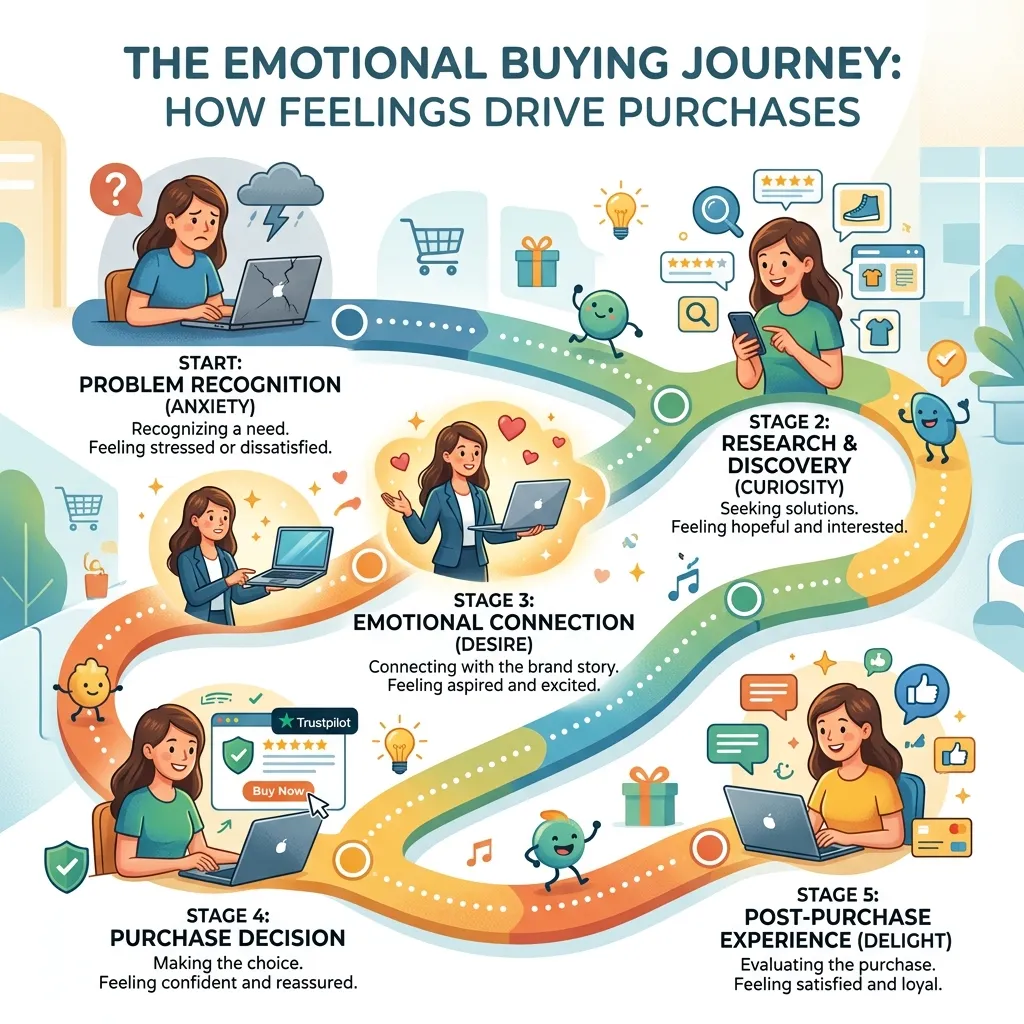
The Emotional Buying Journey describes the emotionally-driven process consumers go through from first discovering a brand to becoming loyal advocates. Research consistently shows that emotional responses—not rational analysis—drive the majority of purchasing decisions. Marketers who understand and align with these emotional stages see significantly stronger customer loyalty and conversion rates.
Consumers rarely buy products. They buy feelings—security, belonging, excitement, relief. A car isn’t just transportation; it’s freedom. A skincare product isn’t just moisturizer; it’s confidence. Understanding this distinction is the foundation of the Emotional Buying Journey, and it’s what separates brands that earn lifelong customers from those that compete endlessly on price.
Marketing has evolved significantly over the past few decades. Early models assumed consumers were rational actors who carefully weighed pros and cons before making a purchase. We now know this isn’t how the human brain works. According to neuroscientist Antonio Damasio, patients with damage to the brain’s emotional centers struggle to make even simple decisions—suggesting that emotion isn’t a distraction from good decision-making, but a core component of it.
This blog post unpacks the full Emotional Buying Journey: the psychology behind it, the key stages, and the practical strategies marketers can use to create meaningful emotional connections at every touchpoint. Whether you’re refining your messaging, rethinking your customer experience, or building a long-term brand strategy, what follows will give you a clear framework to put emotions to work.
The Psychology Behind Emotional Buying Decisions

How does the brain process emotions during purchasing?
The brain processes emotional stimuli far faster than rational thought. The amygdala—responsible for emotional responses—fires before the prefrontal cortex (the seat of logic) even gets involved. This means a customer’s gut reaction to your brand can be formed in milliseconds, long before they’ve read a single product feature.
Harvard Business School professor Gerald Zaltman has argued that 95% of purchasing decisions are made subconsciously. While this figure is debated, the underlying point is broadly supported: emotional processing dominates early-stage consumer behavior. Brands that trigger the right emotions early in the Emotional Buying Journey gain a powerful advantage before rational deliberation even begins.
What role do heuristics and cognitive biases play in emotional consumer behavior?
Heuristics are mental shortcuts the brain uses to make decisions quickly. In marketing contexts, these shortcuts are triggered by emotional cues—social proof, authority, scarcity, and familiarity all tap into deep-seated emotional responses. For example, the “fear of missing out” (FOMO) is not a logical calculation; it’s an emotionally charged bias that accelerates purchasing decisions.
Gathering Emotional Consumer Insights means understanding which of these triggers are most relevant to your specific audience. Research methods such as sentiment analysis, eye-tracking studies, and in-depth interviews can reveal the emotional undercurrents that drive consumer behavior—information that traditional surveys rarely capture.
How do emotions affect brand memory and perception?
Emotion and memory are deeply intertwined. Emotionally charged experiences are encoded more vividly in long-term memory, which is why a powerful brand moment can stay with a consumer for years. This has direct implications for marketing: campaigns that generate strong emotional responses are not only more memorable but also more likely to influence future purchasing behavior.
The Four Stages of the Emotional Buying Journey
Awareness: How can brands spark genuine emotional curiosity?
The first stage of the Emotional Buying Journey is about making an impression that goes beyond information delivery. Consumers encounter thousands of brand messages daily; the ones that cut through are those that resonate emotionally.
At this stage, storytelling is your most powerful tool. A compelling narrative that reflects your audience’s aspirations, fears, or values creates an immediate emotional connection. Rather than leading with product features, lead with relatable human experiences. Ask: what does your ideal customer feel before they find you? Build your awareness messaging around that emotional state.
Consideration: What emotional levers move consumers from interest to desire?
During consideration, consumers are evaluating options. Logically, this seems like the stage for facts and specifications—but research suggests emotion continues to play a dominant role. Consumers are looking for brands they trust, identify with, and feel genuinely understood by.
This is where Emotional Brand Experience becomes critical. Every touchpoint during consideration—your website copy, product photography, customer reviews, and email sequences—should reinforce a consistent emotional identity. Personalization is particularly powerful here. When a brand demonstrates that it understands a customer’s specific situation, the emotional resonance deepens significantly.
Decision: How do brands overcome emotional hesitation at the point of purchase?
Even after a consumer has decided they want something, they often hesitate. This hesitation is emotional: fear of making the wrong choice, anxiety about spending money, or uncertainty about whether the brand will deliver on its promise.
Reducing this friction requires addressing emotional objections directly. Strong social proof (real customer stories, visible ratings), clear return policies, and confident, reassuring brand messaging all help consumers feel safe committing. Urgency tactics can also work here—but only when used ethically and honestly, which we’ll return to later.
Post-Purchase: How do brands turn customers into emotional advocates?
The Emotional Buying Journey doesn’t end at checkout. The post-purchase phase is arguably the most important for long-term brand growth. A customer who feels validated, appreciated, and excited about their purchase is one who will come back—and tell others.
Effective post-purchase emotional engagement includes personalized follow-up communications, unboxing experiences that delight, and community-building efforts that give customers a sense of belonging. Emotional Customer Engagement at this stage transforms a transactional relationship into an ongoing emotional one.
Crafting an Emotional Brand Experience That Lasts
What storytelling techniques create the strongest emotional brand connections?
Brand storytelling works because narratives are how humans naturally make sense of the world. The most emotionally resonant brand stories share a common structure: they present a relatable struggle, introduce the brand as the solution, and paint a vivid picture of transformation.
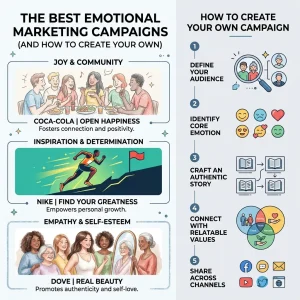
Nike doesn’t sell shoes—it tells stories about human determination. Dove doesn’t sell soap—it challenges conventional beauty standards. These brands have built Emotional Brand Experiences that extend far beyond their products, creating emotional identities that customers actively want to be associated with.
How does sensory marketing enhance the emotional impact of a brand?
Sensory marketing engages multiple senses to create richer emotional responses. Scent, for instance, is processed by the olfactory bulb, which is directly connected to the brain’s limbic system—the emotional center. This is why certain smells can trigger powerful memories and emotional states almost instantaneously.
Retailers use ambient music to influence purchasing pace and mood. Food brands obsess over the sound of a crisp packaging seal. Tech companies design unboxing experiences that create anticipation and delight. Each of these is a deliberate attempt to shape the Emotional Brand Experience through sensory engagement.
Leveraging Emotional Consumer Insights for Smarter Strategy

What research methods reveal the emotional triggers driving consumer behavior?
Traditional market research—surveys, focus groups, demographic data—tells you what consumers think and do, but rarely why they feel the way they do. Emotional Consumer Insights require deeper methods:
- Ethnographic research: Observing consumers in real-world contexts reveals emotional responses that self-reporting misses.
- Sentiment analysis: AI-powered tools can scan social media, reviews, and customer service transcripts to identify emotional patterns at scale.
- Biometric testing: Eye-tracking, galvanic skin response, and facial coding measure subconscious emotional reactions to marketing stimuli.
- Depth interviews: One-on-one conversations, conducted by skilled researchers, can uncover deeply held emotional motivations.
How can emotional data be translated into actionable marketing strategies?
Data alone doesn’t drive strategy—interpretation does. Once you’ve gathered Emotional Consumer Insights, the next step is mapping them to specific stages of the Emotional Buying Journey and identifying where emotional gaps exist. For example, if sentiment analysis reveals that customers feel anxious during the checkout process, that’s an actionable signal to redesign that experience with reassurance in mind.
Driving Emotional Customer Engagement Across Channels
How can brands build community to deepen emotional loyalty?
Belonging is one of the most powerful emotional drivers in human behavior. Brands that successfully build communities—whether through online forums, social media groups, loyalty programs, or live events—give customers something that transcends the product itself: a sense of identity and connection.
Emotional Customer Engagement through community isn’t just about retention. Customers who feel a strong sense of belonging are significantly more likely to advocate for a brand organically, reducing acquisition costs and increasing lifetime value.
What makes a brand moment genuinely memorable?
Memorable brand moments are almost always emotionally charged. They’re unexpected, personal, and human. A customer service agent who goes well beyond the job description. A brand that donates to a cause after a customer shares a personal story. A packaging detail that makes someone smile unexpectedly.
These moments aren’t always expensive to create—but they require a brand culture that prioritizes genuine emotional connection over transactional efficiency.
Measuring the Emotional Impact of Your Marketing
What KPIs best reflect the success of emotional marketing strategies?
Emotional marketing doesn’t always map neatly onto traditional performance metrics, but several indicators can signal emotional resonance:
- Net Promoter Score (NPS): Measures the likelihood of emotional advocacy.
- Customer Lifetime Value (CLV): High CLV often reflects strong emotional loyalty.
- Social sentiment scores: Track shifts in the emotional tone of consumer conversations over time.
- Engagement rate: High engagement on content often signals emotional relevance.
- Return rates and complaint volume: Negative post-purchase emotions show up here.
Pairing quantitative metrics with qualitative research—such as customer interviews or social listening—gives the fullest picture of emotional marketing performance.
Ethical Considerations in Emotional Marketing
Where is the line between emotional resonance and emotional manipulation?
Emotional marketing becomes manipulation when it exploits psychological vulnerabilities, uses false urgency, or creates fear for commercial gain without genuine justification. Consumers are increasingly sophisticated, and brands that cross this line risk significant reputational damage.
Authenticity is the antidote. Brands that use emotion in service of a genuine promise—rather than as a trick to bypass critical thinking—build lasting trust. Transparency about practices, honest storytelling, and a consistent commitment to delivering on emotional promises are the hallmarks of ethical emotional marketing.
The Future of the Emotional Buying Journey
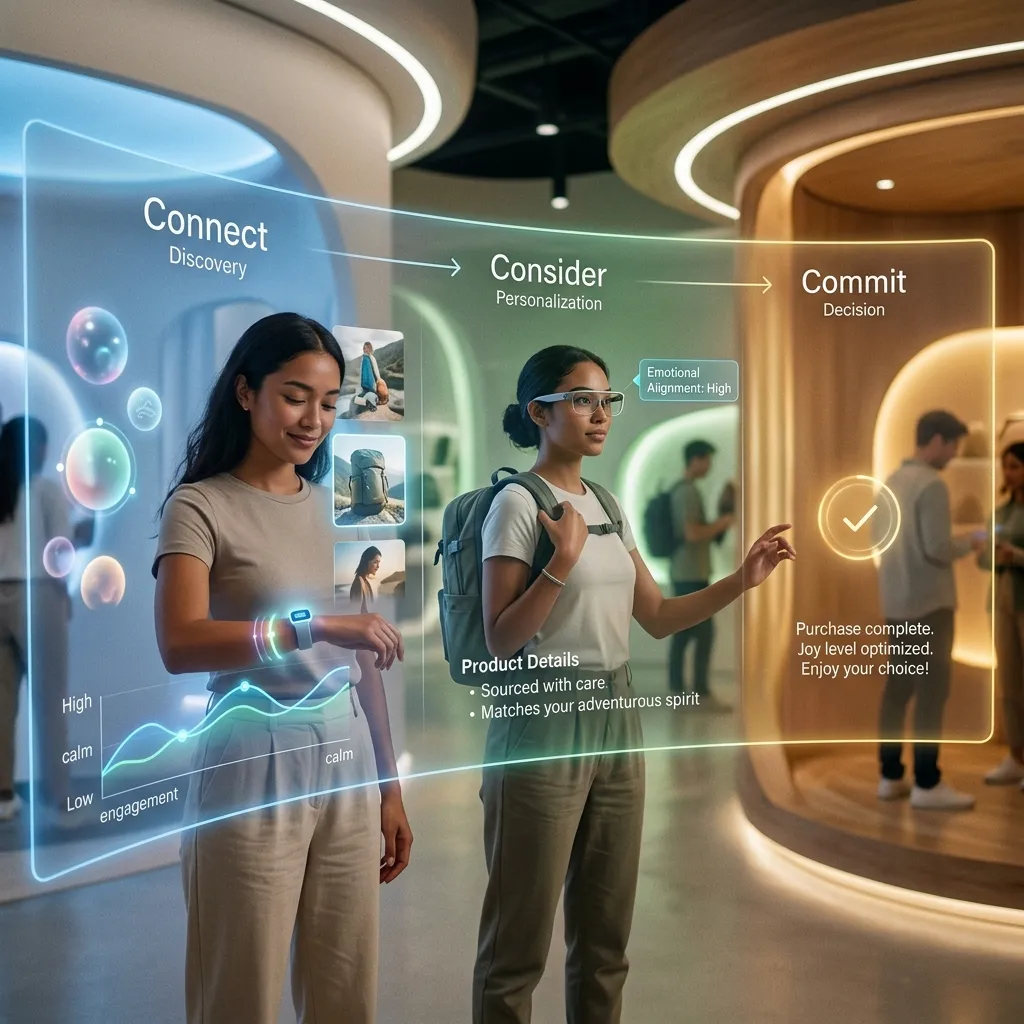
The Emotional Buying Journey will only grow in importance as markets become more saturated and product differentiation becomes harder to sustain. Consumers increasingly expect brands to understand and respond to their emotional needs—not just their functional ones.
Emerging technologies are expanding what’s possible. AI-powered personalization can deliver emotionally resonant experiences at scale. Immersive technologies like AR and VR create new opportunities for Emotional Brand Experience. And as data privacy regulations evolve, the brands that build emotional trust will have a significant advantage in retaining customer relationships.
The fundamentals, though, remain unchanged. People want to feel seen, understood, and valued. Brands that deliver on those emotional needs—consistently, authentically, and across every stage of the Emotional Buying Journey—will be the ones that earn not just customers, but advocates.
Frequently Asked Questions
What is the Emotional Buying Journey?
The Emotional Buying Journey describes the emotionally-driven process consumers go through when making a purchase—from initial awareness, through consideration and decision, to post-purchase loyalty. Unlike purely rational models, it recognizes that emotions are the primary driver of most purchasing decisions.
How do emotions influence purchasing decisions?
Emotions influence purchasing decisions by shaping how consumers perceive value, trust a brand, and remember their experiences. Positive emotional associations increase purchase likelihood, while negative emotional states—such as anxiety or doubt—can prevent conversion even when a product meets a consumer’s functional needs.
What is an Emotional Brand Experience?
An Emotional Brand Experience is the cumulative emotional impression a brand creates across all consumer touchpoints—from advertising and packaging to customer service and community. A strong Emotional Brand Experience creates consistent emotional associations that deepen loyalty over time.
How can businesses gather Emotional Consumer Insights?
Businesses can gather Emotional Consumer Insights through methods such as sentiment analysis of social media and reviews, ethnographic observation, biometric testing (eye-tracking, facial coding), and in-depth qualitative interviews. These methods reveal the subconscious emotional drivers that traditional surveys often miss.
What are the key stages of the Emotional Buying Journey?
The key stages are Awareness (sparking emotional curiosity), Consideration (building desire and trust), Decision (overcoming hesitation and fostering commitment), and Post-Purchase (cultivating loyalty and advocacy). Each stage requires a distinct emotional engagement strategy.
How can I drive Emotional Customer Engagement?
Emotional Customer Engagement is driven by building community, creating genuinely memorable brand moments, personalizing communications, and consistently demonstrating authenticity. Brands that make customers feel seen and valued—beyond the transaction—generate the strongest emotional engagement.
Is emotional marketing ethical?
Emotional marketing is ethical when it uses genuine storytelling and authentic connection to serve real consumer needs. It becomes unethical when it exploits vulnerabilities, uses false urgency, or manipulates consumers into decisions they would otherwise not make. Transparency and honest brand promises are the clearest markers of ethical practice.
What role does storytelling play in emotional buying?
Storytelling activates emotional responses by presenting relatable human experiences that mirror the consumer’s own desires, fears, or aspirations. Brands that lead with narrative rather than features create deeper emotional connections and more memorable impressions—both of which drive purchasing behavior.
How can small businesses leverage the Emotional Buying Journey?
Small businesses can leverage the Emotional Buying Journey by focusing on authentic storytelling, personalized customer interactions, and community building. These don’t require large budgets—they require genuine understanding of what emotionally motivates the target audience and consistent effort to meet those needs at every touchpoint.
What are some common emotional triggers in marketing?
Common emotional triggers include belonging (community and identity), fear of missing out (scarcity and urgency), trust (social proof and authority), nostalgia (familiar imagery or language), and aspiration (the promise of a better version of oneself). The most effective triggers are those that align authentically with a brand’s identity and genuinely reflect the consumer’s emotional state.
How can I measure the effectiveness of emotional marketing?
Effectiveness can be measured using Net Promoter Score, Customer Lifetime Value, social sentiment analysis, content engagement rates, and qualitative customer feedback. Combining quantitative metrics with qualitative research provides the most complete picture of emotional marketing performance.
What is the difference between rational and emotional buying?
Rational buying is driven by logic, objective evaluation, and deliberate analysis of features and price. Emotional buying is driven by feelings, instinct, and subconscious associations. In practice, most purchasing decisions involve both—but research consistently shows that emotional factors initiate, accelerate, and ultimately determine the majority of consumer choices.