Online Marketing: Strategies, Techniques, and Trends for Business Growth
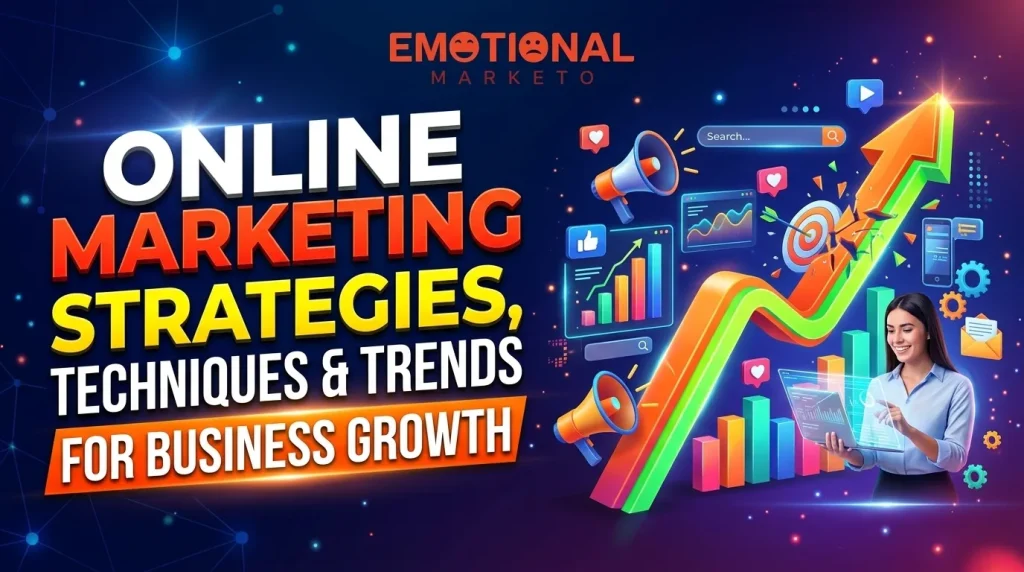
Online marketing helps businesses reach their target audiences, promote products, build brand awareness, and increase sales through digital channels. From search engine optimization and social media marketing to email campaigns and online advertising, effective online marketing strategies enable businesses of all sizes to connect with potential customers. By using the right digital marketing tools, creating valuable content, and following emerging internet marketing trends, businesses can build a strong online presence and achieve long-term growth.
Online Marketing Strategies
Online marketing strategies help businesses promote their products and services through the internet. A successful strategy begins with understanding the target audience, identifying business goals, and choosing the most effective digital channels. Whether the objective is increasing website traffic, generating leads, or improving sales, a clear marketing plan helps businesses use their resources efficiently.
An effective online marketing strategy combines several approaches, including SEO, content creation, social media promotion, email marketing, and paid advertising. Businesses should also monitor customer behavior and campaign performance to understand which activities deliver the best results. Developing a structured product marketing plan can help businesses define their audience, communicate product benefits, and create a consistent promotional approach. With regular evaluation and improvement, online marketing strategies can support sustainable business growth.
Digital Marketing Techniques
Digital marketing techniques are the methods businesses use to attract, engage, and convert online audiences. These techniques include search engine optimization, pay-per-click advertising, content marketing, influencer partnerships, email campaigns, and video marketing. Each technique serves a different purpose, making it important to select methods that align with the audience’s interests and the company’s goals.
For example, SEO helps attract visitors who are actively searching for relevant information, while email marketing supports customer relationships and repeat purchases. Video marketing can demonstrate product features, answer common questions, and make complicated information easier to understand. Combining organic and paid techniques can help businesses reach potential customers at different stages of the buying journey. Testing different formats, analyzing engagement, and refining campaigns allows marketers to improve their results over time.
Online Advertising Methods
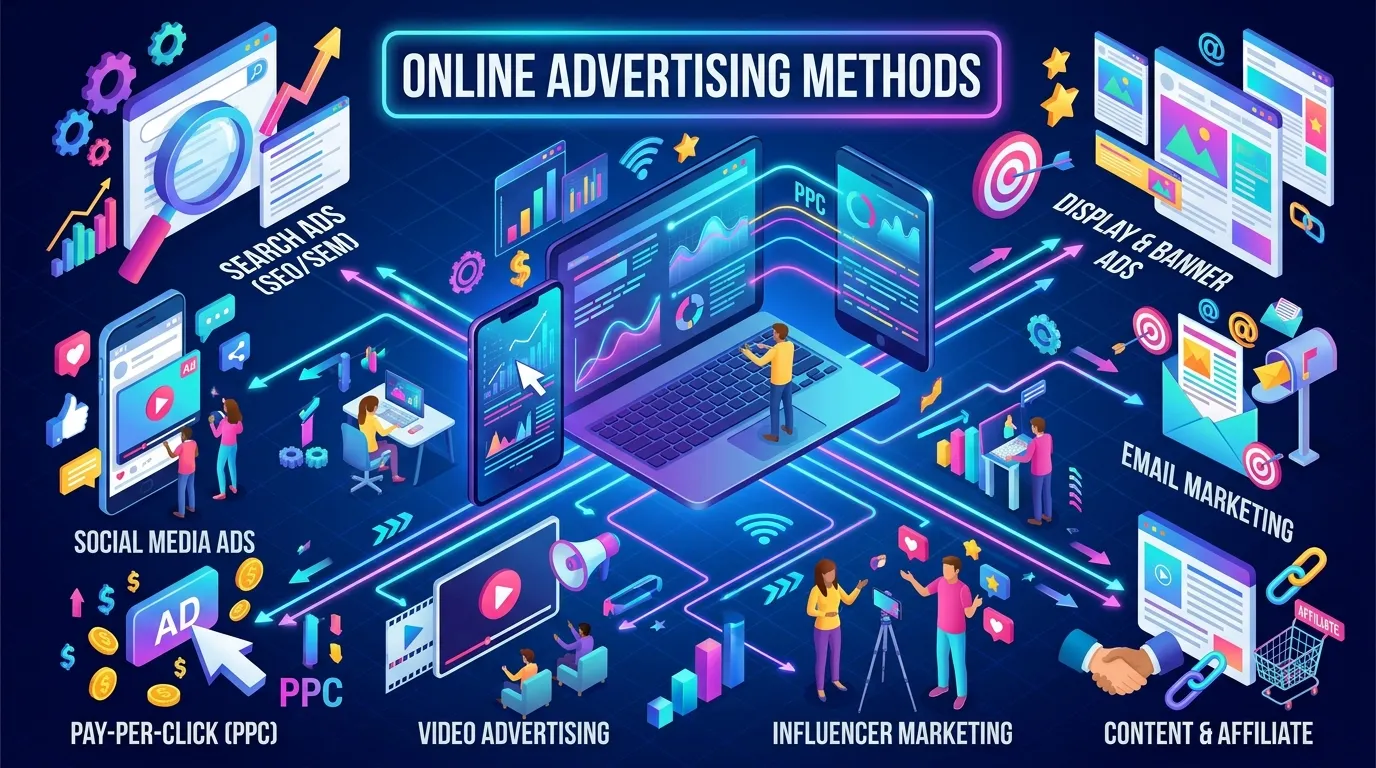 Online advertising allows businesses to reach specific audiences through paid digital channels. Common methods include search advertising, display ads, social media advertisements, video ads, and sponsored content. Unlike traditional advertising, many online advertising platforms offer detailed targeting options based on interests, demographics, search intent, and previous interactions.
Search ads can connect businesses with people actively looking for products or services, while social media ads help introduce brands to new audiences. Retargeting campaigns can also remind previous website visitors about products they viewed, provided the appropriate consent and tracking requirements are met. To make advertising profitable, businesses should establish clear campaign objectives, use compelling ad copy, and direct users to relevant landing pages. Measuring conversion rates and advertising costs helps identify which campaigns deserve additional investment.
Search Engine Optimization (SEO)
Search engine optimization (SEO) improves a website’s visibility in organic search results. It involves optimizing website content, page titles, headings, internal links, loading speed, mobile usability, and technical structure so search engines can understand and index pages effectively. High-quality content that answers users’ questions is particularly important for attracting relevant visitors.
Keyword research helps marketers understand what their target audience searches for and incorporate relevant terms naturally into website content. Internal linking also helps readers discover related information while allowing search engines to understand the relationship between pages. For example, a business discussing organic visibility can connect its SEO content with practical organic product promotion techniques that complement its wider marketing efforts. SEO usually requires consistent effort, but it can generate valuable long-term traffic without paying for every website visit.
Social Media Marketing
Social media marketing uses platforms such as Facebook, Instagram, TikTok, LinkedIn, and Pinterest to build brand awareness, communicate with customers, and promote products. Businesses can publish educational posts, short videos, product demonstrations, customer stories, and behind-the-scenes content to create meaningful connections with their audiences.
Choosing the right platform is essential because different audiences engage with different types of content. For example, visually appealing products may perform well on Instagram, while short, entertaining videos can help brands reach new audiences on TikTok. Businesses can also use social listening, comments, and direct messages to understand customer needs and respond to feedback.
Social platforms increasingly support product discovery and purchasing directly within the user experience. Businesses interested in this opportunity can explore social commerce marketing to understand how social feeds can become more effective shopping destinations. Consistent publishing, authentic communication, and relevant content help build trust and encourage long-term engagement.
Content Marketing Strategies
Content marketing focuses on creating and sharing useful, relevant information to attract and retain a clearly defined audience. Blog articles, videos, infographics, case studies, tutorials, and downloadable guides are common content formats. Rather than relying entirely on direct promotions, content marketing provides value that helps customers understand problems, compare solutions, and make informed purchasing decisions.
A strong content strategy begins with identifying audience questions and planning content around their needs. Businesses should create informative articles, optimize them for relevant keywords, and connect related pages through natural internal links. For example, a company selling a new product could publish educational content about its benefits, explain how to use it, and provide answers to frequently asked questions.
Repurposing content can also improve efficiency. A detailed blog post can become several social media posts, a short video, or an email newsletter. Measuring organic traffic, engagement, lead generation, and conversions helps businesses identify which content formats are most effective. Over time, valuable content can strengthen brand authority and support other online marketing activities.
Email Marketing Campaigns
 Email marketing remains an effective way to communicate directly with customers and encourage repeat business. Companies use email campaigns to share newsletters, announce new products, distribute special offers, welcome subscribers, and recover abandoned shopping carts. Unlike social media platforms, email gives businesses a direct communication channel with subscribers who have chosen to receive their messages.
Successful email marketing depends on delivering relevant content to the right audience. Segmenting subscribers by interests, purchase history, or engagement can make campaigns more personalized. Clear subject lines, useful information, mobile-friendly layouts, and strong calls to action can also improve performance.
Automation helps businesses send timely messages based on customer actions, such as signing up for a newsletter or completing a purchase. However, marketers should obtain appropriate consent, provide an easy unsubscribe option, and comply with applicable privacy and email marketing laws. Tracking delivery rates, clicks, conversions, and unsubscribes helps businesses improve future campaigns and maintain healthy subscriber relationships.
Online Marketing for Small Businesses
Online marketing gives small businesses opportunities to compete with larger companies without requiring enormous advertising budgets. A professional website, an optimized business profile, useful blog content, and active social media accounts can help a small company establish credibility and attract local or national customers.
Small businesses should begin by identifying their most valuable audience and selecting a few channels they can manage consistently. Local SEO can help businesses appear in relevant local searches, while email newsletters encourage customer loyalty. Organic social media content and customer reviews can also strengthen trust and support word-of-mouth recommendations.
Businesses introducing new products can combine these activities with a structured launch campaign. A clear marketing plan, informative content, and targeted promotional efforts help explain why a product matters and how it solves customer problems. Small businesses should regularly review their spending and results, focusing on the channels that generate meaningful inquiries, purchases, and repeat customers rather than chasing visibility alone.
Internet Marketing Trends
Internet marketing continues to evolve as consumer behavior, technology, and digital platforms change. Artificial intelligence is increasingly used to support content planning, customer segmentation, campaign analysis, and marketing automation. Businesses can use these tools to work more efficiently, but human review remains important for accuracy, originality, and brand consistency.
Short-form video, creator partnerships, social commerce, and personalized customer experiences are also important areas of development. Consumers often discover products through entertaining videos, recommendations, and online communities before visiting a company’s website. Brands that understand these discovery habits can create more relevant campaigns and reduce friction between product discovery and purchasing.
TikTok is one example of a platform where trends and creative videos can influence product awareness. Businesses can learn how to turn attention into measurable outcomes through TikTok product promotion strategies. At the same time, marketers should pay attention to privacy, accessibility, and changing platform policies. Rather than following every trend, businesses should prioritize developments that match their audiences and measurable objectives.
Digital Marketing Tools and Platforms
 Digital marketing tools help businesses plan campaigns, publish content, understand audience behavior, and measure performance. Analytics platforms provide insights into website traffic and conversions, while SEO tools support keyword research and technical website analysis. Social media management platforms help schedule posts, and email marketing software supports subscriber management and automated campaigns.
Customer relationship management systems can organize leads, record customer interactions, and help sales teams follow up effectively. Advertising platforms provide reporting on impressions, clicks, and conversions, allowing businesses to evaluate campaign performance. Content management systems also make it easier to maintain websites and publish optimized articles.
The best tools depend on a company’s size, budget, and objectives. Small businesses can start with free or affordable options and upgrade as their needs grow. Instead of purchasing every available tool, marketers should select a practical combination that integrates well, protects customer information, and provides actionable insights. Regularly reviewing the performance of these tools ensures that technology supports marketing goals rather than adding unnecessary complexity.
Conclusion
Online marketing helps businesses build visibility, attract potential customers, and develop lasting relationships in an increasingly digital marketplace. By combining effective strategies, SEO, social media, content creation, email marketing, and appropriate digital tools, companies can create a consistent and measurable marketing approach. Staying informed about emerging trends and regularly analyzing campaign results allows businesses to adapt to customer needs, improve performance, and achieve sustainable growth.
FAQ
1. What is online marketing?
Online marketing is the promotion of products, services, or brands through internet-based channels. It includes SEO, social media marketing, email campaigns, content marketing, and paid digital advertising.
2. Why is online marketing important for businesses?
Online marketing helps businesses reach relevant audiences, increase brand awareness, generate leads, and improve sales. It also provides measurable data that helps companies understand customer behavior and optimize their campaigns.
3. What are the most effective online marketing strategies?
Effective strategies often combine SEO, valuable content, social media engagement, email marketing, and targeted advertising. The best combination depends on the target audience, industry, and business objectives.
4. How does SEO help online marketing?
SEO improves a website’s visibility in organic search results, helping potential customers discover relevant products, services, and information. It can attract consistent traffic over time when supported by useful content and a technically sound website.
5. Is online marketing suitable for small businesses?
Yes. Small businesses can use affordable tools, local SEO, social media, email marketing, and content creation to reach customers. Starting with a few relevant channels helps keep costs and workloads manageable.
6. What is the difference between digital marketing and online marketing?
The terms are often used interchangeably. Digital marketing is the broader term for marketing through digital technologies, while online marketing generally focuses on internet-connected channels such as websites, search engines, email, and social media.
7. How can social media marketing increase sales?
Social media marketing can introduce products to new audiences, demonstrate their benefits, build customer trust, and direct interested users to purchase pages. Social commerce features can also allow customers to discover and buy products within supported platforms.
8. How much does online marketing cost?
The cost varies depending on the channels, competition, tools, and campaign goals. Organic activities such as SEO and content creation require time and resources, while paid advertising involves a budget for impressions, clicks, or other campaign objectives.
9. Which digital marketing tools should beginners use?
Beginners can start with website analytics, keyword research tools, social media management software, email marketing platforms, and a content management system. The right choices depend on the business’s immediate needs and available budget.
10. How can businesses measure online marketing success?
Businesses can measure success using relevant metrics such as website traffic, search rankings, engagement, qualified leads, conversion rates, customer acquisition costs, and return on advertising spend. Metrics should be selected according to the specific goals of each campaign.