How Emotional Advertising Builds Better Brands

Emotional advertising connects with consumers on a deeper, more personal level. By tapping into fundamental human feelings, it helps companies build stronger brands, drive meaningful engagement, and foster lasting loyalty.
Logic rarely dictates purchasing decisions. Research consistently shows that people rely heavily on their feelings when deciding what to buy. When a brand successfully triggers a specific feeling, the consumer associates that positive or impactful sentiment with the brand itself. This creates an undeniable impact on marketing outcomes. A compelling story or a relatable scenario can transform a passive viewer into a passionate brand advocate.
Using emotional advertising is absolutely crucial for modern businesses. Consumers are bombarded with thousands of ads daily. Rational appeals about product features easily get lost in the noise. To stand out, brands must create content that resonates. Integrating emotional advertising within your broader Digital Marketing strategy ensures your message cuts through the clutter, capturing attention and inspiring action.
Understanding Emotional Advertising
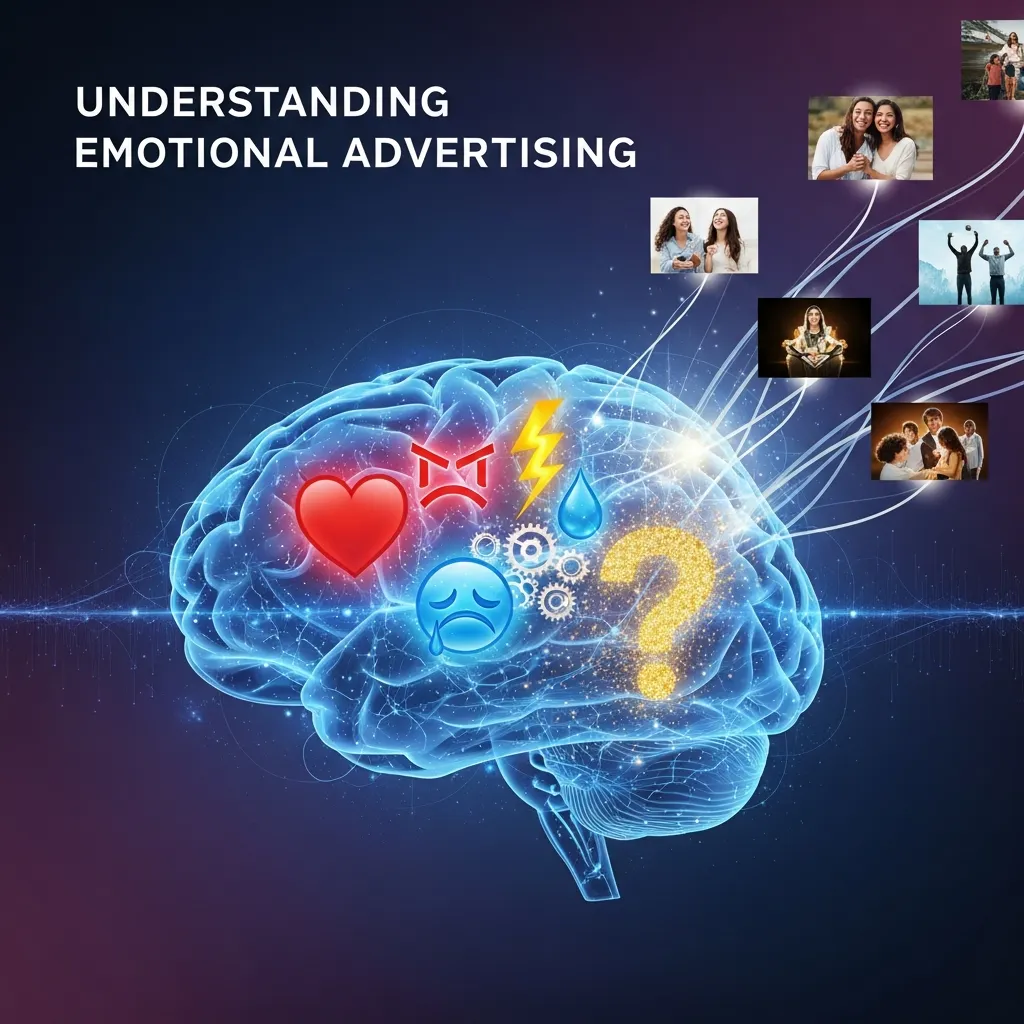
To leverage this strategy, you must first define it clearly. Emotional advertising is a marketing approach designed to elicit a specific affective response from the audience. Instead of focusing solely on price, features, or utility, emotional advertising targets the heart. Core principles include empathy, storytelling, and authenticity.
The psychology behind this approach is rooted in how the human brain processes information. When an advertisement triggers a feeling like joy or surprise, the brain releases neurotransmitters like dopamine or oxytocin. These chemicals enhance memory retention and build trust. Consequently, an audience is far more likely to remember a campaign that made them feel something compared to one that just listed facts.
Differentiating emotional advertising from other marketing approaches is relatively straightforward. Traditional, rational advertising focuses on logic. It might highlight a car’s fuel efficiency or a software’s processing speed. Emotional advertising, on the other hand, highlights the freedom of driving on an open road or the relief of finishing work early.
Key Emotional Triggers in Advertising
Marketers generally rely on a few primary feelings to drive their campaigns. Understanding these triggers is essential for executing successful emotional advertising.
Joy and Happiness
Joy is highly contagious. Brands use happiness to create positive associations with their products. Fast-food chains and beverage companies often show people laughing, sharing, and enjoying life. When consumers see these joyful interactions, they subconsciously link the brand with good times.
Fear and Urgency
Fear is a powerful motivator. It drives immediate action by highlighting a potential risk or missed opportunity. Insurance companies often use fear to remind viewers of the unexpected, prompting them to buy a policy. Limited-time offers in Digital Marketing also tap into the fear of missing out (FOMO) to accelerate purchasing decisions.
Sadness and Empathy
Sadness can foster a deep sense of connection and support. Non-profit organizations frequently use this trigger. Showing a heartbreaking scenario encourages viewers to donate or volunteer. When emotional advertising successfully evokes empathy, people are highly motivated to help provide a solution.
Anger and Frustration
Channeling dissatisfaction into solutions is a clever way to position a product. An ad might highlight a common, frustrating problem that consumers face daily. By validating that anger, the brand positions itself as the ultimate problem solver, offering relief and an alternative way forward.
Surprise and Curiosity
Surprise captures attention instantly. An unexpected twist in a commercial keeps the audience engaged until the very end. Curiosity works similarly, prompting viewers to click a link or watch a video to uncover the secret. Both are highly effective for driving engagement in Digital Marketing channels.
Crafting Effective Emotional Advertising Campaigns
Creating content that resonates requires careful planning. You cannot simply guess what will make your audience react.
Identifying your target audience’s emotional landscape
You must conduct thorough research to understand your audience’s values, pain points, and desires. A campaign designed for retirees will rely on different feelings than one targeting college students. Data collected through Digital Marketing analytics can reveal exactly what your audience cares about most.
Storytelling as a core component
Storytelling is the backbone of emotional advertising. A good narrative gives context to the feeling. It provides characters to root for and conflicts to overcome. Instead of telling people your product is great, show a relatable character using your product to improve their life.
The role of visuals, music, and sound
Visuals, music, and sound design heavily influence human feelings. A slow, acoustic guitar track creates a very different mood than a fast-paced electronic beat. Lighting, color grading, and voiceover pacing all contribute to the overall tone of your emotional advertising campaign.
Authenticity and transparency
Modern consumers easily spot a fake. Your emotional appeals must align with your actual brand values. If a company with a poor environmental record runs a sentimental ad about saving the planet, the audience will reject it. Authenticity ensures your emotional advertising builds trust rather than destroying it.
Integrating with your Digital Marketing strategy
Emotional advertising should not exist in a vacuum. It must integrate seamlessly into your overall Digital Marketing strategy. The feelings evoked in a YouTube video should carry over to your email campaigns, social media posts, and landing pages to create a cohesive customer journey.
Measuring the Impact of Emotional Advertising
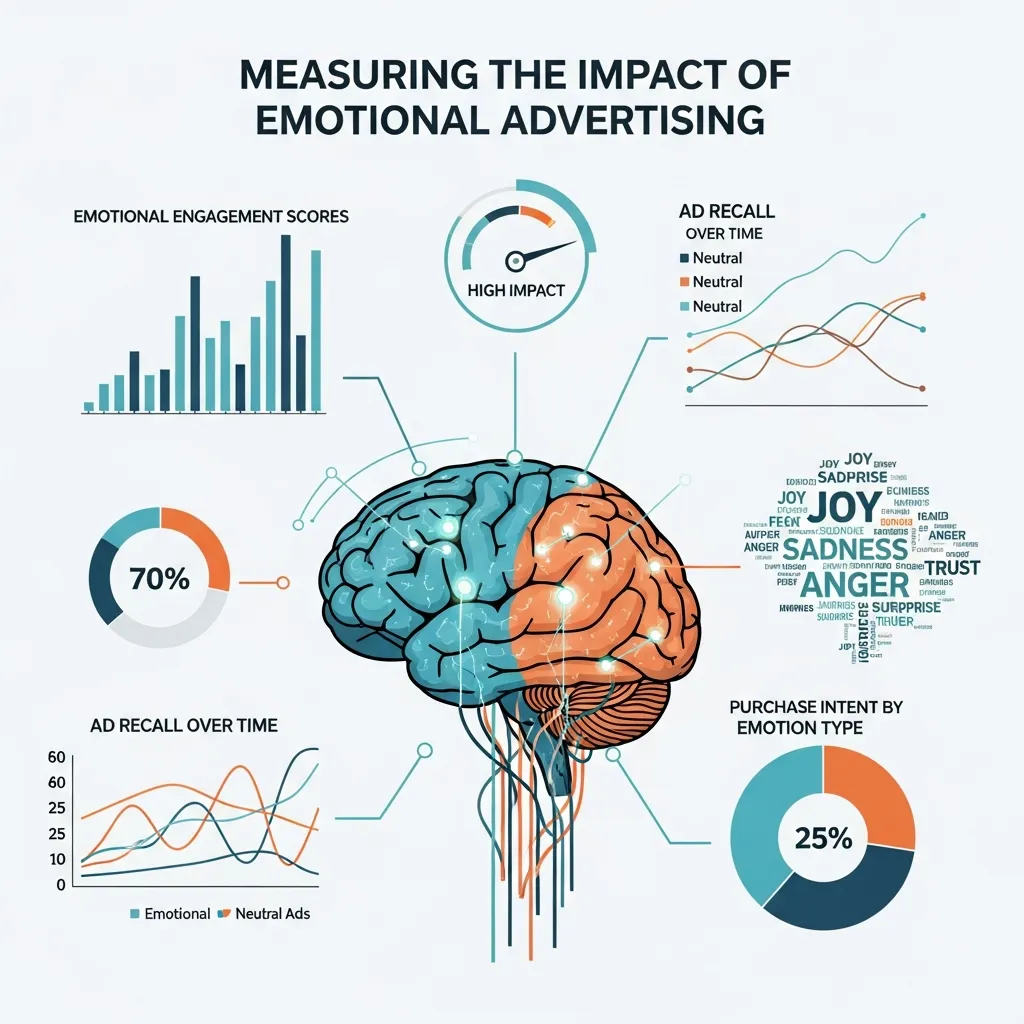
You must track performance to ensure your emotional advertising is actually working.
Key performance indicators (KPIs)
Standard metrics still apply. Look at engagement rates, social shares, and comments. Emotional advertising often generates higher sharing rates because people want to pass on content that moved them. Track video completion rates to see if your storytelling holds attention.
Tools and methods for analyzing response
Advanced tools now allow marketers to measure sentiment. Social listening platforms analyze the tone of comments and reviews. Some companies even use facial coding or biometric testing in focus groups to gauge subconscious reactions to their emotional advertising materials.
Long-term brand building vs. short-term conversions
While emotional advertising can drive quick sales, its true power lies in long-term brand building. A deeply moving campaign creates brand affinity that lasts for years. Balance your measurement by looking at both immediate conversion spikes and long-term brand equity growth.
Case Studies: Successful Emotional Advertising Campaigns
Looking at past successes provides a roadmap for your own efforts.
Iconic examples and their strategies
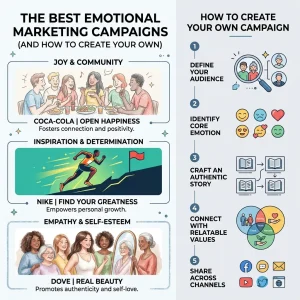
Consider the classic “Share a Coke” campaign. By putting names on bottles, Coca-Cola tapped into the joy of personal connection. Another example is Google’s “Parisian Love,” which told a full romance story solely through search queries. These campaigns perfectly executed emotional advertising by making the product a facilitator of human connection.
Analyzing the elements of success
These campaigns succeeded because they focused on the user, not just the product. They used simple, relatable narratives. They understood that the most effective emotional advertising makes the consumer the hero of the story.
Lessons learned
The main lesson is that subtlety often works best. You do not need to be overly dramatic to evoke a feeling. Simple, authentic moments often resonate the most. Let the story do the heavy lifting in your emotional advertising.
Challenges and Ethical Considerations
With great power comes great responsibility. Triggering human feelings requires a careful, ethical approach.
Avoiding manipulation and exploitation
There is a fine line between persuasion and manipulation. Brands must never exploit tragedies or vulnerable populations to sell products. Emotional advertising should offer genuine value and connection, rather than making people feel inadequate or unnecessarily terrified.
Cultural nuances
Feelings are universal, but the events that trigger them vary by culture. What is considered funny in one country might be deeply offensive in another. Global Digital Marketing teams must carefully adapt their emotional advertising to respect local cultural norms.
Maintaining brand integrity
If your emotional advertising promises a specific type of experience, your product must deliver it. Failing to meet the expectations set by your marketing will damage consumer trust. Maintain your brand integrity by keeping your promises.
The Future of Emotional Advertising and Digital Marketing
As technology evolves, so does the way we connect with consumers.
The rise of personalized appeals
Data allows for highly personalized marketing. In the future, emotional advertising will become even more tailored. Brands will use behavioral data to serve ads that align with a user’s current mood or life stage.
AI and emotional intelligence
Artificial intelligence is beginning to understand human sentiment. AI tools can analyze text, voice, and facial expressions to determine how people feel. This technology will help marketers refine their emotional advertising, ensuring their messages hit the perfect note.
The evolving relationship between brands and consumers
Consumers increasingly want to support brands that share their values. Emotional advertising will focus heavily on purpose and community. Brands that successfully communicate their mission will thrive in the modern Digital Marketing landscape.
The Enduring Power of Connection Through Storytelling

Human beings are hardwired to feel. Long after consumers forget your pricing or specific product features, they will remember how your brand made them feel. By investing in authentic, well-crafted emotional advertising, you build a resilient brand that can weather market changes and outpace competitors. Let empathy guide your strategy, and watch your Digital Marketing efforts reach new heights of success.
Frequently Asked Questions (FAQ)
1. What exactly is emotional advertising?
Emotional advertising is a marketing technique designed to elicit specific affective responses—such as joy, sadness, fear, or anger—from an audience to encourage them to remember a brand or make a purchase.
2. Why is emotional advertising so effective?
It is effective because human beings make decisions largely based on feelings rather than logic. When a brand connects with a consumer on an affective level, it builds a stronger, more memorable bond.
3. How can I identify the right emotions for my brand?
You can identify the right triggers by conducting market research. Understand your target audience’s desires, pain points, and values to determine which feelings align best with your brand identity.
4. Is emotional advertising ethical?
Yes, as long as it avoids manipulation and exploitation. Brands must remain authentic and avoid using tragedies or extreme fear-mongering to push a product.
5. How does emotional advertising differ from traditional advertising?
Traditional advertising relies on logic, highlighting product features, facts, and prices. Emotional advertising focuses on storytelling and the feelings associated with using the product.
6. What are some examples of successful emotional advertising?
Examples include Google’s “Parisian Love” campaign, which used search history to tell a love story, and Coca-Cola’s “Share a Coke” campaign, which focused on the joy of connection.
7. Can emotional advertising be used in B2B marketing?
Absolutely. Business buyers are still human beings. B2B emotional advertising often focuses on feelings of relief, security, trust, or the frustration of current inefficient workflows.
8. How do I measure the success of an emotional advertising campaign?
Measure success by tracking engagement metrics, social shares, comments, brand sentiment through social listening tools, and overall long-term brand affinity.
9. What role does storytelling play in emotional advertising?
Storytelling is the vehicle that delivers the feeling. A narrative provides context, making the advertisement relatable and allowing the audience to see themselves in the situation.
10. How can Digital Marketing amplify emotional advertising?
Digital Marketing amplifies these campaigns by allowing precise targeting, enabling social sharing, and providing multiple channels (like email, video, and social media) to tell a cohesive story.
11. Are there any risks associated with emotional advertising?
Risks include coming across as inauthentic or manipulative. If a campaign misses the cultural mark or feels forced, it can lead to public backlash and damage brand trust.
12. What are the key elements of a powerful emotional advertisement?
Key elements include a clear understanding of the target audience, a relatable story, authentic messaging, and the careful use of visuals and audio to set the appropriate mood.