Fear Appeal Marketing Guide: How Fear Influences Consumer Decisions
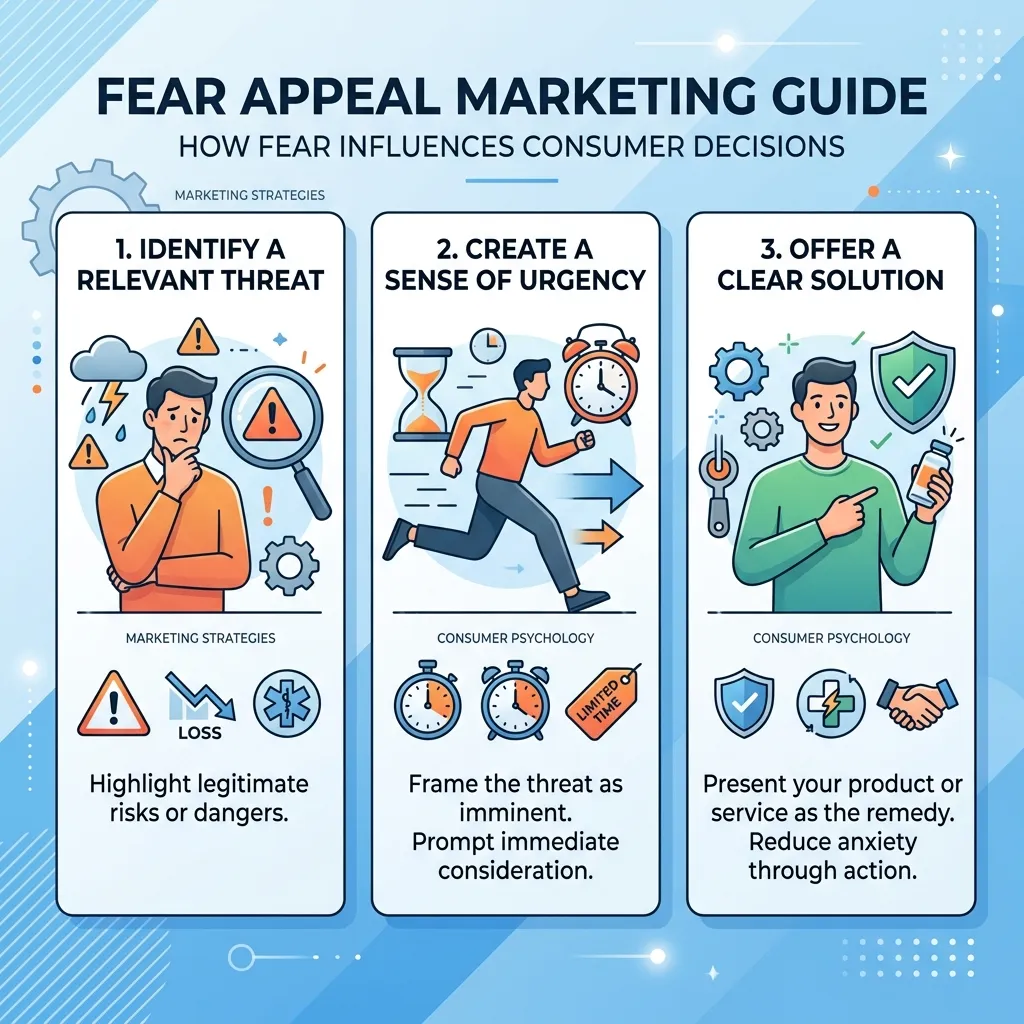
Fear is one of the strongest emotions humans experience, and marketers have understood its influence on decision-making for decades. When used responsibly, fear can help brands communicate risks, highlight important problems, and encourage audiences to take meaningful action.
This approach is commonly known as fear appeal marketing.
Fear appeal marketing uses a potential threat, risk, loss, or negative outcome to motivate people to respond to a marketing message. Instead of focusing only on what customers can gain, the message may also explain what they could lose or what problem they could face if they do not act.
However, fear-based marketing needs to be handled carefully. Excessive fear, misleading claims, or unnecessary pressure can damage consumer trust and create negative brand associations.
In this fear appeal marketing guide, we will explore what fear appeal marketing means, how it works psychologically, common examples, effective strategies, ethical considerations, and how businesses can use fear without crossing the line into manipulation.
What Is Fear Appeal Marketing?
Fear appeal marketing is an advertising and communication technique that attempts to motivate consumers by presenting a potential threat, danger, problem, or undesirable consequence.
The basic structure is often:
Threat → Emotional response → Solution → Action
For example, a cybersecurity company might communicate the risk of data breaches and then present its security software as a solution.
A health-related campaign might explain the consequences of ignoring a particular risk and then encourage people to take an appropriate preventive action.
The purpose is not necessarily to frighten people for its own sake. Effective fear appeal marketing connects the perceived problem with a realistic and useful solution.
This makes fear different from simple negative advertising.
How Fear Appeal Marketing Works
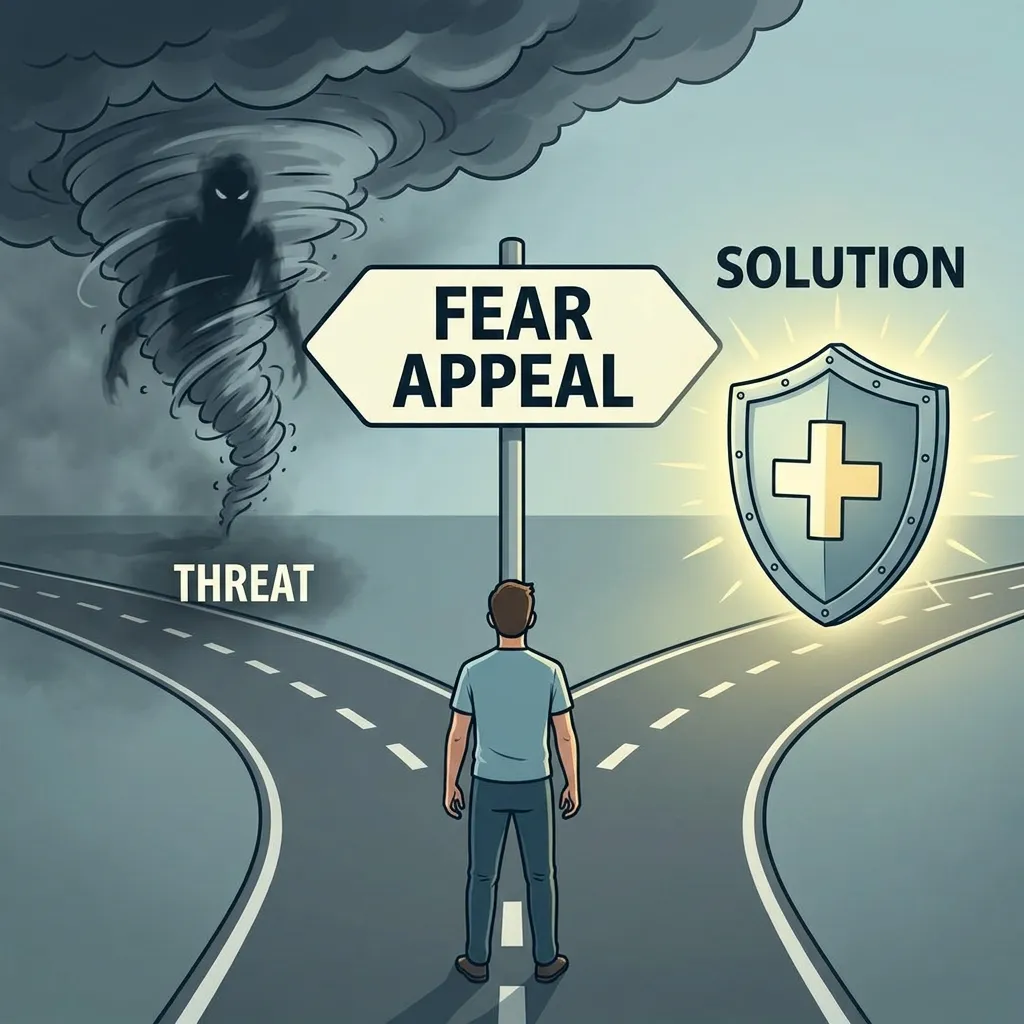
Fear can influence attention and decision-making because people naturally pay attention to potential threats.
When consumers perceive a meaningful risk, they may become more motivated to understand the problem and search for a way to reduce it.
A fear-based marketing message usually contains several components:
1. Identify the Threat
The message introduces a potential problem or undesirable outcome.
Examples include:
- Data theft
- Financial loss
- Missed opportunities
- Product failure
- Security risks
- Poor performance
- Wasted time
- Losing access to something valuable
2. Increase Risk Awareness
The advertisement explains why the problem deserves attention.
This stage should be based on credible information rather than exaggerated claims.
3. Present a Solution
The brand introduces its product, service, or recommended action as a way to address the problem.
4. Provide a Clear Call to Action
Finally, the audience is given a practical next step.
For example:
Learn More
Get Protected
Check Your Coverage
Start Your Free Trial
The strongest fear appeal campaigns do not leave consumers trapped in fear. They provide a reasonable path toward solving the problem.
The Psychology Behind Fear-Based Marketing
Fear appeal marketing is closely connected with the psychology of decision-making.
People often react more strongly to potential losses than equivalent gains. This concept is known as loss aversion.
For a deeper explanation, see this guide to loss aversion strategy in marketing.
Consider two marketing messages:
Message A:
“Save $100 with our security service.”
Message B:
“Protect your business from potentially costly security problems.”
The first emphasizes a benefit. The second emphasizes risk.
Depending on the audience and situation, the perceived threat in the second message may attract stronger attention.
Fear can therefore become a powerful emotional trigger when the audience believes the risk is relevant and the solution is credible.
Fear Appeal vs. Loss Aversion
Fear appeal marketing and loss aversion are related, but they are not exactly the same.
Fear appeal focuses on a potential threat or negative consequence.
Loss aversion describes the tendency to place greater psychological weight on losses than comparable gains.
For example:
A home security advertisement saying:
“Protect your home from potential break-ins.”
uses a fear appeal.
An advertisement saying:
“Don’t lose the valuable belongings you’ve worked hard to own.”
leans more heavily on loss aversion.
Many successful campaigns combine both psychological principles.
Fear and Emotional Marketing
Fear is one emotion within the broader field of emotional marketing.
Brands can use many different emotional triggers, including:
- Happiness
- Sadness
- Anger
- Surprise
- Trust
- Nostalgia
- Belonging
- Hope
- Fear
To understand the broader concept, explore this complete guide to emotional marketing.
Fear appeal marketing works best when it is considered as part of a larger emotional strategy rather than being treated as the only way to influence customers.
Common Examples of Fear Appeal Marketing
Fear appeals appear across many industries.
Cybersecurity Marketing
Cybersecurity brands frequently use risk-based messaging.
A campaign might explain that businesses can face:
- Data breaches
- Account compromise
- Malware
- Financial damage
- Customer data exposure
The product is then positioned as a way to reduce these risks.
Insurance Advertising
Insurance is naturally connected with uncertainty and potential loss.
Marketing messages may focus on what could happen if an unexpected accident, illness, property problem, or financial emergency occurs without adequate protection.
The solution is insurance coverage.
Road Safety Campaigns
Public safety campaigns often use fear appeals to encourage safer behavior.
Messages may highlight the consequences of:
- Distracted driving
- Speeding
- Drunk driving
- Not wearing a seat belt
These campaigns generally have a broader social purpose rather than simply selling a commercial product.
Financial Services
Financial brands may use fear-based messaging around:
- Retirement insecurity
- Fraud
- Unexpected expenses
- Poor financial planning
- Inflation
- Investment mistakes
The important factor is whether the message provides useful information rather than simply creating panic.
Software and Technology
Technology companies sometimes highlight the consequences of using outdated systems.
For example:
“Is your outdated software putting your business data at risk?”
The message creates concern and then presents updated software as a possible solution.
Fear Appeal Marketing and FOMO
Fear can also overlap with FOMO, or the fear of missing out.
A typical FOMO message might suggest:
“Don’t miss your chance.”
“Offer ends tonight.”
“Limited availability.”
This type of marketing creates concern about missing an opportunity rather than fear of physical or financial danger.
Your FOMO marketing psychology guide explores how this psychological trigger works and why ethical considerations matter.
Fear Appeal and Scarcity
Scarcity marketing can also create a fear-based response.
When customers believe that a product or opportunity may become unavailable, they may feel pressure to act quickly.
For example:
“Only 5 seats remaining.”
This can create urgency.
However, businesses should not manufacture fake scarcity. If a brand repeatedly claims that something is almost sold out when it is not, customers may eventually lose trust.
You can learn more about the psychology behind this approach through the scarcity marketing psychology guide.
How to Create an Effective Fear Appeal Campaign

Creating a responsible fear-based campaign requires more than simply describing something frightening.
Use the following framework.
Step 1: Understand Your Audience
First, identify the problems your target audience genuinely cares about.
Ask:
- What risks concern them?
- What problems are they trying to avoid?
- What could prevent them from reaching their goals?
- What information do they need before taking action?
Fear is only effective when the threat is relevant.
Step 2: Use a Realistic Threat
The threat should be credible.
Avoid dramatic statements that cannot be supported.
For example, instead of:
“Your business will definitely be hacked without our software.”
a responsible message might say:
“Weak security practices can increase your exposure to cyber threats.”
The second statement creates awareness without claiming certainty.
Step 3: Show the Consequence
Explain why the problem matters.
A strong message connects the risk to something the audience values.
For example:
Security risk → potential data loss → business disruption → need for stronger protection
Step 4: Present a Solution
This is one of the most important elements of ethical fear appeal marketing.
After highlighting the risk, provide a useful solution.
The customer should feel:
“There is something I can do about this.”
rather than:
“I’m being scared into buying something.”
Step 5: Use a Clear CTA
Tell customers what they should do next.
Examples include:
- Learn More
- Get Started
- Protect Your Business
- Schedule a Consultation
- Download the Guide
- Check Your Security
- Compare Options
A clear CTA turns emotional attention into meaningful action.
The Fear-Solution Balance
One of the most important principles in fear appeal marketing is balance.
Too little fear:
The customer may not care.
Too much fear:
The customer may feel manipulated or overwhelmed.
The ideal approach is:
Relevant Risk + Credible Evidence + Practical Solution
This balance allows the campaign to create urgency while preserving consumer trust.
Fear Appeal Marketing in Digital Advertising
Digital platforms provide many opportunities for fear-based messaging.
Search Ads
Search advertising can address problems that customers are already actively researching.
For example, a cybersecurity company can target searches related to data protection and security risks.
Social Media Ads
Social media advertisements can use short emotional hooks to capture attention.
Examples:
“Could your business survive a major data loss?”
“What happens when your customers stop trusting your brand?”
The rest of the advertisement should provide useful context and a credible solution.
Email Marketing
Email campaigns can use risk awareness to encourage action.
For example:
“Is your current backup strategy enough?”
The email can then explain common backup problems and provide practical recommendations.
Video Marketing
Video can make fear-based messages particularly emotional because visual storytelling can communicate consequences quickly.
However, businesses should avoid sensationalizing serious topics simply to generate clicks.
How Fear Can Influence Consumer Decisions
Fear can influence different stages of the buying journey.
Awareness
A fear-based message can make consumers notice a problem they previously ignored.
Consideration
Once consumers recognize the problem, they may begin researching potential solutions.
Decision
If the brand offers a credible solution, fear can contribute to the motivation to take action.
Retention
After purchase, brands should shift from fear to reassurance.
Customers generally want to feel confident that they made the right decision.
This is why fear should not dominate every stage of the customer relationship.
Fear Appeal Marketing and Brand Trust
Brand trust is critical.
If a company repeatedly uses exaggerated threats, customers may eventually question its credibility.
For long-term success, fear should be supported by:
- Accurate information
- Transparent claims
- Evidence
- Helpful education
- Realistic solutions
- Clear communication
The objective should be to help consumers make informed decisions.
For additional context, explore this guide on how emotional marketing works.
Ethical Considerations in Fear Appeal Marketing
Fear-based advertising becomes problematic when marketers intentionally exploit vulnerabilities or create unnecessary panic.
Ethical fear appeal marketing should avoid:
- False claims
- Fake statistics
- Manufactured emergencies
- Hidden conditions
- Excessive pressure
- Exploiting vulnerable audiences
- Deliberately misleading imagery
- Unnecessary alarm
Instead, marketers should focus on education and empowerment.
A useful question is:
“Would this message still be responsible if the customer carefully investigated the claim?”
If the answer is no, the campaign probably needs to be reconsidered.
Fear Appeal Marketing for Different Industries
The appropriate use of fear depends heavily on the industry.
Healthcare
Healthcare marketing requires especially careful communication. Fear should not be used to exaggerate health risks or pressure people into unnecessary purchases.
Finance
Financial marketing should clearly distinguish potential risks from guaranteed outcomes.
Cybersecurity
Risk communication can be highly relevant, but businesses should avoid claiming that customers will definitely experience an attack.
Education
Educational campaigns can use fear of falling behind or missing opportunities, but they should avoid exploiting students’ anxieties.
Consumer Products
Product safety messages can responsibly highlight potential risks when those risks are supported by reliable information.
Measuring Fear Appeal Campaign Performance
Fear-based campaigns should be measured using more than clicks.
Important metrics may include:
- Click-through rate
- Conversion rate
- Lead generation
- Sales
- Cost per acquisition
- Engagement
- Bounce rate
- Time on page
- Brand sentiment
- Customer retention
A campaign can generate many clicks because the headline is frightening, but that does not necessarily mean it is successful.
The ultimate question is whether the campaign generates meaningful business results without damaging the brand.
Fear Appeal Marketing vs. Positive Marketing
Fear is not always the best emotional strategy.
Some audiences respond better to positive messaging.
Compare:
Fear-focused:
“Don’t let security problems destroy your business.”
Positive-focused:
“Build a safer and more secure business with better protection.”
Both messages can communicate the same value proposition, but they create different emotional experiences.
This is why marketers should test different emotional appeals rather than assuming fear will always produce the highest conversion rate.
Testing Different Emotional Appeals
A/B testing can help marketers determine which message resonates with their audience.
For example:
Version A: Fear appeal
“Is your business prepared for a security breach?”
Version B: Positive appeal
“Build stronger security for your growing business.”
Track:
- Clicks
- Conversions
- Leads
- Sales
- Engagement
- Customer quality
The winning message should not simply generate more clicks. It should produce better overall outcomes.
The Future of Fear Appeal Marketing

As consumers become more aware of psychological marketing techniques, transparency will become increasingly important.
Modern customers can quickly research claims, compare brands, read reviews, and share negative experiences online.
This means fear-based marketing must be supported by credibility.
Brands that use fear responsibly can educate customers about genuine problems and encourage useful action.
Brands that rely on manipulation may achieve short-term attention but risk long-term trust.
Final Thoughts
Fear appeal marketing can be a powerful communication strategy when it highlights genuine risks and provides customers with practical solutions.
The most effective approach is not to frighten people unnecessarily. Instead, it is to help them understand a problem, recognize its potential consequences, and discover a credible way to address it.
Fear can attract attention, but trust sustains relationships.
For marketers, the ideal formula is simple:
Relevant Fear + Honest Information + Credible Solution + Clear Action
When these elements work together, fear appeal marketing can become part of a broader emotional marketing strategy that informs consumers, encourages action, and creates meaningful business results.
Frequently Asked Questions
1. What is fear appeal marketing?
Fear appeal marketing is an advertising technique that highlights a potential threat, risk, loss, or negative consequence to motivate consumers to take action. Effective campaigns also provide a practical solution to the problem.
2. Is fear appeal marketing effective?
Fear appeal marketing can be effective when the perceived threat is relevant, credible, and paired with an achievable solution. Excessive or misleading fear can have the opposite effect and damage consumer trust.
3. What is an example of fear appeal advertising?
Cybersecurity advertisements are a common example. A company may explain the potential consequences of weak security and then present its software or service as a way to reduce those risks.
4. What is the difference between fear appeal and FOMO marketing?
Fear appeal generally focuses on a threat, risk, or negative consequence. FOMO focuses on the fear of missing an opportunity, product, experience, or social event. Both use emotional motivation but target different concerns.
5. Is fear appeal marketing ethical?
Fear appeal marketing can be ethical when it communicates genuine risks accurately and gives consumers a reasonable solution. False claims, exaggerated threats, fake scarcity, and deliberately manipulative messaging can make a campaign unethical.