The Psychology Behind Emotional Branding
This article delves into the psychology behind emotional branding, examining how emotional triggers in marketing drive consumer behavior. From Nike’s emotional marketing strategies to the rise of Emotion AI, we explore how to build long-term brand trust through empathy, storytelling, and data-driven insights.
In an era of endless choice, logic often takes a backseat to feeling. Emotional Branding is the strategic art of connecting a brand’s soul to the consumer’s heart.
The Biological Foundation of Emotional Branding
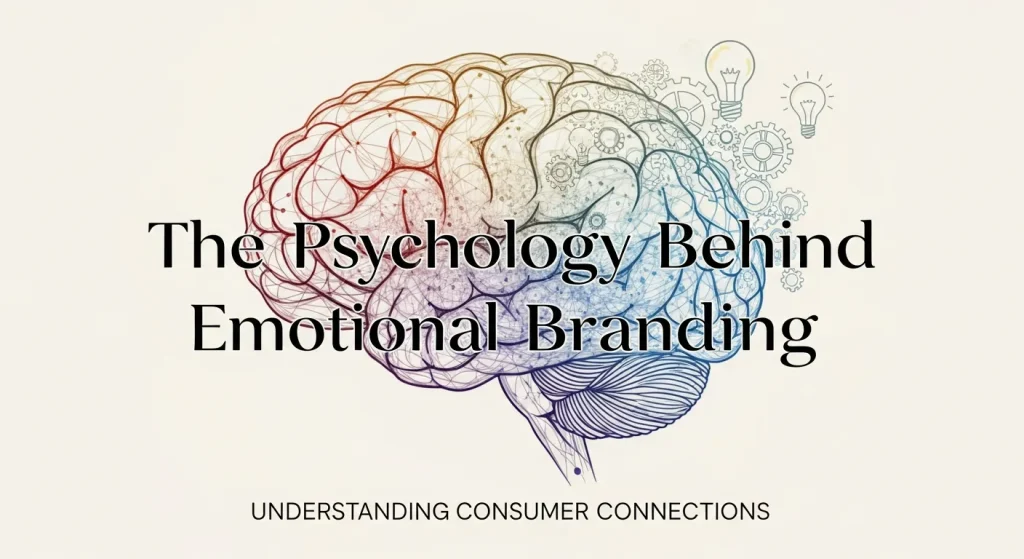
At its core, the psychology behind emotional branding is rooted in the human limbic system—the part of the brain responsible for emotions, memories, and stimulation. Unlike the neocortex, which handles logic and speech, the limbic system has no capacity for language but exerts a massive influence on decision-making. This is why consumers often say they “just feel right” about a purchase, even if they can’t explain why.
Emotional Branding leverages this biological reality by creating a “gut feeling” of safety and belonging. When a brand aligns its values with a customer’s self-identity, it moves beyond being a commodity and becomes a part of the person’s life story. This connection is the most effective emotional branding technique because it bypasses rational skepticism. Successful brands utilize neuromarketing techniques to understand these subconscious reactions, ensuring their brand personality in marketing resonates on a visceral level.
Identifying the Core Types of Emotions Used in Marketing
To build emotion marketing strategy frameworks that actually convert, marketers must identify which specific feelings to target. What emotion sells the most? While there is no single answer, the most powerful drivers are usually rooted in our evolutionary needs.
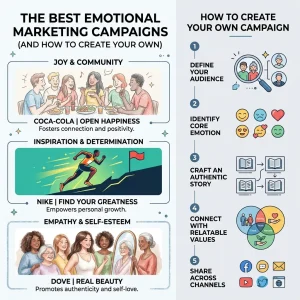
- Joy and Inspiration: Creating a sense of possibility and “winning” (e.g., Nike’s emotional marketing strategies).
- Nostalgia in Digital Branding: Tapping into fond memories to create an immediate sense of long-term brand trust.
- Fear and Urgency: Often used in emotional marketing direct response strategy to prevent loss or highlight risk.
- Belonging: The drive to be part of a brand community on social media and feel understood.
Emotional marketing is the key to winning because it addresses these universal human needs. By understanding what are the most attractive emotions for your specific niche, you can create a brand voice strategy that feels authentic rather than manipulative.
The Role of Storytelling in Emotional Marketing

A brand without a story is just a product. The role of storytelling in emotional marketing is to provide a narrative framework that the customer can inhabit. In this framework, the customer is the hero, and the brand is the “mentor” or “guide” that provides the necessary tools for success.
By leveraging brand storytelling to elevate your marketing strategy, you provide a context for the emotional benefits marketing you offer. Mastering brand storytelling involves identifying a conflict (the customer’s pain point) and demonstrating how your brand provides the resolution. This is not just about entertainment; it is about emotional involvement marketing. When customers see their own struggles reflected in a brand’s message, emotional branding wins hearts wallets.
B2B Emotional Branding: Beyond the Boardroom
It is a common misconception that professional buyers are purely rational. However, the power of b2b emotional marketing in today’s market is immense. B2B purchases often involve higher stakes, meaning the emotions behind investment decisions—such as the fear of making a mistake or the desire for professional prestige—are heightened.
Why b2b emotional marketing drives better results is because it addresses the person behind the title. By focusing on B2B brand differentiation, companies can build emotional marketing customer relationships that are much harder for competitors to break. The undeniable power of emotions in marketing applies just as much to enterprise software as it does to consumer goods.
Quantifying the Impact: Data and Statistics
While emotions feel subjective, their impact is highly measurable. The power of emotional marketing backed by surprising statistics shows that campaigns with purely emotional content perform twice as well as those with only rational content. Using tools like Google Analytics, brands can track how Emotional Marketing Videos impact bounce rates and conversion.
Performance Comparison – Rational vs. Emotional Appeals
| Metric | Rational Marketing Appeal | Emotional Branding Appeal |
| Average Sales Lift | 16% | 31% |
| Brand Recall | Moderate / Fact-Based | Very High / Association-Based |
| Customer Loyalty | Price-Sensitive | Values-Driven & Relational |
| Conversion (Browsers to Buyers) | Low (Requires comparison) | High (Driven by impulse/affinity) |
Revolutionizing the Market with Emotion AI
We are entering a new era where Emotion AI is Revolutionizing Marketing. By using AI-powered brand analysis, companies can now detect sentiment shifts in customer feedback across the web. This allows for hyper-personalized branding that reacts to how a user is feeling in real-time.
Emotion AI redefining marketing means we can now move from broad segments to individual emotion-driven customer marketing. This technology helps in future-proofing your brand by ensuring your message is always relevant to the consumer’s current state. This synergy of UGC & AI personalization digital marketing creates a seamless, empathetic user experience that builds unshakeable brand trust.
Ethical Branding and the Risks of Emotion Washing
With the power to influence feelings comes a significant ethical responsibility. Emotional marketing ethical standards must be maintained to avoid emotion washing—the practice of faking empathy for social causes to boost profit.
What are the risks of branding? If a brand is perceived as inauthentic, it can lead to a brand crisis management nightmare. Negatives of emotional branding occur when there is a disconnect between the marketing message and the actual company culture. To do emotional marketing effectively, a brand must ensure its sustainable branding strategies are backed by real action. Brand authenticity is the only defense against consumer cynicism.
Building an Emotionally Intelligent Marketing Funnel
To move Emotional Marketing Browsers to Buyers, your entire funnel must be emotionally aligned. This requires emotional intelligence marketing, where you address specific psychological states at different touchpoints.
Mapping Emotional States to the Customer Journey
| Funnel Stage | Target Customer Emotion | Content Strategy / Response |
| Awareness | Curiosity, Hope, or Frustration | Inspirational Storytelling |
| Consideration | Trust, Relief, or Skepticism | Case Studies & Testimonials |
| Decision | Confidence, Pride, or FOMO | Seamless UX & Value Reinforcement |
| Retention | Gratitude & Belonging | Community & Exclusive Rituals |
Mastering Digital Channels for Emotional Connection
In the digital age, how sms marketing can connect emotionally or how social media viral trends are leveraged can make or break a brand. Building a brand community on social media requires more than just posting content; it requires active listening and high emotional intelligence marketing.
Emotional marketing ads how to connect hearts by inviting participation. Whether it’s through gamified branding or interactive content boost marketing, the goal is to make the consumer an active participant. How to master YouTube emotional marketing involves long-form content that allows for deeper emotional involvement marketing, turning viewers into loyal brand ambassadors.
Creating Your Own Emotional Branding Roadmap
To create a successful Emotional Branding strategy, you must follow a structured approach that integrates psychology with modern technology.
- Audit: Conduct a comprehensive brand audit to find your current brand perception.
- Archetype: Define your brand archetypes to ensure consistent messaging.
- Voice: Develop a brand voice strategy that aligns with human values.
- Sensory: Implement sensory branding (colors, sounds, and textures).
- Measure: Monitor and adapt using social listening as a brand strategy tool.
The 5 A’s of Emotional Branding Strategy
| Pillar | Definition | Strategic LSI Goal |
| Authenticity | Genuine values and consistent actions | Brand Authenticity |
| Accessibility | Inclusive design and tone | Brand Accessibility |
| Affinity | Shared interests and values | Emotional Connection |
| Awareness | Visible and recognizable presence | Brand Recognition |
| Adaptability | Resilience during market shifts | Building Brand Resilience |
The Impact of Color and Visual Sensory Branding
The psychology of color in branding is a cornerstone of any successful emotional branding strategy, as visual cues are processed by the brain long before text. For instance, the use of “Nike Blue” or specific high-energy reds in Nike’s emotional marketing strategies isn’t accidental; these shades are scientifically proven to trigger physiological responses like increased heart rate or a sense of calm reliability. Beyond color, AI sensory branding is now allowing companies to map visual stimuli to specific emotional triggers in marketing with surgical precision. By understanding the psychology of brand design, businesses can ensure that every visual touchpoint—from the logo to the website’s white space—reinforces the intended brand personality in marketing. This visual consistency is essential for building brand recognition and ensuring that the brand’s “look and feel” aligns perfectly with the emotional benefits marketing promised to the consumer.
Future-Proofing Through Inclusive Brand Strategies

In today’s globalized market, inclusive branding has shifted from a trend to a fundamental requirement for building a resonant brand. Consumers increasingly gravitate toward companies that reflect diverse identities and experiences, making inclusive brand strategies a key driver of long-term brand trust. When a brand embraces cultural branding and authentically connects with social movements, it moves beyond mere product selling and becomes a “must-have” for the socially conscious consumer. However, this must be approached with brand authenticity to avoid the pitfalls of “performative activism” or emotion washing. By integrating brand accessibility and diversity into the core brand purpose development, organizations can foster deep emotional connection in marketing. This approach not only builds brand resilience but also ensures the brand remains relevant across different generations, effectively future-proofing your brand in a rapidly evolving social landscape.
Conclusion
Emotional Branding is not just a marketing tactic; it is a fundamental shift in how businesses relate to people. By focusing on the power of emotions in marketing, companies can transition from being a simple choice to being a necessity. Authentic storytelling, ethical practices, and the smart use of AI sensory branding will ensure your brand wins the hearts and long-term loyalty of your audience.
FAQs
-
What is Emotional Branding and why does it matter?
Emotional Branding is the practice of building brands that appeal directly to a consumer’s emotional state, needs, and aspirations. It matters because emotions affect consumer behavior more than logic. When a brand creates an emotional connection in marketing, it builds long-term brand trust, which protects the business from price wars and competitors.
-
How do I start an emotional marketing campaign?
To start, you must first understand the psychology behind emotional branding. Identify the “pain points” of your audience and determine which emotional triggers in marketing your product provides. Then, develop a brand voice strategy and use storytelling to communicate your message across channels like social media or email.
-
What are the most common emotional marketing examples?
Classic examples include Nike’s emotional marketing strategies (Inspiration), Dove’s “Real Beauty” (Self-acceptance), and Apple’s “Think Different” (Identity). These brands don’t just sell products; they sell a version of who the customer wants to be, proving that emotion-based marketing is the key to winning hearts.
-
How can AI help with Emotional Branding?
Emotional AI is Revolutionizing Marketing by allowing brands to analyze customer sentiment at scale. Through AI-powered brand analysis, companies can tailor their digital marketing strategies to match the real-time emotional state of their audience, leading to hyper-personalized branding and a higher ROI of brand strategy.
-
Is emotional marketing effective for B2B companies?
Yes, absolutely. The Power of b2b emotional marketing in Today’s Market is significant because B2B buyers are looking for security, trust, and professional growth. By focusing on B2B brand differentiation and emotional marketing customer relationships, B2B brands can decrease the perceived risk of a purchase and build lasting partnerships.
-
What are the risks of using emotions in branding?
The biggest risks are appearing inauthentic or manipulative. This is known as emotion washing. If a brand’s actions don’t match its emotional branding, it can lead to a brand crisis. Additionally, overusing certain triggers like fear can lead to negatives of emotional branding, where consumers feel manipulated and eventually detach from the brand.
-
How do I measure the success of emotional branding?
You can measure success using brand equity KPIs, such as Net Promoter Score (NPS), customer retention rates, and sentiment analysis. Tools like SEMrush and Ahrefs can help you track brand awareness and brand perception in marketing by analyzing how people talk about your brand online.
-
What is the role of storytelling in this process?
Role of storytelling in emotional marketing is to act as the bridge between the product and the emotion. It humanizes the brand and makes the emotional benefits marketing relatable. A good story creates emotional involvement marketing, making the consumer feel like they are part of a larger movement or family.
-
Can small businesses afford emotional branding?
Yes! Emotional Branding is often cheaper than competing on price or ad spend. Small businesses can win by being more human and transparent. By focusing on personal branding for CEOs and building a brand community on social media, small businesses can create a resonant brand that large corporations often struggle to mimic.
-
How does color affect emotional branding?
The Psychology of Color in Branding is a key part of sensory branding. For example, blue evokes trust and security (common in B2B), while red evokes excitement and urgency. Choosing the right palette is essential for brand recognition and ensures your brand personality in marketing is communicated instantly without words.